
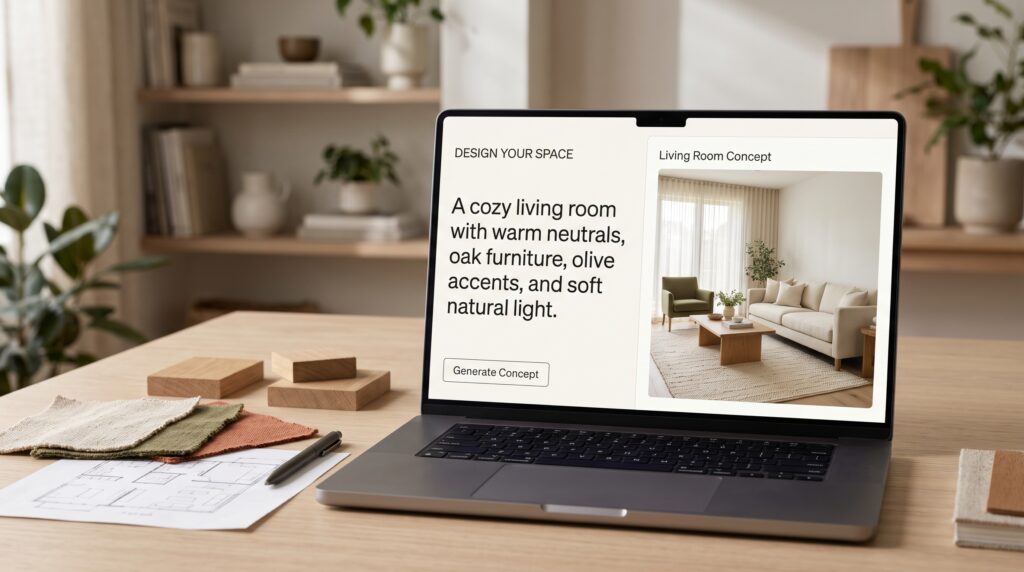
AI room design prompts help you describe the spaces you imagine, from a peaceful bedroom to a colorful living room made for entertaining. A clear prompt gives an image generator useful direction about the room’s purpose, layout, furniture, materials, and lighting. Instead of requesting a “beautiful interior,” you can explain what would make that interior feel beautiful to you.
The resulting images are useful for exploring visual concepts, comparing styles, and discussing preferences. Treat them as inspiration rather than measured plans. This guide includes original prompts you can adapt, along with a practical process for creating rooms that feel coherent, personal, and connected to everyday life.
Start AI Room Design Prompts With a Clear Purpose
Before choosing colors or furniture, decide what the room needs to support. A living room for reading and conversation may require a different arrangement from one centered on movie nights.
Describe who uses the space, what activities happen there, and which features matter most. Include anything that should remain, such as an existing sofa, a fireplace, or a large window.
Useful AI room design prompts turn those priorities into visible instructions.
For example, “a comfortable family living room” becomes more specific when you add “seating for four, a clear route to the balcony, closed storage, and a low table for board games.”
That description gives the concept a practical starting point.
Build AI Room Design Prompts With Specific Details
Organize your prompt around a few connected decisions. The following structure helps you describe the room without assembling an unrelated list of attractive objects.
| Prompt element | What to describe |
|---|---|
| Room and purpose | Living room for conversation and reading |
| Layout | Sofa facing two chairs, clear circulation |
| Style | Relaxed contemporary interior |
| Palette | Cream, olive, warm brown |
| Materials | Oak, linen, textured ceramic |
| Lighting | Soft afternoon daylight |
| Viewpoint | Wide view from the doorway |
| Constraints | Keep the window wall unobstructed |
These details work together. A room described as compact should have furniture proportions and storage choices that support that scale.
End with a few relevant visual constraints, such as realistic furniture placement and no overlapping objects. Avoid adding so many instructions that the main concept becomes difficult to identify.
AI Room Design Prompts for Inviting Living Rooms
Living rooms often combine several activities. Decide which one leads the design, then describe how the furniture arrangement supports it.
Warm Contemporary Living Room Prompt
“Create a realistic interior concept for a medium-sized living room designed for conversation and reading. Arrange a cream linen sofa opposite two compact olive-green armchairs, with a rounded oak coffee table between them. Add a low bookshelf, textured ceramic accessories, and a large neutral rug connecting the seating. Use warm-white walls and soft afternoon daylight. Show the room from the doorway with believable furniture proportions and a clear walking route. No television, excessive decorations, or overlapping furniture.”
Colorful Apartment Living Room Prompt
“Visualize a compact apartment living room with a playful contemporary style. Keep a light-gray two-seat sofa as the main existing piece. Introduce a cobalt-blue chair, terracotta cushions, a small round table, and one large abstract artwork. Include practical closed storage and an open route to the window. Use balanced color accents, natural daylight, and realistic apartment proportions. Photograph from eye level with an editorial interior aesthetic.”
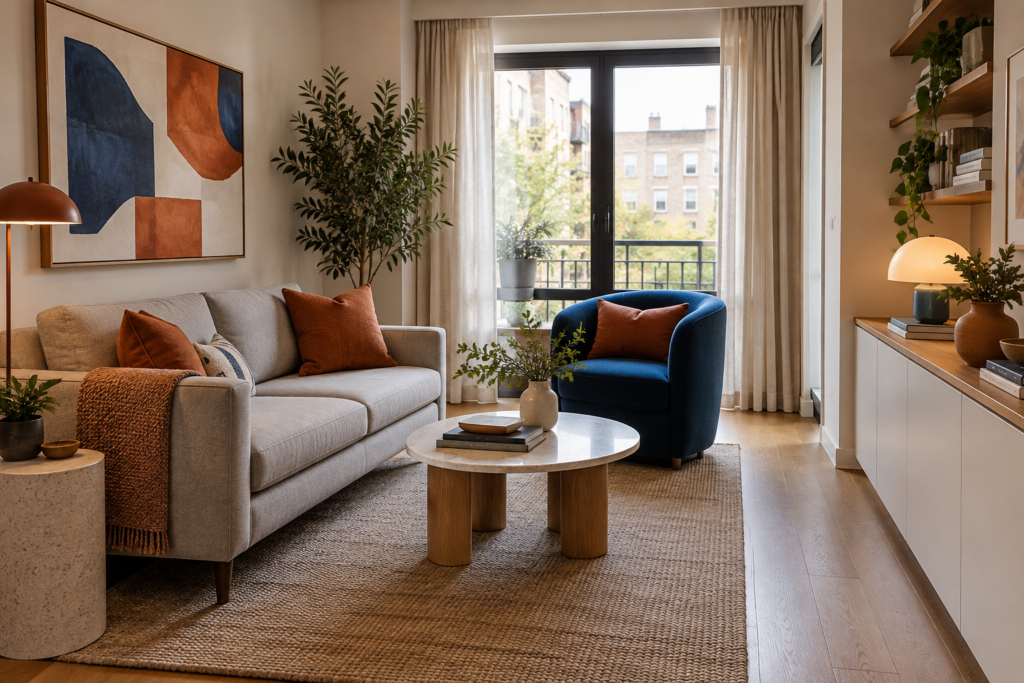 Example|Image Source: ChatGPT
Compare these AI room design prompts by asking which arrangement better suits your routine, rather than choosing only by color.
Also Read: 50 Dessert Photography Prompts for Beautiful Food Photos
AI Room Design Prompts for Restful Bedrooms
A bedroom concept benefits from a clear focal point and a restrained selection of materials. Describe storage, bedside needs, and the relationship between the bed and windows.
Soft Minimal Bedroom Prompt
“Create a realistic bedroom concept with a calm, understated atmosphere. Position a double bed against a warm-white wall with a pale-oak headboard and compact bedside tables. Use layered ivory bedding, muted-sage accents, and full-length linen curtains. Include a simple wardrobe and accessible walking space around the bed. Show gentle morning daylight, tactile materials, and a view from the foot of the bed. Avoid decorative clutter and oversized furniture.”
Cozy Bedroom With a Reading Corner Prompt
“Design a welcoming bedroom concept combining a comfortable sleeping area and a small reading corner. Use oatmeal upholstery, walnut furniture, dusty-blue textiles, and warm cream walls. Place a compact armchair and floor lamp near the window without blocking it. Include closed bedside storage and a softly patterned rug. Render realistic furniture scale and balanced evening lighting. No candles, crowded surfaces, or impossible window reflections.”
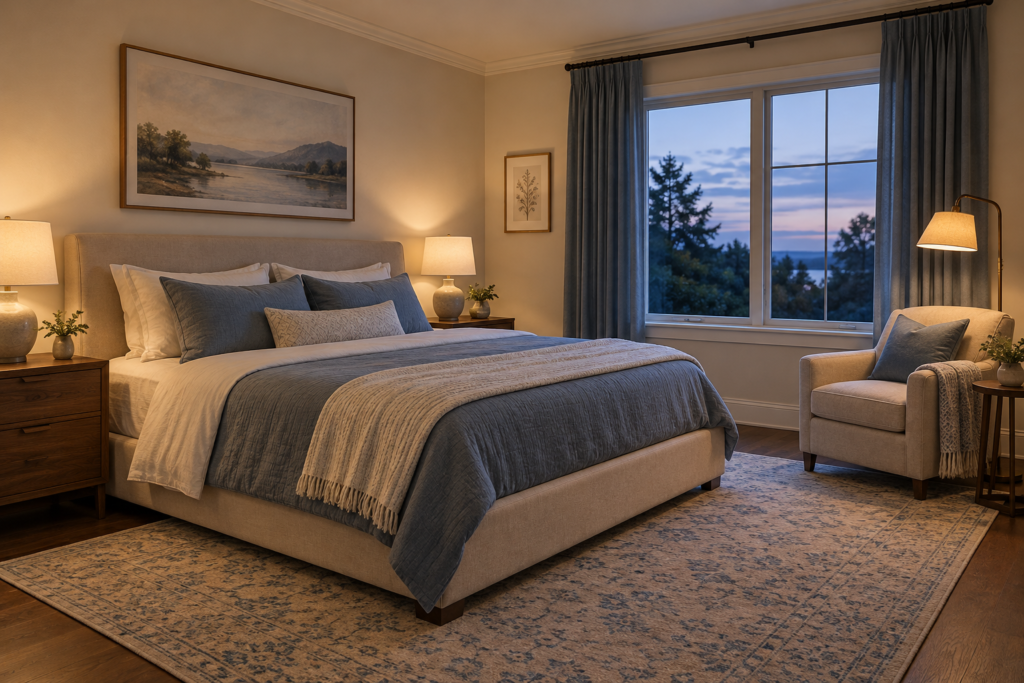 Example|Image Source: ChatGPT
When adapting bedroom AI room design prompts, specify which furniture is essential and which pieces are optional.
AI Room Design Prompts for Kitchens and Dining Areas
Kitchen images need particular care because attractive visuals can conceal impractical arrangements. Use them to explore appearance and atmosphere while keeping actual installation decisions separate.
Warm Modern Kitchen Prompt
“Create a realistic visual concept for a modest modern kitchen with pale-oak lower cabinets, warm-white upper cabinets, and a muted-green backsplash. Include a continuous-looking preparation area, integrated storage, simple metal handles, and restrained countertop accessories. Use soft daylight and a straight-on viewpoint that clearly shows the cabinet arrangement. Keep appliances visually plausible and avoid excessive islands, floating fixtures, or obstructed doorways.”
Relaxed Dining Corner Prompt
“Visualize a small dining area beside a living room. Include a round oak table with four comfortable chairs, a flatwoven rug, and a simple pendant light centered over the table. Use warm-white walls, soft terracotta details, and one framed print. Show enough visible space around the chairs for a believable arrangement. Create a welcoming evening atmosphere with realistic materials and no formal place settings.”
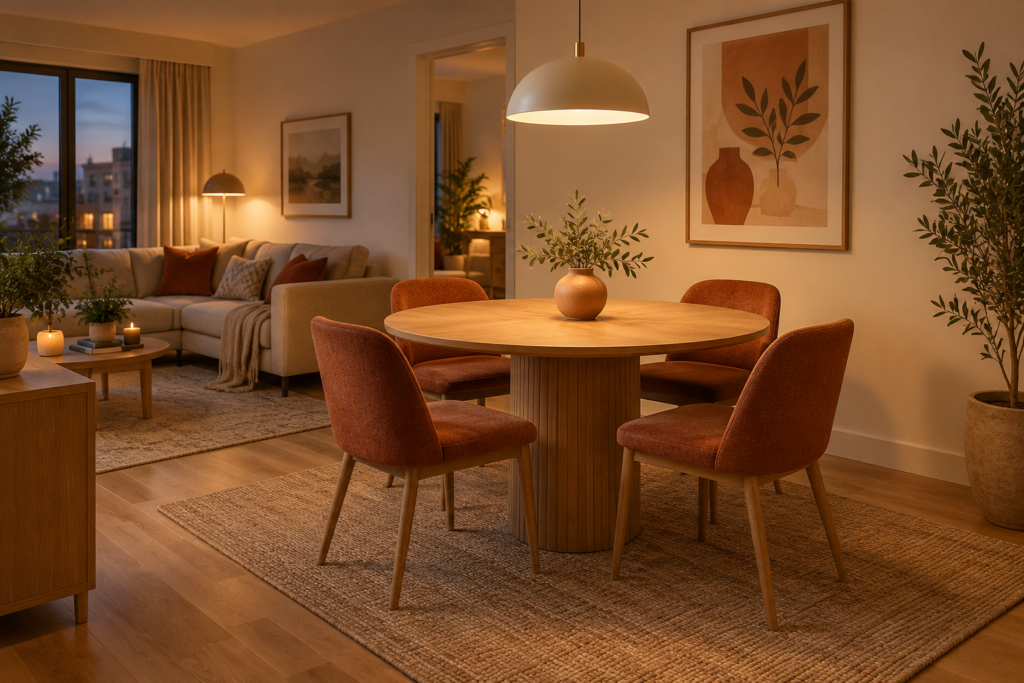 Example|Image Source: ChatGPT
For these AI room design prompts, compare finishes and visual relationships first. An appealing rendering does not establish dimensions or technical feasibility.
AI Room Design Prompts for Productive Home Offices
A home office should reflect the work taking place there. Describe equipment, storage, and the atmosphere you want during a normal working day.
Compact Creative Workspace Prompt
“Create a realistic home-office concept for a graphic designer in a small spare room. Place an oak desk with one monitor perpendicular to a window. Add an adjustable-looking office chair, closed storage, a small pinboard, and shelves holding a restrained selection of books. Use cream, charcoal, muted sage, and a cobalt-blue accent. Show natural daylight, believable cable routing, and a clear doorway. Keep screen content abstract and unreadable.”
Shared Home Workspace Prompt
“Visualize a shared home office for two adults using a long desk along one wall. Provide two distinct work areas, individual task lights, separate drawer storage, and space between the chairs. Use light wood, warm-gray cabinetry, and soft green accents. Include simple window coverings and restrained wall decoration. Show a wide eye-level view with realistic proportions and no duplicated or merged furniture.”
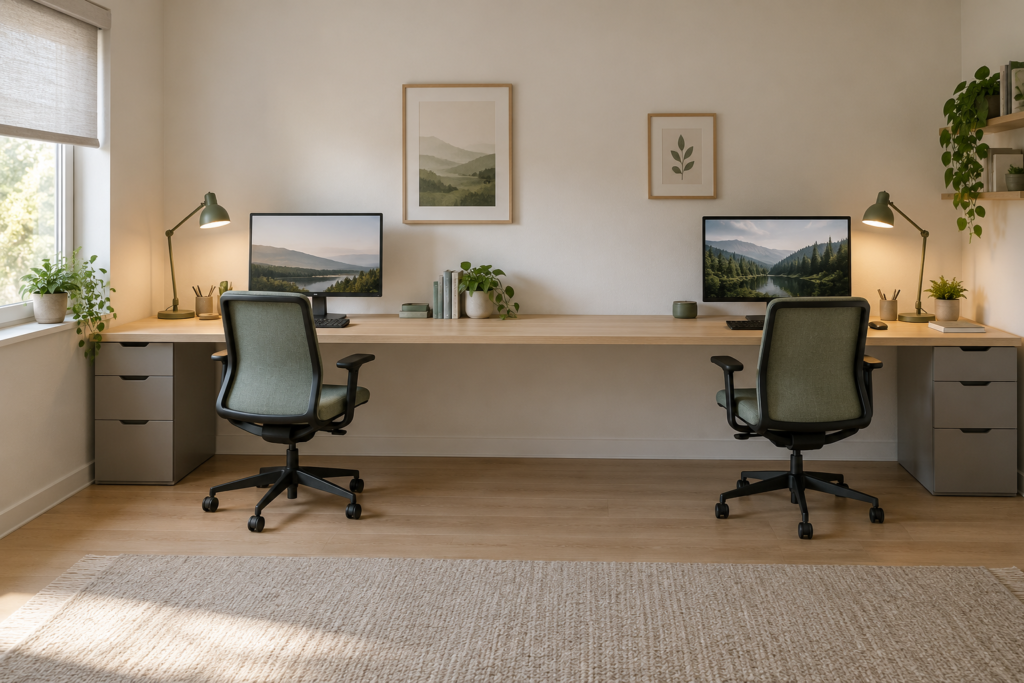 Example|Image Source: ChatGPT
These AI room design prompts become more useful when you specify what must fit, rather than asking only for a stylish workspace.
Also Read: Best Room Design Prompts to Generate Unique Interior Ideas
AI Room Design Prompts for Distinctive Personal Styles
Once the basic layout feels suitable, explore a different visual direction. Keep the room’s purpose and essential furniture consistent so the comparison remains meaningful.
Relaxed Vintage Interior Prompt
“Create a realistic living-room concept with a collected vintage character. Combine a walnut sideboard, a softly curved sofa, a patterned wool rug, and a reading chair with simple lines. Use rust, muted mustard, cream, and dark wood. Include a few personal-looking objects without overcrowding the room. Show natural afternoon light and an inviting, lived-in arrangement. Avoid themed props and excessive distressed finishes.”
Quiet Botanical Interior Prompt
“Visualize a contemporary sitting room inspired by soft botanical colors. Use warm-white walls, olive textiles, pale wood, woven details, and three thoughtfully placed indoor plants. Arrange seating around a simple coffee table and leave the windows visible. Keep the room balanced, airy, and realistic. Show gentle daylight and detailed materials without turning the space into a greenhouse.”
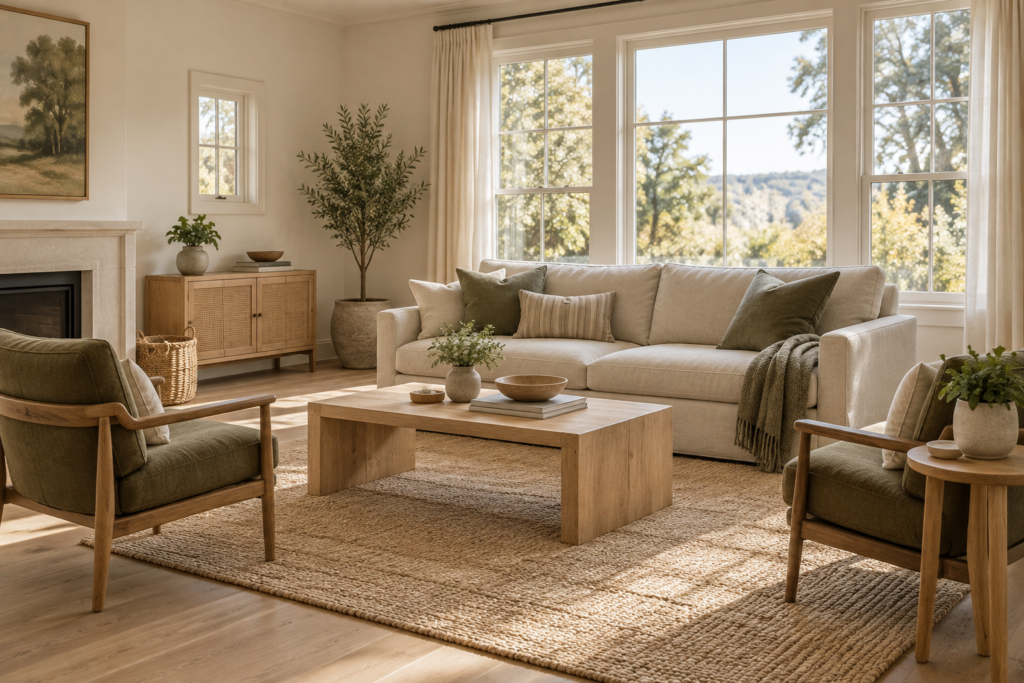 Example|Image Source: ChatGPT
Use these AI room design prompts to identify specific preferences. You may discover that you like one palette but prefer another room’s furniture shapes.
Refine AI Room Design Prompts One Decision at a Time
After generating an image, review it against your original priorities. Identify what works and what needs to change before writing the next request.
Improve the Room Layout First
Look for blocked doors, crowded furniture, and unclear walking routes. Request one specific adjustment, such as removing a chair or making the coffee table visually smaller.
Adjust Materials and Lighting Next
Once the arrangement is useful, refine finishes. Ask for warmer wood, less reflective surfaces, or softer daylight. Describe the visible change you want instead of using vague phrases such as “make it more premium.”
Keep a Record of Prompt Changes
Save the prompt beside each image and note what you changed. This makes it easier to compare versions and reuse the parts that produced helpful results.
Turn Interior Concepts Into a Clear Visual Brief
The best AI room design prompts help you articulate preferences. Select a few images and write down what you like about each, the seating arrangement, the cabinet color, or the relationship between wood and fabric.
Separate those preferences from details that still need checking. Measure your actual room, confirm furniture dimensions, and consider the practical requirements of any proposed changes.
A short brief might describe the room’s purpose, existing pieces, preferred palette, storage needs, and unresolved questions. That is more useful than collecting many attractive images without explaining why they appeal to you.
Also Read: AI Design Tools for Faster Ideas and Better Content
Conclusion – Create a Room Concept That Feels Like Yours
AI room design prompts provide a starting point for exploring spaces with intention. Clear descriptions of purpose, layout, materials, and lighting make it easier to compare ideas and recognize your preferences.
Begin with one room and a few essential requirements. Generate a concept, review it carefully, and refine one decision at a time.
The most useful result is an image you can explain: what you like, how it connects with your life, and which details need further planning.
For high-quality fonts to boost your income, check out Letter Crafted. Our professional fonts are perfect for branding, marketing, and content creation. So, don’t miss this opportunity.