
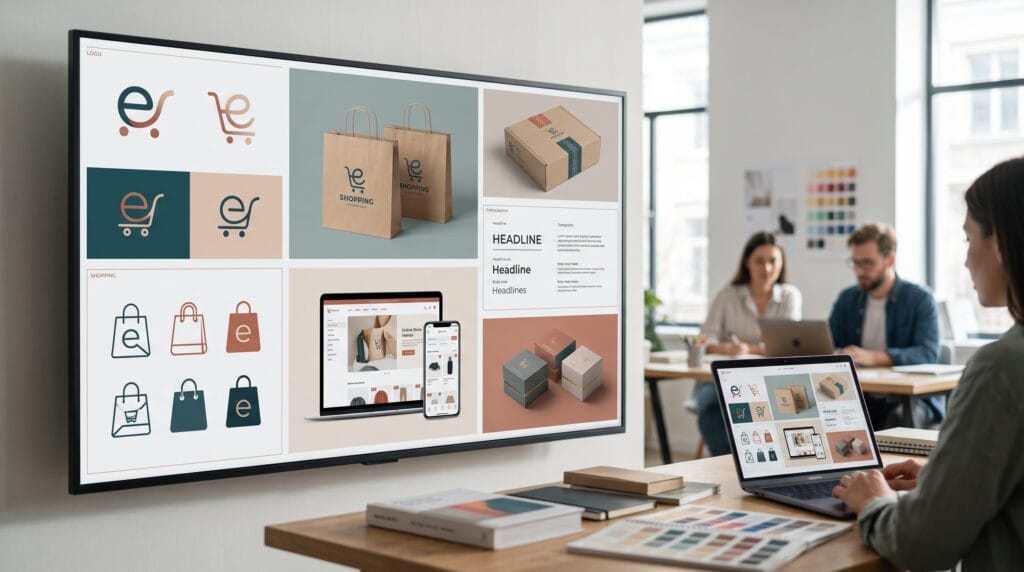
In the highly competitive world of online retail, your logo is often the first thing customers notice. Before they explore your products, compare prices, or read reviews, they form an impression based on your brand identity. A well-designed logo communicates professionalism, builds trust, and makes your business memorable. The best ecommerce logo design ideas combine simplicity, versatility, and strategic branding to create an identity that stands out across websites, mobile apps, social media, packaging, and digital advertising.
Today’s ecommerce businesses compete globally, making strong visual branding more important than ever. Whether you’re launching a fashion store, electronics marketplace, beauty brand, or handmade product shop, your logo should represent your company’s personality and values while appealing to your target audience. This guide presents 25 ecommerce logo design ideas, explains current branding trends, and shares practical design tips for building a successful online brand.
Why Ecommerce Logo Design Matters
A professional logo helps businesses:
- Build customer trust
- Improve brand recognition
- Create memorable first impressions
- Support premium brand positioning
- Increase marketing consistency
- Differentiate from competitors
- Strengthen customer loyalty
A logo becomes the visual foundation of your entire brand.
Characteristics of a Great Ecommerce Logo
Successful ecommerce logos are typically:
- Simple
- Memorable
- Scalable
- Timeless
- Versatile
- Relevant
- Easy to recognize
- Effective in color and monochrome
A clean design performs well across digital and print media.
25 Ecommerce Logo Design Ideas
1. Minimalist Wordmark
A clean text-based logo that emphasizes your brand name.
Best for:
- Fashion brands
- Luxury stores
- Lifestyle businesses
2. Shopping Bag Icon
A shopping bag instantly communicates ecommerce.
Ideal for:
- Online marketplaces
- Retail stores
- General ecommerce businesses
3. Modern Monogram
Use your brand initials to create a sophisticated identity.
Works well for:
- Premium brands
- Designer products
- Boutique stores
4. Geometric Logo
Simple geometric shapes communicate stability and innovation.
Suitable for:
- Technology brands
- Electronics stores
- Modern retailers
5. Abstract Symbol
Abstract logos create unique visual identities.
Ideal for:
- Innovative startups
- Digital-first businesses
- Global brands
6. Negative Space Design
Use hidden shapes to create memorable visual effects.
Benefits include:
- Clever branding
- Strong recall
- Modern appearance
7. Flat Design Logo
Flat logos remain highly effective.
Advantages:
- Fast recognition
- Excellent scalability
- Clean digital appearance
8. Gradient Logo
Subtle gradients create depth while maintaining simplicity.
Popular for:
- Technology
- SaaS
- Creative ecommerce brands
9. Typography-Focused Logo
Elegant typography alone can become a recognizable brand.
Perfect for:
- Fashion
- Beauty
- Premium lifestyle products
10. Circular Badge
Circular logos communicate reliability.
Often used by:
- Coffee brands
- Handmade products
- Artisan businesses
11. Shield Logo
Shields symbolize trust and security.
Suitable for:
- Cybersecurity products
- Financial services
- Premium marketplaces
12. Nature-Inspired Logo
Leaves, mountains, or natural elements reinforce sustainability.
Ideal for:
- Organic brands
- Eco-friendly products
- Outdoor retailers
13. Line Art Logo
Minimal outlines create elegant branding.
Perfect for:
- Home décor
- Jewelry
- Boutique stores
14. Mascot Logo
A friendly mascot adds personality.
Best for:
- Family brands
- Children’s products
- Entertainment
15. Luxury Monochrome Logo
Black-and-white branding creates timeless elegance.
Ideal for:
- Luxury fashion
- Premium accessories
- Designer products
16. Handwritten Logo
Script typography communicates authenticity.
Works well for:
- Handmade products
- Artisan goods
- Creative businesses
17. Icon + Wordmark Combination
Combine a recognizable icon with your business name.
Advantages:
- Flexible branding
- Strong recognition
- Easy scalability
18. Tech-Inspired Logo
Modern symbols communicate innovation.
Suitable for:
- Gadgets
- AI companies
- Software marketplaces
19. Vintage Badge
Retro branding creates nostalgia and authenticity.
Popular for:
- Coffee
- Craft products
- Heritage brands
20. Minimal Animal Symbol
Animals often represent brand personality.
Examples include:
- Owl for wisdom
- Fox for creativity
- Lion for strength
- Eagle for leadership
21. Color Block Logo
Bold color blocks increase visibility.
Excellent for:
- Youth brands
- Startups
- Consumer products
22. Isometric Logo
Three-dimensional geometric concepts create modern appeal.
Often used by:
- Tech startups
- Logistics
- Digital services
23. Initial Letter Icon
Transform the first letter into a unique brand mark.
Simple and highly memorable.
24. Dynamic Motion Logo
Designs that suggest movement create energy.
Great for:
- Delivery services
- Sports brands
- Ecommerce platforms
25. AI-Inspired Modern Logo
Future-focused logos incorporate clean geometric forms and digital aesthetics.
Suitable for:
- AI startups
- SaaS businesses
- Technology brands
Also Read: Simple Logo Design Ideas: Guide for Startups and Shops
Choosing the Right Color Palette
Color psychology influences customer perception.
| Color | Brand Message |
|---|---|
| Blue | Trust, security, reliability |
| Green | Sustainability, health, growth |
| Black | Luxury, elegance |
| Red | Energy, excitement |
| Orange | Creativity, friendliness |
| Purple | Innovation, premium quality |
| Yellow | Optimism, happiness |
| Gray | Professionalism, balance |
Choose colors that align with your audience and brand values.
Typography Tips
Select typography that reflects your business.
Serif Fonts
Best for:
- Luxury
- Heritage
- Premium products
Sans-Serif Fonts
Ideal for:
- Technology
- Ecommerce
- Modern brands
Script Fonts
Suitable for:
- Handmade products
- Boutique brands
- Artisan stores
Limit your logo to one or two complementary fonts for maximum clarity.
Where Your Logo Should Work
An effective ecommerce logo should perform well on:
- Websites
- Mobile apps
- Product packaging
- Shipping boxes
- Social media profiles
- Email newsletters
- Business cards
- Advertisements
- Merchandise
Versatility ensures a consistent brand experience.
Recommended Logo Design Tools
| Tool | Purpose |
| Adobe Illustrator | Professional vector logo design |
| Figma | Collaborative design |
| Canva | Beginner-friendly branding |
| Adobe Photoshop | Mockups and presentations |
| Affinity Designer | Vector illustration |
| CorelDRAW | Professional logo creation |
| Procreate | Hand-drawn concepts |
| Coolors | Color palette generation |
| ChatGPT | Brand naming and messaging ideas |
| Adobe Color | Color harmony exploration |
These tools support every stage of logo creation, from brainstorming to final production.
Also Read: Ecommerce Logo Design That Make Your Brand Look Professional
Common Mistakes of Ecommerce Logo Design Ideas
Avoid these common pitfalls:
- Overly complex designs
- Too many colors
- Trend-driven styles that age quickly
- Low-quality typography
- Poor scalability
- Generic icons
- Inconsistent branding
- Ignoring mobile visibility
Simple, timeless logos generally deliver stronger long-term value.
Frequently Asked Questions
1. What makes a good ecommerce logo?
A successful ecommerce logo is simple, memorable, scalable, versatile, and aligned with your brand’s personality. It should work across digital platforms, packaging, and marketing materials.
2. How many colors should an ecommerce logo use?
Most professional logos use two or three primary colors. A restrained color palette improves recognition and ensures consistent reproduction across different media.
3. Should my ecommerce logo include an icon?
Not necessarily. Many successful brands use wordmarks alone, while others combine typography with a distinctive symbol. The choice depends on your branding strategy and target audience.
4. Why is vector design important?
Vector graphics allow logos to scale without losing quality, making them suitable for everything from website favicons to large-format signage and product packaging.
Ecommerce Logo Design Ideas Checklist
- Define your brand personality
- Research your target audience
- Choose a memorable color palette
- Select professional typography
- Keep the design simple
- Ensure scalability
- Test the logo in black and white
- Create horizontal and vertical variations
- Apply branding consistently
- Review your logo periodically as your business evolves
Best Practices for Ecommerce Logo Design
To get the most from your ecommerce logo design ideas:
- Design with your target audience and brand values in mind.
- Keep the logo simple enough to remain recognizable at any size.
- Choose colors and typography that reinforce your brand personality.
- Create a flexible logo system that works across websites, apps, packaging, and social media.
- Avoid short-lived design trends in favor of timeless visual principles.
- Test your logo on different backgrounds and devices before finalizing it.
- Develop comprehensive brand guidelines to ensure consistency as your business grows.
A thoughtfully designed logo serves as the cornerstone of a strong ecommerce brand and supports long-term customer recognition.
Also Read: Startup Logo Ideas for Payments Apps: Simple and Secure
Conclusion on Ecommerce Logo Design Ideas
The best ecommerce logo design ideas combine creativity, strategic thinking, and timeless design principles to create memorable brand identities. Whether you choose a minimalist wordmark, a modern monogram, an abstract icon, or a bold geometric design, your logo should communicate trust, professionalism, and your brand’s unique personality. By pairing a well-crafted logo with consistent branding across every customer touchpoint, your ecommerce business can build stronger recognition, increase customer confidence, and create a solid foundation for long-term growth.
For high-quality fonts to boost your income, check out Letter Crafted. Our professional fonts are perfect for branding, marketing, and content creation. So, don’t miss this opportunity.