
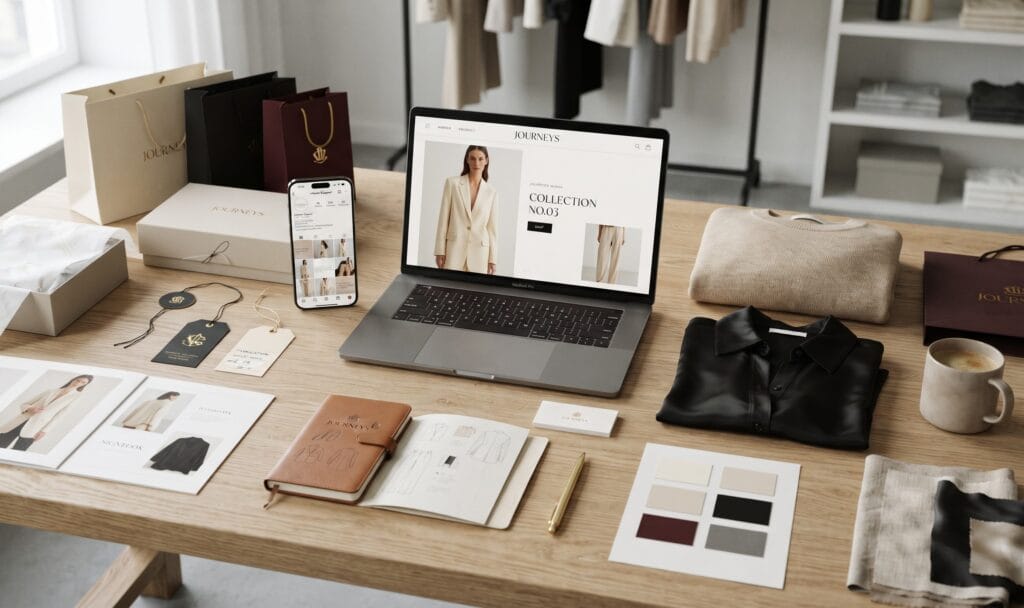
Fashion branding ideas can help clothing labels, accessory businesses, and fashion startups create a stronger identity that customers can recognize across products, packaging, websites, social media, and retail experiences. Fashion is highly visual, but professional branding involves much more than creating an attractive logo. Every detail should communicate a consistent personality and help customers understand what makes the brand different.
A fashion brand may need to communicate:
- Luxury
- Minimalism
- Youthfulness
- Sustainability
- Street culture
- Elegance
- Craftsmanship
- Innovation
- Comfort
The visual direction should reflect the market the business wants to serve.
A premium clothing label should not feel identical to a playful streetwear brand.
Likewise, a handmade accessories company may need a different tone from a performance sportswear business.
The following fashion branding ideas can help create a more polished, consistent, and memorable identity.
Start Fashion Branding Ideas With Clear Positioning
Before designing a logo or choosing colors, define the brand.
Ask:
- Who is the ideal customer?
- What style does the brand represent?
- What price level does it occupy?
- What makes the products different?
- How should customers feel when they see the brand?
A useful positioning statement might be:
Modern essentials for professionals who want simple, versatile clothing.
Another could be:
Bold streetwear for customers who want expressive graphics and limited collections.
These statements guide future design decisions.
Without clear positioning, fashion branding ideas can easily become a collection of attractive but disconnected visuals.
Define a Fashion Brand Personality
Brands feel more consistent when they have a recognizable personality.
Choose several words that describe the desired identity.
For example:
- Elegant, refined, timeless, understated
- Bold, energetic, rebellious, youthful
- Natural, soft, comfortable, conscious
These words can guide:
- Logo design
- Typography
- Photography
- Packaging
- Website design
- Social media
Before approving a new design element, ask whether it matches the chosen personality.
Fashion Branding Ideas for Logo Design
The logo is an important part of fashion identity because it may appear on:
- Clothing labels
- Hang tags
- Packaging
- Websites
- Social media
- Embroidery
- Buttons
- Accessories
Fashion logos often benefit from simplicity because they must work at many sizes.
A complicated logo may look impressive on a website but become difficult to use on a small garment label.
Create a Flexible Logo System
Instead of designing only one logo, create several related versions.
A useful system might include:
- Primary wordmark
- Secondary logo
- Monogram
- Small symbol
The primary wordmark can appear on the website.
A monogram may work better on a zipper, label, or social profile.
A flexible system makes the identity easier to apply consistently.
Fashion Branding Ideas for Typography
Typography can communicate fashion positioning before customers even examine the clothing.
A refined serif typeface may feel:
- Elegant
- Editorial
- Premium
A clean sans serif may communicate:
- Modern
- Minimal
- Contemporary
Bold display typography may work well for:
- Streetwear
- Youth fashion
- Experimental brands
The goal is not choosing the most decorative font.
Choose typography that supports the brand personality.
Build a Consistent Typography System
Define fonts for:
- Logo or display type
- Headlines
- Body text
Keep the system simple.
Using several unrelated fonts can make the brand feel inconsistent.
Typography should remain recognizable across product pages, lookbooks, emails, and social posts.
Build a Distinctive Color Palette
Color is one of the fastest ways customers recognize a brand.
Create a controlled palette rather than choosing different colors for every campaign.
A fashion palette might include:
- Primary color
- Secondary color
- Neutral background
- Accent color
For example:
- Black + cream + burgundy could feel sophisticated.
- White + cobalt blue + silver could feel more modern.
- Beige + sage + warm brown could support a natural lifestyle direction.
Strong fashion branding ideas use color intentionally rather than following trends without a strategy.
Use Neutrals to Support Fashion Products
Fashion photography often contains many colors and textures.
Neutral brand colors can provide a stable background.
Common choices include:
- White
- Black
- Cream
- Gray
- Beige
These colors allow garments to remain the visual focus.
Accent colors can then be introduced through:
- Buttons
- Packaging
- Campaign graphics
- Seasonal collections
A neutral foundation can also make the brand easier to adapt across changing collections.
Fashion Branding Ideas for Photography
Photography strongly influences how customers perceive fashion products.
Two brands could sell similar clothing but feel completely different because of photography.
Define a clear visual style.
Consider:
- Lighting
- Locations
- Models
- Cropping
- Poses
- Backgrounds
- Editing
- Color treatment
A luxury brand might use dramatic editorial photography.
A casual lifestyle label may use natural outdoor images.
A minimalist brand could use simple studio backgrounds.
Create Photography Guidelines
Document basic rules such as:
- Preferred lighting
- Background colors
- Model poses
- Image ratios
- Editing style
- Product crops
This helps different photographers produce work that still feels connected to the same brand.
Also Read: Holiday Branding Ideas for Christmas, New Year, and More
Build a Recognizable Art Direction
Art direction combines typography, photography, color, and layout into one visual language.
A strong fashion campaign should feel recognizable even before customers see the logo.
For example, you might consistently use:
- Large editorial headlines
- Cropped fashion photography
- Generous white space
- Small product details
Another brand might use:
- Bright colors
- Collage layouts
- Flash photography
- Hand-drawn graphics
Consistency in art direction helps fashion branding ideas become a recognizable system.
Fashion Branding Ideas for Packaging
Packaging extends the fashion experience beyond the product.
Customers may interact with:
- Shipping boxes
- Shopping bags
- Tissue paper
- Stickers
- Thank-you cards
- Garment tags
These details can strengthen the impression of quality.
You do not need expensive packaging for every brand.
Even simple packaging can feel professional when colors, materials, typography, and messaging remain consistent.
Design Better Fashion Hang Tags
Hang tags are small but important brand touchpoints.
They may contain:
- Logo
- Product details
- Size
- Materials
- Care information
- Website
- Social information
Keep the layout clean.
Avoid trying to fit too much information onto one small card.
Hang tags should feel like part of the visual identity, not an afterthought.
Create Better Clothing Labels
Garment labels need to work at very small sizes.
This makes simple logo versions especially useful.
Consider how the label will appear:
- Inside clothing
- On accessories
- On hats
- On bags
A highly detailed logo may become unreadable.
Testing the identity on small physical applications should happen early in the branding process.
Fashion Branding Ideas for Website Design
A fashion website should visually support the products rather than compete with them.
Focus on:
- Strong product imagery
- Clear categories
- Simple navigation
- Readable product details
- Easy checkout
- Mobile usability
Avoid adding complicated animations simply because they look fashionable.
A website should help customers browse and purchase.
Create Strong Product Pages
A professional product page should make important information easy to find.
Include:
- Product name
- Price
- Images
- Size options
- Description
- Materials
- Care details
- Shipping information
The design should remain consistent with the wider fashion identity.
Fashion Branding Ideas for Social Media
Social media often becomes the most visible part of a fashion brand.
Instead of posting random content, create recognizable categories.
These might include:
- Campaign photography
- Product details
- Behind-the-scenes content
- Styling ideas
- Customer photos
- New collection announcements
A consistent visual system can help the feed feel professional without making every post identical.
Create Reusable Social Templates
Templates are useful for:
- Product launches
- Sale announcements
- Quotes
- Collection previews
- Stories
Define:
- Typography
- Colors
- Spacing
- Image treatment
This allows teams to produce content faster while maintaining brand consistency.
Create a Clear Fashion Brand Voice
Branding also includes language.
Decide how the brand communicates.
- A luxury label may sound refined and concise.
- A streetwear brand may use more casual language.
- A sustainable fashion company may focus on transparency and materials.
Define several voice principles.
For example:
- Clear
- Confident
- Warm
Then apply them to:
- Product descriptions
- Emails
- Social captions
- Packaging
- Customer support
Visual identity and voice should feel like parts of the same personality.
Use Storytelling to Strengthen Fashion Branding
Fashion customers often connect with more than products.
They may also connect with:
- Founder story
- Craftsmanship
- Cultural inspiration
- Design philosophy
- Materials
- Production process
Use storytelling where it genuinely supports the brand.
For example, a handmade fashion business could show:
Sketch → Material selection → Production → Finished garment
This creates context around the product.
Good storytelling makes fashion branding feel more meaningful.
Also Read: Seasonal Summer Branding Trends for Better Brand Engagement
Fashion Branding Ideas for Collection Launches
Each new collection can have its own creative direction while remaining connected to the main brand.
A collection may introduce:
- New colors
- Photography
- Campaign graphics
- Seasonal themes
However, core elements should remain recognizable.
Keep important parts consistent, such as:
- Logo
- Typography
- Brand voice
- General art direction
This balance allows the brand to evolve without losing recognition.
Build a Consistent Customer Experience
Professional fashion branding extends beyond visuals.
Think about the full customer journey:
Social media → Website → Checkout → Packaging → Product → Support
Each stage should feel connected.
If the website feels premium but the packaging feels careless, the experience becomes inconsistent.
Likewise, beautiful packaging cannot compensate for poor customer service.
Strong fashion branding ideas consider the entire experience.
Use Collaborations Carefully
Fashion brands often collaborate with:
- Artists
- Influencers
- Designers
- Other brands
Collaborations can introduce the brand to new audiences.
However, the partner should make sense for the identity.
Choose collaborations based on:
- Shared audience
- Similar values
- Complementary style
Do not collaborate simply because another account has a large following.
The collaboration should strengthen the brand rather than confuse its positioning.
Avoid Following Every Fashion Trend
Trends can provide inspiration, but constantly changing the identity can weaken recognition.
A brand that redesigns its typography, colors, photography, and packaging every season may become difficult to recognize.
Keep a stable foundation.
Then use trends selectively in:
- Campaigns
- Photography
- Seasonal graphics
This allows the identity to remain current without becoming temporary.
Common Fashion Branding Mistakes
Inconsistent Visual Identity
Random fonts, colors, and photography reduce recognition.
Designing Only a Logo
A brand needs a complete identity system.
Copying Competitors
Similarity makes it harder to stand out.
Ignoring Packaging
Physical touchpoints influence perceived quality.
Poor Product Photography
Images are central to fashion ecommerce.
Unclear Positioning
Customers should understand who the brand is for.
Weak Website Experience
Fashion branding should support shopping, not make it harder.
Following Every Trend
Build a long-term identity instead.
Fashion Branding Ideas Checklist
Before finalizing your identity, review:
- Clear positioning
- Defined audience
- Brand personality
- Primary logo
- Secondary logo
- Monogram or symbol
- Typography system
- Color palette
- Photography direction
- Art direction
- Packaging
- Hang tags
- Clothing labels
- Website design
- Product pages
- Social templates
- Brand voice
- Collection campaigns
- Customer experience
- Brand consistency
Not every fashion company needs the same system, but these elements provide a strong foundation.
Also Read: Brand Strategy You Should Follow for Better Results
Final Thoughts
Strong fashion branding ideas combine strategy, visual identity, and customer experience.
Start by understanding the audience.
Define the positioning.
Create a clear personality.
Then build a visual system around that foundation.
Use a flexible logo.
Choose typography that reflects the brand.
Create a controlled color palette.
Develop consistent photography.
Pay attention to packaging and garment details.
Keep social media and website design connected to the wider identity.
Most importantly, think beyond individual design elements.
Customers experience a fashion brand through many touchpoints.
Every photograph, label, product page, package, email, and social post contributes to the overall impression.
Professional fashion branding does not require every element to look identical.
It requires them to feel related.
When positioning, visual identity, messaging, products, and customer experience work together, fashion branding ideas become more than decoration.
They create a recognizable system that can help the brand feel more professional, memorable, and consistent as it grows.
For high-quality fonts to boost your income, check out Letter Crafted. Our professional fonts are perfect for branding, marketing, and content creation. So, don’t miss this opportunity.