
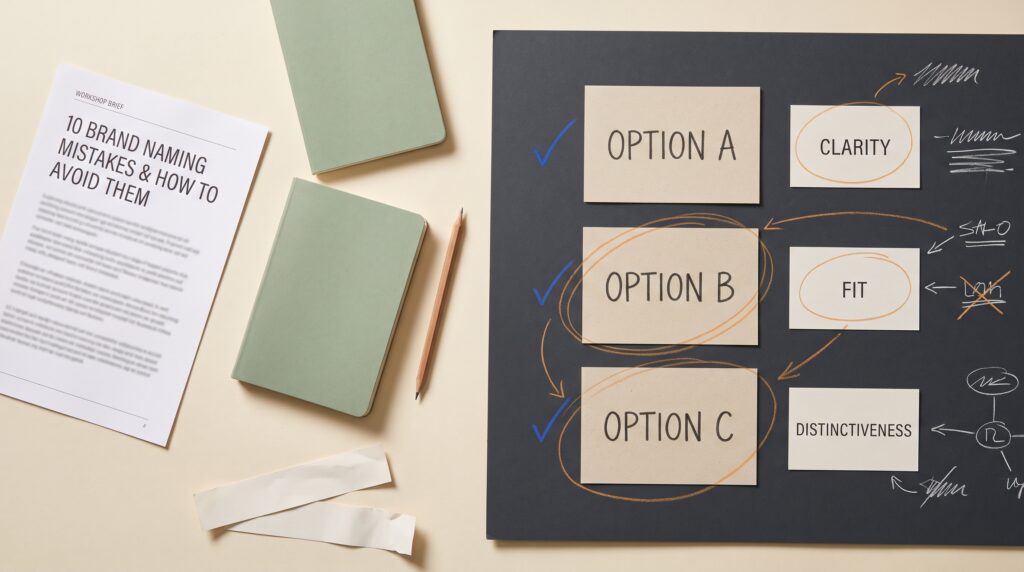
Brand naming mistakes can make a promising business harder to explain, remember, or recommend. A name might look attractive in a logo but confuse people when spoken aloud. Another may describe the first product perfectly while leaving little room for future plans. Naming becomes easier when you evaluate ideas against practical criteria instead of relying entirely on first impressions.
A useful name should fit your business, work in everyday situations, and give customers a manageable way to identify you. This guide explores ten common mistakes and practical exercises for avoiding them. The goal is a thoughtful shortlist you can investigate further before committing to a final choice.
1. Brand Naming Mistakes Start Without a Clear Brief
Brainstorming without direction can produce plenty of ideas and very little agreement. One person favors something playful, another wants a formal name, and nobody knows which approach suits the business.
Without a brief, your shortlist becomes a collection of personal preferences rather than purposeful options.
How to avoid an unclear naming direction
Write a short brief before generating names. Describe the offer, primary audience, intended personality, and likely business direction.
Include practical requirements, such as the languages in which the name needs to work. Also identify characteristics you want to avoid.
For example, a name for a cheerful family bakery may need a different tone from one for a specialized business consultancy.
Use the brief as a reference throughout the process.
2. Choosing a Name Only Because You Like It
Personal enthusiasm matters, especially when you will use the name daily. However, liking an idea does not tell you how customers will interpret it.
A private joke or meaningful reference may communicate very little to someone encountering the business for the first time.
These brand naming mistakes happen when emotional attachment replaces evaluation.
How to balance preference with purpose
Ask what the name suggests without its backstory. Does that impression support the business, or does it require a lengthy explanation?
Keep the personal meaning if it adds value, but assess pronunciation, clarity, and audience fit separately.
Write down why each shortlisted name works. “It sounds nice” can begin the discussion, but it should not end it.
3. Brand Naming Mistakes Make Spelling Needlessly Difficult
Invented spellings can create a distinctive appearance, but they may also require repeated correction. A customer hearing the name aloud might not know how to write or search for it.
Repeated letters, ambiguous sounds, and unexpected substitutions deserve particular attention.
How to test spelling and pronunciation
Say the name to someone without showing it. Ask them to write what they heard. Then show the written name to another person and ask them to pronounce it.
Notice patterns rather than treating one response as decisive.
If several people make the same mistake, consider whether the distinction is worth the explanation. Test the name in realistic sentences, including a phone introduction and a spoken recommendation.
4. Making the Name So Generic It Becomes Forgettable
A broadly descriptive phrase can explain the category while giving people little to remember. Several businesses may sound similar when they combine familiar words in predictable ways.
This does not mean every name must be invented. The issue is whether your choice has enough character to help people identify it.
How to create a more recognizable option
Explore different naming approaches, including suggestive words, meaningful combinations, and names built around a distinctive idea.
Compare the shortlist with the language commonly used in your category. Ask what makes each option stand apart.
To avoid brand naming mistakes, look for a balance between understandable associations and an identifiable character. A supporting description can explain the offer when the name itself is less literal.
Also Read: Unique Brand Name Ideas Every Creator Should Know
5. Brand Naming Mistakes Copy Competitors Too Closely
A name that resembles an established competitor may feel comfortably familiar. However, similar wording, rhythm, or spelling can make your business harder to distinguish.
The resemblance may also lead customers to assume a connection you did not intend.
How to develop an independent direction
Review competitor names to understand the landscape, then identify patterns you want to move away from.
Compare more than exact spelling. Read the names aloud and consider their overall impression.
If your idea depends on reminding people of another business, return to the brief. Look for language connected with your own audience, approach, or personality.
Create a shortlist that can support an independent story rather than borrowing recognition from someone else.
6. Choosing a Name That Limits Future Growth
A name can become restrictive when it refers narrowly to one product, location, or delivery method. That specificity may work well initially but feel awkward when the offer changes.
For example, a name centered on cupcakes may need reconsideration if the business already plans to develop a much broader menu.
How to check room for growth
List the realistic changes you may make over the next few years. Avoid building around every imaginable possibility, focus on plans you genuinely expect to explore.
Place each shortlisted name beside those future offers.
These brand naming mistakes are easier to spot when you test the name in context. Does it still sound suitable on a broader product range, a new service page, or a second location?
7. Brand Naming Mistakes Ignore Language and Cultural Context
A name may carry associations beyond the meaning you intended. This becomes especially relevant when your business serves people across different languages or regions.
Automated translations alone cannot explain every nuance, pronunciation issue, or informal association.
How to review the intended meaning
Identify the markets and languages that matter to your business. Ask relevant language speakers how they interpret and pronounce the name.
Give them space to respond before explaining your preferred meaning. Otherwise, your explanation may influence the feedback.
Document concerns and investigate them rather than dismissing unfamiliar reactions.
You do not need a name that means the same thing everywhere. You do need to understand how it is likely to be received where you intend to use it.
8. Selecting a Name Before Reviewing Its Availability
Falling in love with a name before investigating its existing use can make later changes frustrating and expensive. A logo, packaging design, and launch announcement create additional attachment.
Another problem is assuming that an available web address answers every question about whether a name is suitable to adopt.
How to keep evaluation in the right order
Treat the shortlist as provisional while you investigate existing businesses and relevant uses. Review digital identifiers, potential confusion, and any professional checks appropriate to your situation.
Keep the findings separate, a domain search answers a different question from a review of brand rights.
Avoid brand naming mistakes by delaying major production commitments until the necessary checks are complete. Keep alternatives available rather than building the whole launch around one unconfirmed choice.
Also Read: Best Aesthetic Brand Names to Build a Strong Visual Identity
9. Brand Naming Mistakes Skip Everyday Use Testing
A name can look convincing on a presentation slide while performing poorly in ordinary situations. It might be too long for a small label or sound unclear during an introduction.
Testing only a polished logo can hide those difficulties.
How to test realistic applications
Place each shortlisted name in a simple email signature, product label, website header, and social profile mockup.
Read it in sentences such as, “Thanks for contacting…” and “I ordered this from…”
Use plain typography first so decorative lettering does not influence the evaluation.
Check whether the name remains recognizable at small sizes and whether people can separate its words correctly. Record the problems before deciding whether design adjustments can reasonably solve them.
10. Asking for Votes Without Clear Evaluation Criteria
A public poll may produce a favorite, but the result does not explain whether the name fits your business. People may vote for the funniest or most familiar option.
Feedback becomes harder to interpret when participants receive different explanations or see names in different visual treatments.
How to gather useful naming feedback
Ask people who resemble your intended audience to review the same presentation.
Use questions such as, What kind of business would you expect? How would you pronounce this? What do you remember after seeing the options?
These brand naming mistakes become easier to avoid when you look for repeated interpretations rather than collecting votes alone.
Combine feedback with the brief and your practical checks. The final decision needs a reason you can explain.
Build a Shortlist That Helps You Avoid Brand Naming Mistakes
Keep the shortlist small enough to examine carefully. A simple comparison table can make the discussion more focused.
| Evaluation area | Question to ask |
|---|---|
| Business fit | Does the name support the intended offer and personality? |
| Spoken clarity | Can people say and understand it comfortably? |
| Written clarity | Can people recognize and spell it? |
| Distinctiveness | Does it have an identifiable character? |
| Growth | Does it fit realistic future plans? |
| Context | Have relevant language associations been explored? |
| Practical use | Does it work across everyday applications? |
Add notes and unresolved questions beside each option. Avoid relying on a total score alone, because a serious concern may deserve more attention than several minor strengths.
Also Read: Brand Name for Clothing Guide for Better Branding Results
Conclusion – Make a Naming Decision You Can Explain
Avoiding brand naming mistakes means giving the process enough structure to balance creativity with practical judgment.
Start with a brief, explore several directions, and test a manageable shortlist. Pay attention to repeated misunderstandings and complete the appropriate investigations before investing heavily in production.
A useful final decision should explain why the name suits your business, how people respond to it, and where its limitations lie.
You do not need a name that tells your entire story. Choose one that gives your business a clear, workable starting point for telling that story consistently.
For high-quality fonts to boost your income, check out Letter Crafted. Our professional fonts are perfect for branding, marketing, and content creation. So, don’t miss this opportunity.