
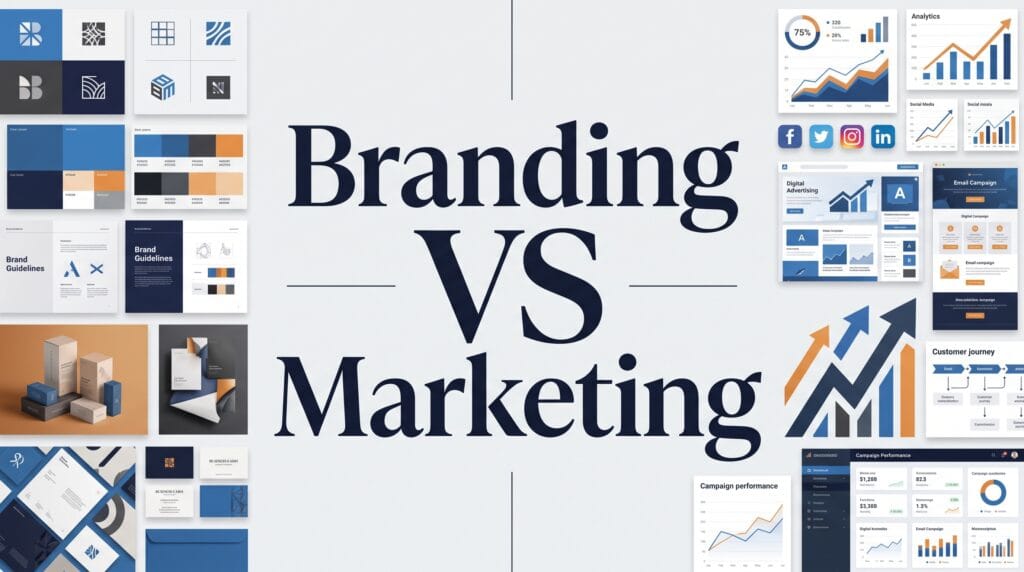
Branding vs Marketing is an important comparison for every small business owner who wants to attract customers, build trust, and create long-term growth. Although people often use these terms interchangeably, branding and marketing serve different purposes within a business strategy.
Branding defines who your business is, what it represents, and how people should feel when interacting with it. Marketing describes the activities you use to promote that business, communicate with potential customers, and encourage them to take action.
A business can launch many advertisements and social media campaigns, but those efforts may feel inconsistent without a strong brand. Similarly, an attractive brand identity may not produce sales if the business never promotes its products or services.
Understanding Branding vs Marketing helps small businesses decide where to invest their time, budget, and creative energy. This guide explains the key differences, practical examples, common mistakes, and how branding and marketing work together.
What Is Branding?
Branding is the process of shaping how people recognize, understand, and remember your business. It includes the visual identity of the company, but it goes much deeper than a logo, color palette, or font selection.
Your brand represents the complete perception customers have of your business.
Branding can include:
- Business name
- Logo and visual identity
- Brand colors
- Typography
- Mission and values
- Brand personality
- Tone of voice
- Customer experience
- Product quality
- Packaging
- Website design
- Brand story
- Market positioning
Strong branding helps customers understand what makes a business different from its competitors. It creates familiarity and gives people a reason to remember, trust, and choose the company.
For example, a small coffee shop may build its brand around locally sourced ingredients, a warm neighborhood atmosphere, friendly service, and sustainable packaging. Its marketing activities may change throughout the year, but its core brand identity should remain recognizable.
What Is Marketing?
Marketing is the process of promoting products, services, or offers to reach a specific audience and achieve a business objective. While branding establishes the identity of the company, marketing communicates that identity through campaigns and customer touchpoints.
Marketing activities may include:
- Social media posts
- Search engine optimization
- Paid advertising
- Email campaigns
- Blog content
- Video marketing
- Influencer partnerships
- Public relations
- Product promotions
- Events
- Direct mail
- Referral programs
- Sales funnels
Marketing is often connected to measurable goals, such as generating website traffic, increasing leads, growing an email list, or producing sales.
A local coffee shop might use Instagram advertisements to promote a seasonal drink. It could also send discount emails, publish blog content about coffee brewing, or partner with local creators. Those activities are marketing efforts designed to attract attention and encourage action.
Branding vs Marketing: What Is the Main Difference?
The simplest way to understand Branding vs Marketing is this:
Branding defines who you are. Marketing tells people about it.
Branding creates the foundation of the business. Marketing uses that foundation to communicate with the market.
Branding answers questions such as:
- Who are we?
- What do we believe?
- What makes us different?
- How should customers feel about us?
- What experience do we want to provide?
- Why should people trust us?
Marketing answers questions such as:
- Who are we trying to reach?
- Where can we find them?
- What message will attract their attention?
- Which channels should we use?
- What offer should we promote?
- What action should customers take?
Branding is usually long-term and consistent. Marketing is more flexible and may change based on products, seasons, trends, platforms, or customer behavior.
Branding vs Marketing Comparison Table
| Area | Branding | Marketing |
|---|---|---|
| Main purpose | Shape business identity and perception | Promote products and generate action |
| Primary focus | Trust, recognition, and loyalty | Awareness, leads, and sales |
| Time frame | Long-term | Short- and medium-term |
| Key question | Who are we? | How do we reach customers? |
| Common elements | Logo, values, voice, positioning | Ads, content, email, SEO, campaigns |
| Measurement | Recognition, loyalty, reputation | Traffic, conversions, leads, revenue |
| Frequency of change | Relatively stable | Changes frequently |
| Emotional role | Builds connection | Creates attention and urgency |
This Branding vs Marketing comparison shows that the two strategies have different responsibilities, but they support the same overall business goals.
Why Branding Comes Before Marketing
Small businesses often begin by creating social media accounts or running advertisements before defining their brand. This approach may generate some attention, but it can also produce inconsistent messaging.
Branding should usually come first because marketing needs a clear identity to promote.
Before launching major campaigns, a business should understand:
- Its target audience
- Its primary value proposition
- Its competitive difference
- Its mission and values
- Its visual style
- Its communication style
- The customer experience it promises
Without these elements, every campaign may look and sound different. Customers may struggle to understand what the business offers or why they should choose it.
A strong brand gives marketing teams clear creative direction. It helps them select appropriate images, write consistent copy, communicate benefits, and maintain a recognizable presence across platforms.
Also Read: Brand Name Ideas for New Businesses: 300 Options
Branding vs Marketing Examples for Small Businesses
Practical examples make the Branding vs Marketing distinction easier to understand.
Local Bakery
The bakery’s branding includes:
- A warm, handmade personality
- Soft cream and brown colors
- Rustic packaging
- Friendly communication
- A focus on traditional recipes
- A commitment to local ingredients
Its marketing includes:
- Instagram posts showing new pastries
- Email promotions for holiday gift boxes
- Local search engine optimization
- Discount cards
- Catering advertisements
- Seasonal product launches
The brand creates the bakery’s identity, while marketing brings that identity to potential customers.
Freelance Graphic Designer
The designer’s branding includes:
- A modern visual identity
- A clear portfolio style
- A professional tone of voice
- A specialization in startup branding
- Consistent proposal and presentation templates
The designer’s marketing includes:
- Sharing case studies on LinkedIn
- Publishing design tutorials
- Sending outreach emails
- Running portfolio advertisements
- Asking previous clients for referrals
Branding makes the designer recognizable and credible. Marketing helps new clients discover the service.
Online Skincare Business
The skincare company’s branding includes:
- Clean and natural positioning
- Minimal packaging
- Earthy colors
- Educational messaging
- Transparent ingredient information
Its marketing includes:
- Product demonstration videos
- Influencer collaborations
- Search advertisements
- Customer review campaigns
- Abandoned-cart emails
- Limited-time product bundles
The marketing campaigns may change regularly, while the brand identity remains consistent.
How Branding Builds Long-Term Value
In the Branding vs Marketing discussion, branding is often associated with long-term business value.
A recognizable brand can help a small business:
- Earn customer trust
- Create emotional connections
- Support premium pricing
- Increase customer loyalty
- Generate referrals
- Reduce dependence on discounts
- Enter new markets more easily
- Build a stronger reputation
Customers do not always choose the least expensive option. They may choose the business that feels more credible, familiar, relevant, or aligned with their values.
Strong branding can make a small company appear more established and professional. It also helps customers know what to expect whenever they purchase a product, visit a website, or contact customer service.
How Marketing Produces Business Growth
Marketing helps transform brand awareness into measurable opportunities.
A strong marketing strategy can help a business:
- Reach new audiences
- Generate website traffic
- Educate potential customers
- Promote new products
- Increase sales
- Build an email list
- Encourage repeat purchases
- Test different offers
- Understand customer behavior
Unlike branding, many marketing activities have direct calls to action. A campaign may ask users to purchase a product, request a quote, subscribe to a newsletter, download a resource, or book a consultation.
Marketing performance can be measured through metrics such as:
- Website visits
- Search rankings
- Social media engagement
- Cost per click
- Conversion rate
- Email open rate
- Lead volume
- Sales revenue
- Customer acquisition cost
- Return on advertising spend
These measurements help small businesses improve campaigns and allocate their budgets more effectively.
How Branding and Marketing Work Together
The most productive way to think about Branding vs Marketing is not to choose one over the other. Successful businesses use both.
Branding gives marketing a consistent identity. Marketing gives branding visibility.
For example, imagine a small sustainable clothing brand. Its brand strategy may emphasize ethical production, timeless design, durable materials, and responsible consumption.
Its marketing strategy could communicate those values through:
- Educational blog posts
- Behind-the-scenes production videos
- Customer testimonials
- Email newsletters
- Search engine content
- Social media campaigns
- Product launches
Every marketing activity should reinforce the same brand promise. When branding and marketing are aligned, customers receive a clear and consistent message.
Branding vs Marketing: Which Should Small Businesses Prioritize?
Small businesses need both, but the order matters.
Begin by creating a clear brand foundation. You do not need an expensive brand strategy to start, but you should define the essentials:
- Who is your ideal customer?
- What problem does your business solve?
- What makes your offer different?
- What values guide your company?
- What personality should your brand express?
- How should customers feel after interacting with you?
Once those answers are clear, build a simple marketing plan.
Choose marketing channels based on where your customers spend time. A business does not need to use every platform. A focused strategy using two or three effective channels is often better than an inconsistent presence across ten platforms.
Also Read: Branding Trends 2026: How Brands Build Trust Now
Common Branding Mistakes
1. Treating a Logo as the Entire Brand
A logo is an important visual element, but it does not define the complete customer experience. Branding also includes communication, values, service, positioning, and reputation.
2. Copying Competitors Too Closely
Competitor research is useful, but imitation makes a brand harder to remember. Small businesses should identify a genuine point of difference.
3. Changing the Brand Too Often
Constantly changing colors, fonts, messages, or tone can weaken recognition. Update the brand when necessary, but maintain consistency across customer touchpoints.
4. Ignoring Customer Experience
A professional visual identity cannot compensate for poor service, confusing policies, or low-quality products. Every customer interaction contributes to the brand.
Common Marketing Mistakes
1. Marketing Without a Clear Audience
Trying to reach everyone often creates generic messaging. Define a specific audience and understand its needs before developing campaigns.
2. Focusing Only on Sales
Constant promotional messages can make a business feel transactional. Balance sales content with education, entertainment, inspiration, and customer support.
3. Using Too Many Channels
Small teams can become overwhelmed by trying to manage every platform. Focus on the channels that provide the strongest connection to your audience.
4. Ignoring Performance Data
Marketing decisions should not rely only on personal preference. Track results and improve campaigns based on meaningful data.
5. Inconsistent Brand Communication
Marketing materials should reflect the same visual style, values, and tone. Inconsistency can confuse customers and reduce trust.
A Simple Branding and Marketing Plan
Small businesses can use the following process to connect branding and marketing.
1. Define Your Brand Foundation
Write down your audience, mission, values, positioning, personality, and primary promise.
2. Create Basic Brand Guidelines
Document your logo usage, colors, fonts, image style, tone of voice, and key messages. Even a one-page guide can improve consistency.
3. Set Marketing Goals
Choose clear goals such as increasing website traffic, collecting leads, improving local visibility, or generating online sales.
4. Select Your Marketing Channels
Focus on channels that match your audience and available resources. These may include search engines, email, social media, video, events, or partnerships.
5. Build a Content Calendar
Plan educational, promotional, inspirational, and trust-building content. Ensure every piece reflects the brand identity.
6. Measure and Improve
Review performance regularly. Keep the brand foundation consistent while testing campaign formats, headlines, offers, and distribution channels.
Branding vs Marketing Success Checklist
Use this checklist to evaluate your current strategy:
- Target customer is clearly defined.
- Business has a recognizable personality.
- Value proposition is easy to understand.
- Logo, colors, and typography are consistent.
- Website reflects the brand promise.
- Marketing messages use a consistent voice.
- Campaigns have measurable goals.
- Content provides value beyond promotions.
- Marketing channels match your audience.
- Customer experience supports your brand claims.
- Team understands the brand guidelines.
- Campaigns are reviewed and improved regularly.
Also Read: Brand Voice Strategy: How to Sound Consistent Everywhere
Final Thoughts on Branding vs Marketing
Understanding Branding vs Marketing allows small businesses to create clearer strategies and make better decisions. Branding establishes the identity, values, personality, and promise of a company. Marketing communicates that identity to the right audience and encourages customers to take action.
Branding helps people recognize and trust the business. Marketing helps people find, understand, and purchase from it.
A small business does not need a large budget to manage Branding vs Marketing effectively. It needs a clear foundation, consistent communication, focused marketing channels, and a willingness to learn from customer feedback.
Start by defining what your business represents. Then use marketing to communicate that message through useful content, relevant offers, and memorable experiences.
When branding and marketing work together, a small business can attract customers more effectively, strengthen loyalty, and build sustainable long-term growth.
For high-quality fonts to boost your income, check out Letter Crafted. Our professional fonts are perfect for branding, marketing, and content creation. So, don’t miss this opportunity.