
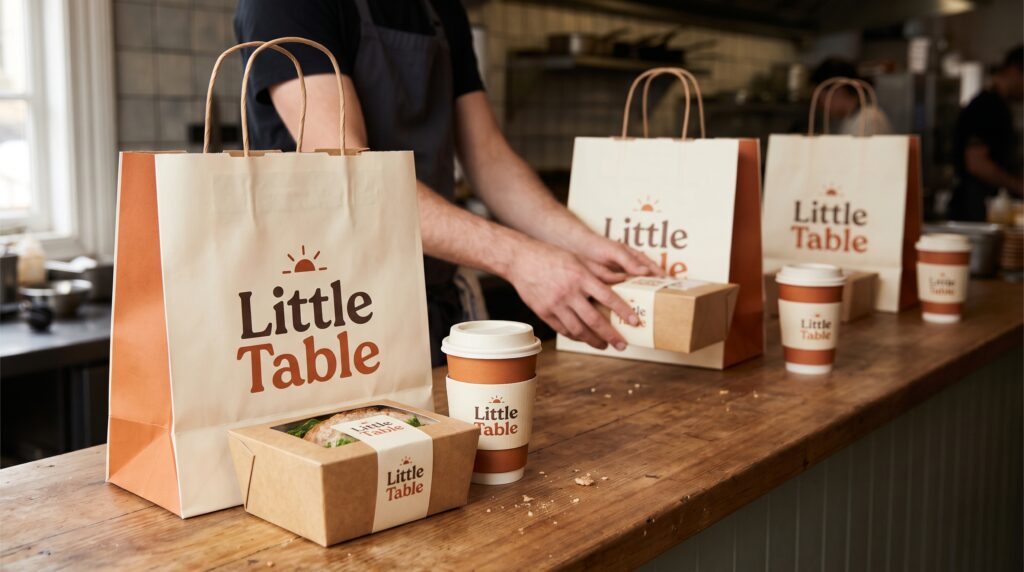
Food branding becomes recognizable through the details customers encounter repeatedly, the menu they browse, the package they open, and the message they receive when something changes. A polished logo is useful, but consistency depends on how the whole ordering experience fits together. Each interaction should make the business feel familiar and help customers understand what to expect.
For a growing food business, those details can become difficult to manage. New staff, different suppliers, and multiple ordering channels introduce variation. The solution is a practical set of standards that people can follow during an ordinary shift. This guide explains how to build those standards without making everyday work unnecessarily complicated.
Define What Your Food Branding Should Communicate
Start with the impression you want an order to leave. Perhaps your business offers cheerful weekday lunches, carefully prepared bakery gifts, or straightforward family meals.
Describe that purpose in one sentence. For a fictional lunch business, it might be “We make weekday lunches feel fresh, uncomplicated, and welcoming.”
Then translate the statement into decisions. “Uncomplicated” could mean clear menu descriptions, recognizable package labels, and concise order updates.
Avoid relying only on broad words such as “quality” or “premium.” Explain what those words mean in the experience you provide.
Practical step: Write three characteristics customers should notice and one example of how each appears in an order.
Build a Simple Food Branding Reference
A short reference helps your team apply the same decisions across different tasks. It should be easy to find and understandable without a designer present.
Include approved logos, colors, typography, writing examples, and packaging layouts. Explain where each version belongs instead of presenting a folder full of unexplained files.
Keep a clearly marked location for current assets. Archive old versions so people do not accidentally reuse them.
A useful food branding reference answers practical questions. Which logo fits a narrow label? What color should the menu heading use? How should a delayed order message sound?
Practical step: Test the reference by asking someone to prepare a label without verbal guidance.
Keep Food Branding Recognizable Across Packaging Formats
A single business may use bowls, bags, boxes, and drink cups. These formats do not need identical layouts, but they should feel related.
Choose a few elements that remain stable, such as the logo treatment, primary color, label position, or typography. Adapt the composition to the available space.
For example, a small sauce label may need only the product name and a compact brand mark. A larger meal sleeve can carry more information.
Review packaging as customers receive it, including stacked containers and closed bags. Important details should remain visible.
Practical step: Place all packaging formats together and check whether they look like one coordinated family.
Connect Food Branding With Clear Product Information
Attractive packaging still needs to help customers identify what they ordered. Product names, options, and instructions should be easy to locate and distinguish.
Separate promotional wording from essential information. A decorative slogan should not make the actual item name difficult to read.
Use consistent naming across the menu, receipt, and package. If the menu says “Roasted Vegetable Bowl,” avoid labeling the same product with an unrelated internal abbreviation.
Strong food branding supports understanding as well as recognition. Confirm that any required food information remains accurate and legible when updating the design.
Practical step: Ask someone unfamiliar with your menu to match several packaged items to a sample receipt.
Also Read: Brand Consistency Mistakes and How to Avoid Them
Standardize Menu Descriptions and Item Names
Your menu gives customers an early impression of the business. Inconsistent wording can make similar products seem unrelated or leave people uncertain about what is included.
Create a simple description pattern. You might begin with the main ingredients, explain the preparation, and finish with the included side or portion format.
Use descriptive language carefully. Words such as “crispy” or “served warm” create expectations that the actual product needs to support.
Keep names and options aligned across printed menus, websites, and ordering platforms. When a product changes, update each version.
Practical step: Review five popular items side by side and give their descriptions a consistent structure.
Make Food Photography Feel Like the Same Brand
Photography can connect your menu, social posts, and promotional materials. A consistent approach makes those images feel related even when the dishes differ.
Choose repeatable lighting, backgrounds, viewpoints, and styling. A relaxed lunch brand might use natural light and simple table settings, while a gift bakery could favor more carefully arranged compositions.
Show the portion and components customers should expect. Avoid styling that suggests extras are included when they are not.
For consistent food branding, document the setup with a reference photograph and a short checklist.
Practical step: Photograph three products using the same background and compare them at the size customers will see online.
Carry Food Branding Into Order Messages
Customers encounter your voice through confirmations, collection instructions, delivery updates, and responses to questions. Those messages should sound connected to the same business.
Decide how you address customers and how much informality suits the situation. A friendly tone can still provide clear, direct information.
Create examples for common situations, including an unavailable item or a changed collection time. Leave room for staff to personalize the response.
During a problem, prioritize the facts and next step. Brand personality should support the message rather than delay it.
Practical step: Prepare a confirmation, a delay update, and a resolution message using the same basic voice.
Make the Handoff Part of Food Branding
The moment someone receives an order connects the visual identity with actual service. A carefully designed package can feel less considered if the collection process is confusing.
Define what staff should check before handing over an order. This might include the order identifier, item count, selected options, and any separate components.
Give customers clear collection directions and a recognizable place to wait. For delivery orders, check how the package is arranged before it leaves.
Consistent food branding includes these practical details because they shape the experience associated with your name.
Practical step: Walk through collection as a first-time customer and note where instructions are missing.
Also Read: Premium Food Brand Colors for Better Branding Results
Train Your Team With Real Order Examples
A guide becomes more useful when people practice applying it. Show staff what a finished order should look like and explain which details matter most.
Use real packaging rather than relying only on a presentation. Demonstrate label placement, bag arrangement, and how to handle unusual combinations.
Discuss exceptions, too. A large order or an unavailable package size should not require staff to invent a completely new approach.
Give the team a clear person or reference to consult when uncertain.
Practical step: Compare a standard order with a mixed order and ask staff to explain how both maintain the same recognizable experience.
Prepare Food Branding Options for Supply Changes
A missing packaging item can create a sudden change in appearance. Plan alternatives before the team needs them.
Identify which elements must remain consistent and which can vary temporarily. A neutral replacement box might work when paired with an approved label.
Check the replacement’s suitability for the product as well as its appearance. Visual similarity alone is not enough.
For food branding, a controlled alternative is easier to manage than an improvised combination of old stickers and unfamiliar packaging.
Practical step: Document one approved fallback for each frequently used packaging format, including the correct label and any necessary customer explanation.
Check Food Branding With an Order Review
Review complete orders periodically, especially after changing suppliers, menu items, or ordering systems. Looking at individual assets may miss problems between them.
| Order stage | What to check |
|---|---|
| Menu browsing | Names, descriptions, images, and options agree |
| Confirmation | Items and next steps are clear |
| Packing | Containers and labels follow the approved approach |
| Collection or delivery | Instructions and order identification are understandable |
| Follow-up | The customer has a clear route to ask for help |
Photograph a sample order and record the differences that need attention. Separate a missing standard from a standard that is simply hard to follow.
Practical step: Choose one improvement, assign an owner, and check the result during the next review.
Adapt Your Brand Without Making Every Order Identical
Consistency leaves room for seasonal campaigns, special occasions, and different product ranges. The aim is a recognizable relationship between the variations.
Keep Core Food Branding Elements Stable
Retain a dependable foundation, such as typography, logo treatment, and information hierarchy. Seasonal artwork can change around it.
Give Special Editions Clear Boundaries
Define when a campaign begins and ends, which products use it, and where approved files are stored. Remove expired materials from active use.
Test Changes Before a Full Rollout
Prepare a sample, photograph it, and ask staff to use it. Check readability, production effort, and how the new version fits beside existing packaging.
Also Read: Brand Strategy You Should Follow for Better Results
Conclusion – Build Consistency Through Manageable Habits
Reliable food branding grows through clear decisions that your team can repeat. Coordinate the visuals, keep product information aligned, and make order messages easy to understand.
Start with one popular item and review its complete journey. Compare the menu listing, confirmation, packaging, and handoff. Correct the clearest mismatch first.
Then turn the improved approach into a reference others can use. Over time, those small standards help each order feel connected to the same thoughtful business, even as your menu and team grow.
For high-quality fonts to boost your income, check out Letter Crafted. Our professional fonts are perfect for branding, marketing, and content creation. So, don’t miss this opportunity.