
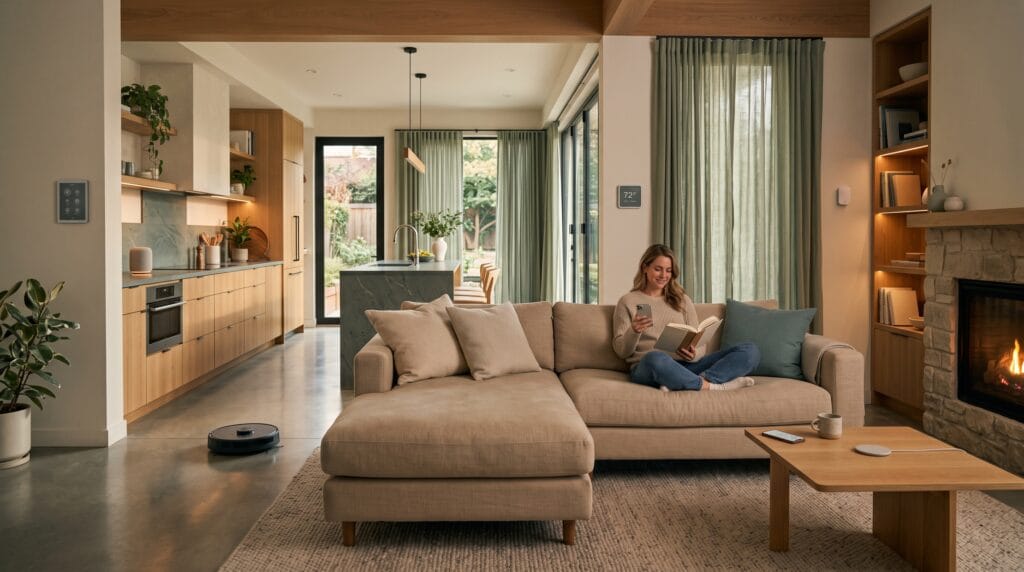
Smart home technology ideas are changing the way people manage everyday life at home. From lights that automatically adjust to your schedule to thermostats that help control energy use, connected devices can make ordinary routines easier, safer, and more comfortable. You do not need to transform your entire house at once to enjoy the benefits of smart home technology.
A good smart home should solve real problems rather than simply fill your rooms with gadgets. The best upgrades save time, increase comfort, improve security, or reduce unnecessary energy consumption.
Whether you are starting with one smart bulb or planning a complete connected-home system, these ideas can help you decide which technology deserves a place in your home.
What Is Smart Home Technology?
Smart home technology refers to connected devices and systems that can be controlled automatically, remotely, or through a central platform.
Many smart products connect through Wi-Fi, Bluetooth, Zigbee, Thread, or other communication standards. Depending on the system, you may control them using an app, voice assistant, smart display, physical switch, or automated routine.
Common examples include smart lights, security cameras, thermostats, plugs, door locks, speakers, blinds, appliances, and sensors.
The goal is not simply automation. Useful smart home technology ideas should reduce repetitive tasks and make your home respond more naturally to your daily habits.
Smart Home Technology Ideas for Better Lighting
Smart lighting is one of the easiest ways to begin creating a connected home. It usually requires less investment than larger automation systems and can immediately change the atmosphere of a room.
1. Install Smart Light Bulbs
Smart bulbs allow you to control brightness, schedules, and sometimes color temperature from an app or voice assistant.
You might create brighter lighting for working during the day and warmer lighting for relaxing at night.
Many smart bulbs also support routines, allowing the lights to turn on automatically before you wake up or switch off when you leave home.
2. Use Smart Light Switches
Smart switches can be more practical than individual smart bulbs when you want to automate several lights controlled by the same wall switch.
They maintain the familiar physical switch while adding scheduling and remote control.
This makes them useful smart home technology ideas for households where not everyone wants to control everything through a phone.
3. Add Motion-Activated Lighting
Motion sensors can automatically illuminate hallways, bathrooms, closets, and outdoor areas when movement is detected.
They improve convenience while reducing the chance of lights being left on unnecessarily.
Smart Home Technology Ideas for Temperature Control
Heating and cooling have a major influence on home comfort. Smart temperature systems can help create a more consistent indoor environment while potentially reducing unnecessary energy use.
1. Upgrade to a Smart Thermostat
A smart thermostat can adjust temperatures according to schedules, routines, occupancy, and personal preferences.
Instead of keeping your home at the same temperature all day, you can reduce heating or cooling when no one is home and restore comfortable conditions before you return.
Some models also provide reports that help homeowners understand their energy usage.
2. Use Smart Fans
Smart ceiling fans and portable fans can be controlled remotely or included in home automation routines.
For example, a fan can automatically turn on when a room reaches a certain temperature.
These small upgrades can make temperature management feel much more natural.
Smart Home Technology Ideas for Home Security
Security is another major reason consumers invest in connected technology. Modern systems can provide real-time information about what is happening around your home.
1. Install a Smart Video Doorbell
A video doorbell allows you to see visitors from your smartphone even when you are away from home.
Depending on the device, features may include motion alerts, two-way audio, recorded video, and package detection.
A smart doorbell can be especially useful for monitoring deliveries and unexpected visitors.
2. Add Smart Security Cameras
Indoor and outdoor smart cameras can provide additional visibility around entrances, gardens, garages, and other important areas.
Look for features such as motion detection, night vision, privacy controls, local or cloud storage, and customizable notification zones.
Security-focused smart home technology ideas should always include good password practices, software updates, and multi-factor authentication whenever available.
3. Consider Smart Door Locks
Smart locks allow doors to be locked or unlocked without relying entirely on traditional keys.
Some models support temporary access codes, which can be useful for family members, guests, cleaners, or contractors.
You may also receive notifications when someone enters or when a door has been left unlocked.
Smart Home Technology Ideas for Energy Savings
Smart technology can make it easier to identify and reduce unnecessary household energy consumption.
1. Use Smart Plugs
Smart plugs turn ordinary electrical devices into controllable devices.
You can schedule lamps, fans, coffee makers, and other compatible products to automatically turn on or off.
Smart plugs are among the most affordable smart home technology ideas for beginners because they require little installation.
Some models also track electricity use, helping you identify devices that consume more power than expected.
2. Install Smart Power Strips
A smart power strip provides similar automation for several devices at once.
This can be particularly useful around entertainment centers, home offices, and other areas where multiple electronics remain connected.
3. Monitor Household Energy Consumption
Smart energy monitors can provide greater visibility into how electricity is being used throughout the home.
Understanding consumption patterns can help homeowners make better decisions about appliances, heating, cooling, and everyday habits.
Technology alone will not automatically reduce every bill, but accurate information makes energy-saving decisions easier.
Also Read: Modern Digital Technology Examples You See Every Day
Smart Home Technology Ideas for the Kitchen
The kitchen is one of the busiest areas in many homes, making it a useful place for practical automation.
1. Try Smart Kitchen Appliances
Modern connected appliances can include ovens, refrigerators, coffee makers, dishwashers, and multicookers.
A smart oven may allow you to monitor cooking remotely, while a connected coffee maker can start brewing according to your morning routine.
Before buying expensive smart appliances, consider whether their connected features genuinely improve your routine.
2. Add a Smart Display
A smart display can become a useful kitchen assistant.
You can use it for timers, recipes, shopping lists, music, weather information, video calls, and controlling other connected devices.
Placing a display in a central location can also make smart home controls easier for the entire household.
Smart Home Technology Ideas for the Bedroom
Technology in the bedroom should prioritize comfort rather than adding unnecessary distractions.
1. Automate Bedroom Lighting
Create a nighttime lighting routine that gradually lowers brightness before bedtime.
Warm, dim lighting can create a calmer atmosphere compared with bright overhead lights.
You can also schedule lights to gradually brighten in the morning.
2. Use Smart Blinds or Curtains
Motorized blinds can automatically open in the morning and close in the evening.
They can also help manage sunlight and indoor temperature throughout the day.
Smart blinds are particularly useful in rooms with large windows or windows that are difficult to reach.
3. Create a Bedtime Routine
One of the most useful smart home technology ideas is combining several devices into a single automation.
For example, saying “good night” to your smart assistant could:
- Turn off downstairs lights
- Lock supported doors
- Lower the thermostat
- Close smart blinds
- Activate selected security cameras
- Turn on a bedroom fan
Instead of controlling each device separately, one routine handles everything.
Smart Home Ideas for Cleaning and Household Tasks
Home automation can also reduce the amount of time spent on repetitive chores.
1. Use a Robot Vacuum
Robot vacuums can maintain floors between deeper cleaning sessions.
Many modern models support scheduled cleaning, room mapping, obstacle avoidance, and automatic charging.
Advanced versions may also empty their own dust bins or mop hard floors.
They are one of the most recognizable smart home technology ideas because they automate a task that normally requires regular manual effort.
2. Install Smart Irrigation Controls
For homes with gardens, smart irrigation systems can automatically manage watering schedules.
Some systems can adjust watering according to local weather information, soil conditions, or seasonal settings.
This can simplify garden maintenance while helping reduce unnecessary water use.
Smart Home Technology Ideas for Entertainment
Connected entertainment systems can make music, television, and media easier to control throughout the house.
1. Build a Multiroom Audio System
Smart speakers can play synchronized music across several rooms or different audio in individual spaces.
You can create groups such as “downstairs,” “bedrooms,” or “whole house.”
This is particularly useful when entertaining guests or moving between rooms while listening to podcasts and music.
2. Create a Smart Entertainment Routine
A “movie night” routine could dim the lights, close the blinds, turn on the television, and adjust the room temperature.
Combining devices into routines makes smart technology feel integrated rather than fragmented.
Also Read: Smart Technology Ideas for a More Sustainable Future
Smart Sensors That Make Your Home More Responsive
Sensors are among the most powerful parts of home automation because they allow devices to respond automatically to changing conditions.
1. Door and Window Sensors
Contact sensors detect whether a door or window is open or closed.
They can provide security alerts or trigger other automations.
For example, your heating or cooling system could temporarily pause if a window is left open.
2. Water Leak Sensors
Water sensors can detect moisture around sinks, washing machines, water heaters, and other vulnerable areas.
Receiving an early notification may help homeowners respond before a small leak becomes a more serious problem.
3. Motion and Occupancy Sensors
Occupancy sensors can help a smart home understand whether someone is actually using a room.
These sensors can automatically manage lighting, temperature, or other connected devices.
Sensor-based smart home technology ideas are particularly useful because they reduce the need to constantly issue commands.
How to Choose the Best Smart Home Technology
Not every connected device will improve your lifestyle.
Start by identifying a specific inconvenience in your home. Perhaps you regularly forget to turn off lights, worry about deliveries, waste electricity, or want easier temperature control.
Then look for technology that solves that particular problem.
Before buying, consider compatibility with your existing ecosystem. Smart home platforms may include Amazon Alexa, Google Home, Apple Home, Samsung SmartThings, and others.
Also look for support for Matter, a smart home connectivity standard designed to make compatible devices work more easily across different ecosystems.
Choosing compatible products from the beginning can prevent frustration as your smart home grows.
Smart Home Security and Privacy Tips
Convenience should never come at the expense of digital security.
Connected devices become part of your home network, so they need basic protection.
Use strong and unique passwords for important accounts. Enable multi-factor authentication when supported and keep device firmware updated.
Avoid buying unknown connected products simply because they are inexpensive. Choose manufacturers that clearly explain their privacy policies and provide ongoing software support.
You may also consider placing smart home devices on a separate Wi-Fi network or guest network if your router supports that configuration.
Good smart home technology ideas should make your home more comfortable without unnecessarily exposing personal information.
Start Your Smart Home Slowly
You do not need dozens of devices to create a useful smart home.
Start with one or two upgrades that provide an obvious benefit. Smart lights, plugs, thermostats, and video doorbells are popular starting points because their value is easy to understand.
Once you become familiar with how connected devices work, you can add sensors, automated routines, smart locks, speakers, appliances, and more advanced systems.
Building gradually also gives you time to understand which features you genuinely use.
Also Read: Top 20 Mobile Technology Trends to Watch This Year
Final Thoughts on Smart Home Technology Ideas
The best smart home technology ideas are not necessarily the most expensive or futuristic. They are the ones that quietly make daily life easier.
Smart lighting can create a more comfortable atmosphere. Smart thermostats can simplify temperature management. Security devices can improve awareness around your property, while sensors and automation can remove repetitive tasks from your routine.
The key is to build a smart home around your lifestyle rather than changing your lifestyle around technology.
Start with a problem you want to solve, choose compatible devices, protect your network, and expand only when another upgrade offers a meaningful benefit.
With thoughtful planning, smart home technology ideas can help transform an ordinary house into a more responsive, efficient, secure, and comfortable place to live.
For high-quality fonts to boost your income, check out Letter Crafted. Our professional fonts are perfect for branding, marketing, and content creation. So, don’t miss this opportunity.