
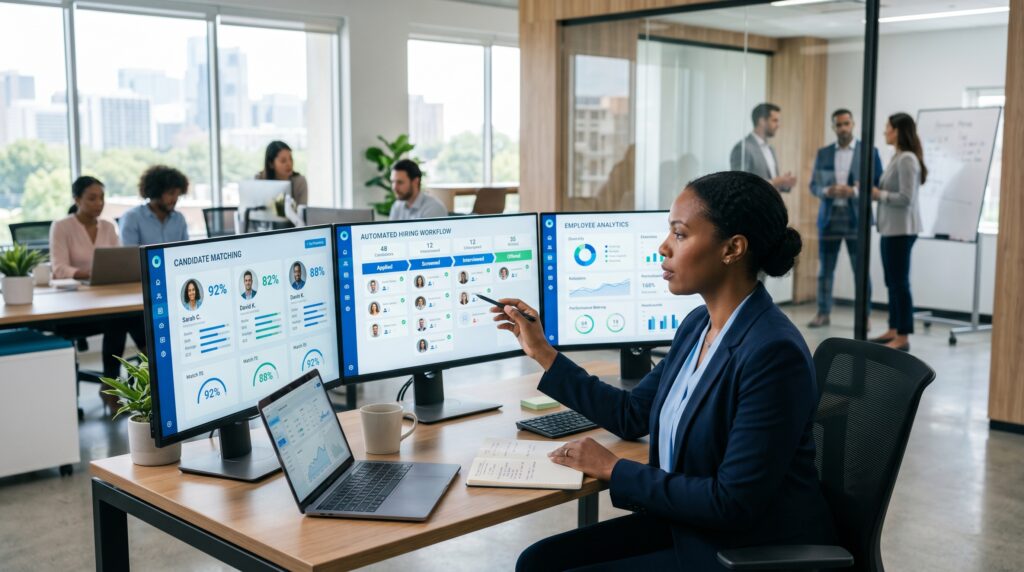
Modern AI tools for HR are transforming how organizations recruit talent, manage employees, improve engagement, and streamline workforce operations. As businesses grow, human resources teams often face increasing demands related to hiring, onboarding, compliance, performance management, and employee development. Artificial intelligence helps reduce administrative workloads while providing valuable insights that support better decision-making.
The adoption of AI tools for HR continues accelerating as organizations seek ways to improve efficiency and create better employee experiences. From candidate screening and interview scheduling to workforce analytics and engagement monitoring, AI is becoming a valuable asset for HR departments of all sizes.
For growing businesses, investing in intelligent HR solutions can help scale operations without significantly increasing administrative costs. AI-powered systems can automate repetitive tasks, improve hiring accuracy, and provide actionable workforce insights.
This guide explores the best AI tools for HR, their benefits, practical use cases, and how they support modern workforce management.
Why AI Tools for HR Are Growing in Popularity
Human resources departments manage many responsibilities.
Modern AI tools for HR help organizations:
- Reduce manual work
- Improve hiring efficiency
- Support employee engagement
- Enhance workforce planning
- Improve productivity
- Generate data-driven insights
Automation allows HR teams to focus on strategic initiatives.
AI Tools for HR Recruitment and Talent Acquisition
Recruitment remains one of the most common AI applications.
Hiring teams often use AI to:
- Screen resumes
- Rank candidates
- Schedule interviews
- Improve sourcing
These capabilities save significant time.
Benefits of AI-Powered Recruiting
Organizations often experience:
- Faster hiring cycles
- Better candidate matching
- Reduced administrative work
- Improved recruitment efficiency
AI helps recruiters focus on top candidates.
AI Tools for HR and Resume Screening
Reviewing hundreds of applications can be time-consuming.
AI-powered screening tools help identify:
- Relevant experience
- Required skills
- Candidate qualifications
Automated screening improves efficiency.
How Resume Analysis Works
Many systems analyze:
- Skills
- Work history
- Education
- Certifications
This helps recruiters prioritize applicants.
AI Tools for HR Interview Scheduling
Scheduling interviews often creates unnecessary delays.
AI scheduling platforms can:
- Coordinate calendars
- Suggest meeting times
- Send reminders
- Reduce scheduling conflicts
Automation improves the candidate experience.
Hiring Process Optimization
Benefits include:
- Faster communication
- Reduced administrative tasks
- Better organization
Streamlined workflows improve recruitment outcomes.
AI Tools for HR Onboarding
Effective onboarding supports employee success.
Modern AI tools for HR help organizations:
- Deliver training materials
- Automate paperwork
- Guide new employees
- Answer common questions
Better onboarding improves retention.
Employee Onboarding Automation
Organizations use AI to:
- Create onboarding workflows
- Personalize training paths
- Monitor progress
Automation creates more consistent experiences.
AI Tools for HR Workforce Planning
Workforce planning helps organizations prepare for future needs.
AI can assist with:
- Staffing forecasts
- Talent gap analysis
- Resource planning
- Workforce optimization
Planning supports sustainable growth.
Predictive Workforce Analytics
AI systems may analyze:
- Hiring trends
- Employee turnover
- Workforce demand
Forecasting improves decision-making.
Also Read: AI Customer Service: A Practical Tutorial with Examples
AI Tools for HR Employee Engagement
Employee engagement strongly influences performance and retention.
Organizations use AI to:
- Measure sentiment
- Analyze feedback
- Identify concerns
- Monitor engagement levels
Insights help improve workplace experiences.
Engagement Monitoring Benefits
Companies often gain:
- Better employee satisfaction
- Lower turnover
- Improved communication
Understanding employee needs creates stronger teams.
AI Tools for HR Performance Management
Performance reviews can be time-consuming.
AI-powered systems help:
- Track goals
- Measure progress
- Analyze performance trends
Data improves evaluation accuracy.
Continuous Performance Tracking
Modern platforms support:
- Real-time feedback
- Goal monitoring
- Employee development
Ongoing evaluation encourages improvement.
AI Tools for HR Learning and Development
Employee development remains a priority.
AI helps personalize:
- Training programs
- Learning paths
- Skill development plans
Personalized learning improves outcomes.
Intelligent Learning Recommendations
AI may recommend:
- Courses
- Certifications
- Development opportunities
Customized learning supports career growth.
AI Tools for HR Compliance Management
Compliance requirements continue increasing.
AI-powered platforms help organizations:
- Track regulations
- Manage documentation
- Monitor policies
Automation reduces compliance risks.
Compliance Monitoring Advantages
Benefits include:
- Improved accuracy
- Reduced administrative effort
- Better record keeping
Compliance becomes easier to manage.
AI Tools for HR Analytics and Reporting
HR departments increasingly rely on workforce data.
Analytics platforms help teams:
- Monitor performance
- Analyze trends
- Generate reports
Data-driven decisions improve workforce management.
Workforce Intelligence Insights
Organizations can evaluate:
- Retention rates
- Recruitment performance
- Employee engagement
Analytics provide strategic visibility.
AI Tools for HR in Small Businesses
Small businesses often have limited HR resources.
AI can help automate:
- Hiring
- Employee management
- Training
- Reporting
Automation supports growth without excessive costs.
Affordable HR Technology Benefits
Advantages include:
- Improved efficiency
- Reduced workload
- Better organization
Small teams can operate more effectively.
Also Read: Creative Business Marketing Basics for New Freelancers
AI Tools for HR and Employee Retention
Retention remains a major concern.
AI can help identify:
- Turnover risks
- Employee dissatisfaction
- Engagement issues
Early intervention improves outcomes.
Predicting Retention Challenges
Advanced systems analyze:
- Feedback patterns
- Performance indicators
- Engagement trends
Proactive action reduces turnover.
AI Tools for HR and Remote Workforce Management
Remote work continues influencing HR practices.
AI supports:
- Communication
- Collaboration
- Performance tracking
- Employee engagement
Distributed teams require effective management systems.
Supporting Hybrid Work Environments
Organizations benefit from:
- Centralized information
- Automated workflows
- Better visibility
Technology improves workforce coordination.
Best AI Tools for HR Teams
Several platforms lead the HR technology market.
1. Workday
Useful for:
- Workforce management
- Talent planning
- HR analytics
- Employee administration
2. BambooHR
Helpful for:
- Employee records
- Performance management
- HR automation
- Reporting
3. Greenhouse
Useful for:
- Recruitment
- Candidate management
- Hiring workflows
4. Lever
Helpful for:
- Talent acquisition
- Candidate sourcing
- Recruitment automation
5. Eightfold AI
Useful for:
- Talent intelligence
- Candidate matching
- Workforce planning
Common Challenges of AI Tools for HR
Despite many advantages, challenges exist.
1. Data Privacy Concerns
Organizations must protect employee information.
Strong security practices remain essential.
2. Overreliance on Automation
Human judgment remains important.
AI should support, not replace, HR professionals.
3. Implementation Complexity
Successful adoption requires:
- Training
- Planning
- Integration
Preparation improves results.
Future Trends in AI Tools for HR
Several developments continue shaping the future.
Emerging trends include:
- AI workforce assistants
- Predictive talent analytics
- Personalized employee experiences
- Automated workforce planning
- Intelligent learning systems
Innovation will continue transforming HR operations.
The Future of Workforce Management
Future platforms may provide:
- Real-time workforce insights
- Autonomous administrative support
- Advanced talent intelligence
AI capabilities will continue expanding.
How to Choose the Right AI Tools for HR
Organizations should evaluate:
- Business needs
- Team size
- Budget
- Integration requirements
- Security standards
The right solution depends on organizational goals.
Key Selection Criteria
Consider:
- Ease of use
- Scalability
- Reporting capabilities
- Automation features
Long-term value should guide decisions.
Also Read: Graphic Design Ideas That Look Great in Your Portfolio
Final Thoughts on AI Tools for HR
Modern AI tools for HR are helping organizations improve recruitment, onboarding, employee engagement, workforce planning, and performance management. By automating repetitive tasks and providing valuable workforce insights, these solutions allow HR teams to focus on strategic priorities that drive business growth.
The best AI tools for HR combine automation, analytics, and employee-focused capabilities to create more efficient and productive workplaces. As artificial intelligence continues evolving, HR departments that embrace these technologies will be better positioned to attract talent, improve retention, and support long-term organizational success.
For high-quality fonts to boost your income, check out Letter Crafted. Our professional fonts are perfect for branding, marketing, and content creation. So, don’t miss this opportunity.