
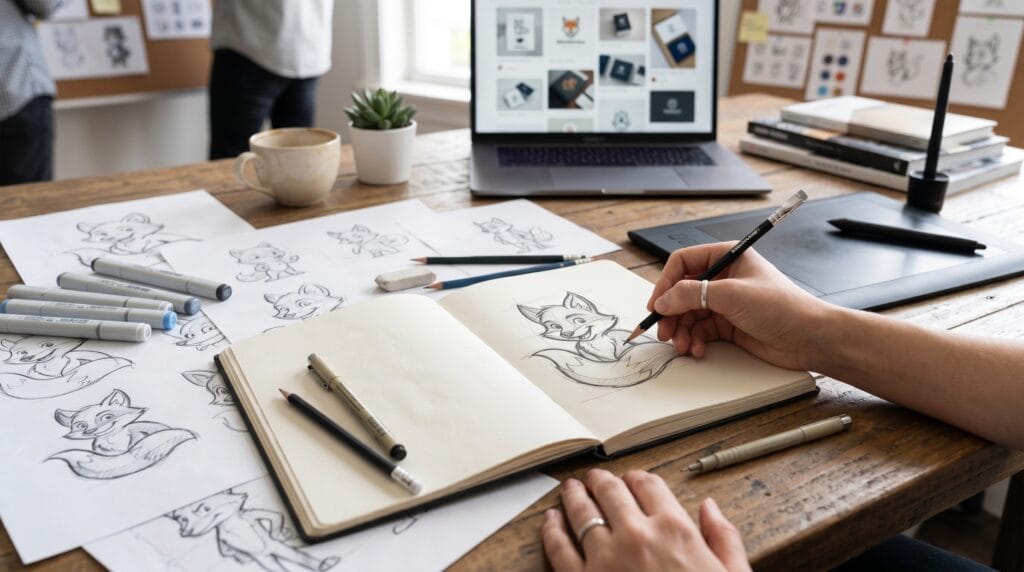
Creating memorable mascot logos starts long before digital rendering. Strong mascot logo sketching tips help illustrators develop characters with personality, visual appeal, and branding potential. Whether you are designing a sports mascot, gaming character, restaurant logo, or company brand ambassador, the sketching stage plays a critical role in the creative process.
Many beginner designers jump directly into software without fully exploring concepts. However, professional illustrators often spend significant time sketching ideas before selecting a final direction. Sketching allows designers to experiment with shapes, expressions, poses, and character traits quickly. Effective mascot logo sketching tips help artists generate stronger concepts while improving creative confidence.
A successful mascot logo should be memorable, recognizable, and aligned with the brand it represents. Strong sketches help establish the foundation for these qualities before colors, typography, and final details are added.
In this guide, you will discover practical mascot logo sketching tips, character design techniques, creative workflows, and illustration strategies that help create professional mascot logos.
Why Mascot Logo Sketching Tips Matter
Every successful mascot begins with a concept.
Strong mascot logo sketching tips help illustrators:
- Generate ideas quickly
- Explore character personalities
- Improve visual storytelling
- Build stronger branding concepts
- Create memorable mascots
- Develop professional workflows
Sketching remains one of the most valuable stages of mascot creation.
Mascot Logo Sketching Tips for Understanding Brand Personality
Before drawing, understand the brand.
A mascot should represent the company’s identity and values.
Questions to ask include:
- What emotions should the mascot communicate?
- Who is the target audience?
- What industry does the business operate in?
- What makes the brand unique?
Understanding these factors improves character development.
Matching Character Style to Brand Identity
Examples include:
- Sports brands → Energetic mascots
- Children’s brands → Friendly characters
- Gaming brands → Bold and dramatic designs
- Food brands → Fun and approachable mascots
Strong mascot branding begins with clear direction.
Mascot Logo Sketching Tips for Starting With Simple Shapes
Professional illustrators often begin with basic forms.
Simple shapes make character construction easier.
Common starting shapes include:
- Circles
- Squares
- Triangles
- Ovals
Many effective mascot logo sketching tips focus on simplifying complex designs.
Shape Psychology in Mascot Design
Different shapes communicate different feelings.
Circular Shapes
Often suggest:
- Friendliness
- Warmth
- Approachability
Square Shapes
Commonly communicate:
- Strength
- Stability
- Reliability
Triangular Shapes
Often create:
- Energy
- Action
- Aggressiveness
Shape selection affects brand perception.
Mascot Logo Sketching Tips for Creating Memorable Silhouettes
Strong mascot logos remain recognizable even without details.
A clear silhouette improves memorability.
Effective silhouettes often feature:
- Distinct outlines
- Unique poses
- Clear proportions
- Recognizable shapes
Professional mascot logo sketching tips frequently emphasize silhouette testing.
Testing Character Recognition
A simple test:
- Fill the sketch with solid black
- Remove interior details
- Evaluate recognition
If the character remains identifiable, the silhouette is working.
Mascot Logo Sketching Tips for Facial Expressions
Expressions communicate personality instantly.
A mascot’s face often becomes its most important feature.
Common expressions include:
- Friendly smiles
- Determined looks
- Excited reactions
- Confident expressions
Strong expressions increase emotional connection.
Designing Expressive Eyes
Eyes often define a mascot’s personality.
Helpful techniques include:
- Enlarging pupils
- Adjusting eyebrow angles
- Simplifying eye shapes
Small adjustments can create significant personality differences.
Also Read: 50 AI Mascot Logo Prompts for Simple Line Mascots
Mascot Logo Sketching Tips for Character Poses
Static characters often feel less engaging.
Dynamic poses improve visual energy.
Examples include:
- Action poses
- Victory poses
- Welcoming gestures
- Athletic stances
Good posing helps tell a story.
Creating Movement in Sketches
Movement can be suggested through:
- Angled body positioning
- Flowing lines
- Exaggerated gestures
- Directional action cues
Dynamic sketches often produce stronger mascot logos.
Mascot Logo Sketching Tips for Exaggeration
Exaggeration helps mascots become more memorable.
Professional illustrators often emphasize:
- Heads
- Eyes
- Hands
- Facial features
Exaggeration improves character appeal and recognition.
Balancing Realism and Cartoon Style
Mascot logos usually simplify reality.
Benefits include:
- Better readability
- Stronger branding
- Easier reproduction
- Greater visual impact
Stylization often works better than realism.
Mascot Logo Sketching Tips for Visual Storytelling
Every mascot should communicate a message.
Storytelling helps make characters more engaging.
Consider:
- Background story
- Personality traits
- Motivations
- Brand connection
Strong narratives improve mascot effectiveness.
Building Character Traits
Examples include:
- Friendly and helpful
- Competitive and energetic
- Creative and playful
- Strong and dependable
Traits influence design decisions.
Mascot Logo Sketching Tips for Sports and Gaming Logos
Sports and gaming mascots often require bold visual impact.
Popular characteristics include:
- Strong poses
- Intense expressions
- Dynamic movement
- High energy
These industries often favor dramatic character designs.
Sports Mascot Sketching Techniques
Helpful approaches include:
- Aggressive facial expressions
- Muscular proportions
- Action-oriented poses
- Team-inspired visual themes
Strong energy improves sports branding.
Mascot Logo Sketching Tips for Simplicity
Overly complex designs can reduce usability.
Effective mascot logos remain simple enough to work across various applications.
Strong mascot logo sketching tips emphasize:
- Clear shapes
- Limited details
- Strong readability
- Scalable design
Simple mascots often perform better.
Designing for Small Sizes
A mascot logo should remain effective on:
- Social media icons
- Websites
- Business cards
- Merchandise
Scalability is essential for branding success.
Also Read: 3D Logo Design Trends and Examples That Stand Out
Mascot Logo Sketching Tips for Iteration
Professional illustrators rarely stop after one sketch.
Multiple iterations improve quality.
Helpful practices include:
- Sketching 20-50 concepts
- Exploring different personalities
- Testing various poses
- Comparing alternatives
Quantity often leads to stronger ideas.
Thumbnail Sketching Workflows
Thumbnail sketches help:
- Generate ideas rapidly
- Avoid perfectionism
- Explore multiple directions
Many professional illustrators begin with very small rough concepts.
Mascot Logo Sketching Tips for Color Planning
Although sketching is often black and white, color planning remains important.
Consider:
- Brand colors
- Audience preferences
- Industry expectations
Color should reinforce character personality.
Popular Mascot Color Strategies
Examples include:
- Bold sports colors
- Friendly children’s palettes
- Premium luxury accents
- Energetic gaming combinations
Color strengthens visual identity.
Best Tools for Mascot Logo Sketching
Several tools support mascot development workflows.
1. Adobe Illustrator
Useful for:
- Vector mascot creation
- Logo refinement
- Character scalability
- Professional branding systems
Illustrator remains an industry standard.
2. Adobe Photoshop
Helpful for:
- Sketch refinement
- Digital painting
- Character exploration
- Presentation development
Photoshop supports concept development workflows.
3. Procreate
Useful for:
- Sketching concepts
- Character exploration
- Digital illustration
- Creative ideation
Many illustrators prefer Procreate for early-stage sketching.
4. Clip Studio Paint
Helpful for:
- Character design
- Illustration workflows
- Sketch development
- Comic-style mascot creation
Clip Studio Paint offers powerful drawing tools.
Common Mascot Logo Sketching Mistakes
Many beginners make similar errors.
1. Starting With Details Too Early
Focus on shapes and structure first.
Details should come later.
2. Ignoring Brand Strategy
A mascot should support branding goals.
Character design without strategy often feels disconnected.
3. Overcomplicating the Design
Too many details reduce usability.
Simple mascots usually perform better.
4. Copying Existing Characters
Originality remains essential.
Develop unique personalities and visual identities.
Future Trends in Mascot Logo Illustration
Mascot design continues evolving.
Popular trends include:
- Simplified character systems
- Retro-inspired mascots
- Gaming-inspired branding
- AI-assisted character ideation
- Animated mascot identities
Future mascot branding will likely become increasingly interactive.
Also Read: Simple Logo Design Ideas: Guide for Startups and Shops
Final Thoughts on Mascot Logo Sketching Tips
Mastering mascot logo sketching tips helps illustrators create stronger characters, improve branding outcomes, and develop more engaging visual identities. Successful mascot logos begin with thoughtful sketching, clear storytelling, strong silhouettes, and memorable personalities.
The best mascot designs balance creativity, simplicity, and strategic branding. By focusing on shape construction, expressions, poses, character traits, and scalability, illustrators can build mascots that connect with audiences and support long-term brand recognition.
Whether you are designing for sports teams, gaming brands, restaurants, startups, or children’s products, applying these mascot logo sketching tips will help you create more professional and memorable mascot logos.
For high-quality fonts to boost your income, check out Letter Crafted. Our professional fonts are perfect for branding, marketing, and content creation. So, don’t miss this opportunity.