
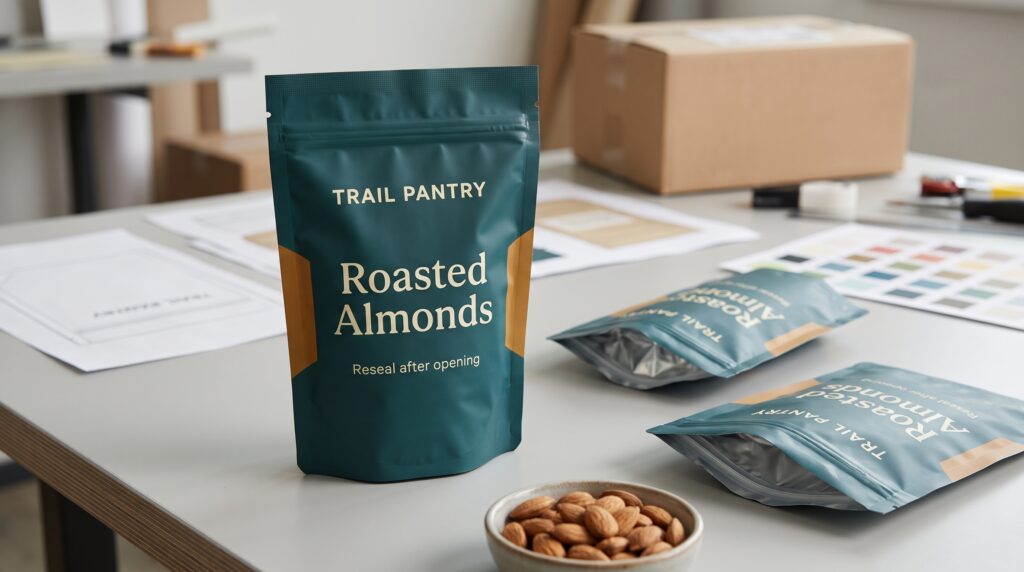
Flexible packaging design brings together materials, structure, and communication to help protect a product throughout its journey. A pouch may look attractive on a screen, yet its performance depends on what happens during filling, storage, shipping, display, and use. For manufacturers, the design process should begin with those conditions.
Consider a powdered product. Its packaging may need to limit moisture exposure, contain fine particles, and remain easy to close. A product with sharp edges presents a different challenge. The package must withstand contact with its contents as well as handling outside the factory.
There is no single format that suits every application. Better protection comes from defining the risks, working with the right suppliers, and checking the finished package under realistic conditions.
This guide explains how to approach those decisions before committing to production.
Start Flexible Packaging Design With the Product
Before choosing colors or pouch shapes, write a clear description of the product and its protection needs.
Record its weight, dimensions, texture, and physical form. Identify whether it contains liquids, oils, fine powders, or pieces that could press against the package. Also consider how the product behaves during filling.
Then map its journey. Will it travel in cartons, sit on a retail shelf, or ship directly to customers? Could it experience temperature changes, compression, or repeated handling?
A useful flexible packaging design brief should answer:
- What could damage the product?
- What could cause the package to fail?
- How long must the unopened package perform?
- What changes after the customer opens it?
- Which filling and sealing equipment will be used?
These questions turn a broad request for “strong packaging” into specific requirements that a supplier can assess.
Choose Materials Around Protection Needs
Material selection should follow the product brief. Appearance and price matter, but neither tells you whether a material will perform in your application.
Flexible packaging can use a single material or a structure made from several layers. Different structures provide different combinations of strength, barrier performance, sealing behavior, and print appearance.
Ask suppliers to explain the proposed structure and provide relevant specifications. Avoid choosing a material simply because another brand uses something that looks similar.
Match Barrier Performance to the Product
Some products need protection from moisture entering the package. Others need to retain moisture or limit exposure to oxygen, light, or aromas.
For flexible packaging design, identify which of these factors matters and under what conditions. Barrier performance should connect to a defined product requirement, supported by suitable testing.
A shiny finish or thick feel does not establish barrier performance. Likewise, a transparent window changes the package structure and should be assessed as part of the whole design.
Work with product and packaging specialists to confirm suitability rather than relying on appearance alone.
Give Seals Space to Work
A suitable material cannot compensate for an unreliable seal. Sealing deserves attention early because it affects dimensions, artwork placement, filling, and production settings.
Keep the intended seal areas clear of structural features that could interfere with closure. Confirm the supplier’s requirements for seal width and positioning.
The filling process also matters. Powder, oil, or product fragments entering a seal area can create problems that an attractive mockup will never reveal.
Discuss these details with the converter and production team:
- Where will the package be filled?
- Which edges will already be sealed?
- How will the final seal be formed?
- Could product contaminate the sealing area?
- How will seal quality be checked?
Flexible packaging design should allow the factory to produce a reliable package repeatedly. Review actual sealed samples before approving the format.
Select a Shape That Supports the Contents
Package shape influences how a product settles, how the pack moves, and how easily customers handle it.
A stand-up pouch, flat pouch, sachet, and flexible bag each offer different possibilities. Choose according to the product and its journey, then develop the visual design around that choice.
An oversized package may allow contents to move excessively. An overly tight pack may place pressure on seals or make filling difficult. The right balance depends on the application.
Check Dimensions With Physical Samples
Use samples containing the intended product whenever possible. Check the filled dimensions, available headspace, and stability.
For flexible packaging design, a flat dieline is only one view of the package. Gussets expand, panels curve, and the product changes its shape.
Handle the sample as a customer would. Lift it, place it down, and check whether its proportions still feel practical.
Also Read: Smart Packaging Design Ideas for Better Customer Experiences
Design for Filling and Production
A package must work with the equipment that produces it. Involve the production team before finalizing dimensions, closures, or decorative features.
Confirm the format your line can handle and the tolerances it requires. Discuss material behavior, filling access, seal positions, and the space needed for variable information.
Small design changes can affect how the package feeds, opens, fills, or seals. Resolve these details through supplier review and appropriate line trials.
Effective flexible packaging design also includes a clear approval process. Identify who signs off on the structure, artwork, production settings, and finished samples.
Keep one approved specification available to everyone involved. This reduces uncertainty when the project moves between design, purchasing, and manufacturing.
Make Opening and Reclosing Practical
Protection continues into the customer experience. A package that is difficult to open may encourage people to cut it unpredictably or transfer the contents elsewhere.
Choose an opening method that suits the product and intended users. Tear notches, easy-open features, zippers, and spouts all need practical evaluation.
If the pack contains several servings or uses, consider how customers will store what remains. A reclosure may improve convenience, but its performance must match the application.
Do not assume a zipper restores the protection of the original unopened seal.
In flexible packaging design, assess the complete sequence like first opening, dispensing, reclosing, and storage. Check whether instructions are needed and whether the opening leaves enough room for comfortable use.
Use Clear Graphics to Support Product Care
Graphics can help customers recognize, handle, and store a product correctly. They should support the package’s function as well as its brand identity.
Give the product name, variant, and essential instructions a clear hierarchy. Keep important wording away from folds, seals, and areas likely to curve sharply.
Use strong contrast and review text at the final printed size. A label that looks readable when enlarged on a monitor may become difficult to use on a small pouch.
Flexible packaging design should also reserve practical space for batch details and other variable information.
Check the filled package from several angles. Make sure customers can locate opening directions and storage guidance without unfolding or flattening the entire pack.
Also Read: Luxury Jewelry Packaging Ideas for Better Unboxing
Test Flexible Packaging Design Under Real Conditions
Testing should reflect the risks identified in the brief. Agree on suitable methods and acceptance criteria with the relevant specialists before production approval.
Depending on the application, evaluation may include seal performance, leakage, puncture resistance, handling, transport, and storage behavior.
A single successful sample does not show that every production pack will perform consistently. Consider samples from realistic production conditions and review how variation will be managed.
Review the Whole Distribution Pack
Assess the flexible package together with its outer carton or other transport protection.
Look for movement, rubbing, compression, and contact with sharp edges. A pouch may perform differently when packed tightly beside others than when tested alone.
Record failures clearly. Photographs, sample references, and production details make it easier to identify what needs changing.
Balance Material Use With Reliable Performance
Reducing material can be a useful design objective, but changes should preserve the protection the product needs.
Review package size, unused space, layer structure, and secondary packaging together. Sometimes a better fit offers a more practical starting point than simply reducing material thickness.
Any revised structure needs assessment. A lighter package that fails during distribution may create additional waste through damaged goods and replacements.
For flexible packaging design, compare alternatives against the same requirements. Include manufacturing performance and product loss alongside material use.
If environmental claims appear on the package, have them checked against the actual structure and intended market. Keep the wording specific to what can be supported.
Keep Specifications Clear Across Product Variants
Manufacturers often manage several sizes, flavors, or product types within one packaging range.
Use a shared design system for the brand, but check each variant’s practical needs. Different contents or fill weights may require changes beyond artwork.
Create a specification record for each approved package. Include dimensions, material structure, closures, artwork version, and relevant production requirements.
Flexible packaging design becomes easier to manage when teams can distinguish a visual update from a structural change.
Before ordering a repeat run, confirm that the product, supplier, equipment, and intended use still match the approved specification. Treat changes as review points rather than assuming previous approval covers every situation.
Also Read: Bakery Packaging Design Ideas for Beautiful Branding
Build Protection Into the Approval Process
The strongest flexible packaging design decisions connect the product brief to a verified finished package.
Before approval, confirm that material suitability, seal performance, filled dimensions, opening, instructions, and distribution needs have all been reviewed. Resolve remaining questions with physical samples and appropriate trials.
Keep the approved sample alongside the final specification so future production has a clear reference.
Start your next project by documenting the three most likely causes of product damage. Then ask how each packaging decision addresses them. That simple exercise gives the team a practical basis for comparing options and building a package that performs beyond the presentation mockup.
For high-quality fonts to boost your income, check out Letter Crafted. Our professional fonts are perfect for branding, marketing, and content creation. So, don’t miss this opportunity.