
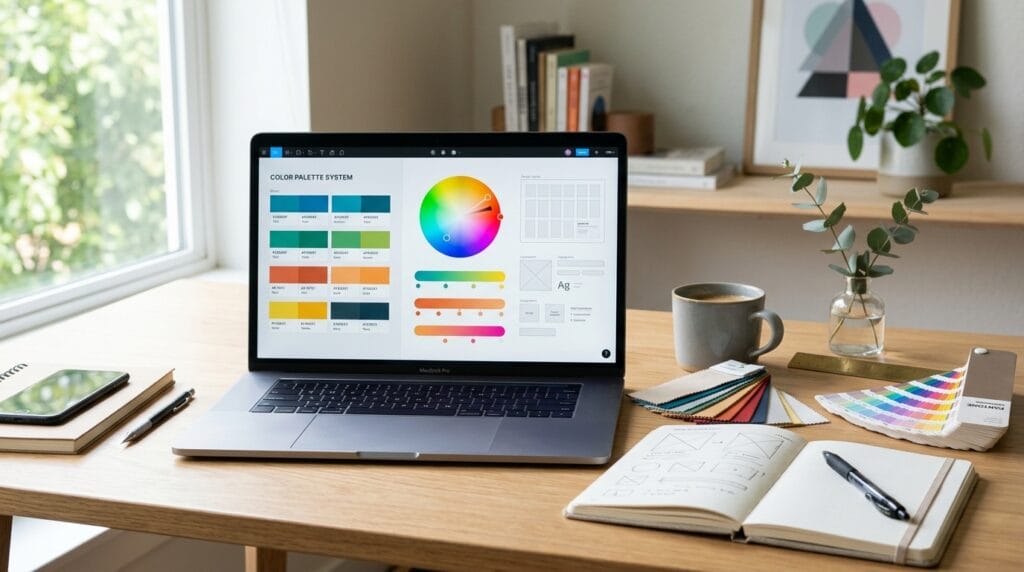
Understanding color is one of the most important steps in design, and this graphic design color guide is created to make that process simple. For beginners and students, learning how to use color correctly can improve your work instantly. With the help of this graphic design color guide, you will learn how colors work, how to combine them, and how to use them effectively in your designs. By following this graphic design color guide, you can create visuals that feel balanced, clear, and professional.
In this tutorial, we break down everything you need to know in a simple and practical graphic design color guide.
Why a Graphic Design Color Guide Matters for Beginners
A clear graphic design color basics helps you understand how color affects design quality.
Using the right colors can:
- Improve readability
- Create emotional impact
- Strengthen visual identity
- Make your design look professional
Without a proper graphic design color basics, designs can feel confusing or unbalanced.
Graphic Design Color Guide Basics You Should Know
Before creating color combinations, you need to understand the basics.
1. What Is Color in Graphic Design
Color is used to communicate ideas and create visual interest.
2. Primary, Secondary, and Tertiary Colors
A good graphic design color basics includes:
- Primary colors (red, blue, yellow)
- Secondary colors (green, orange, purple)
- Tertiary colors (mixed variations)
3. Color Wheel Understanding
The color wheel helps you see how colors relate to each other.
Learning these basics is the foundation of any graphic design color.
Graphic Design Color Guide for Color Psychology
Color influences emotions and perception.
1. Warm Colors
Red, orange, and yellow create energy and excitement.
2. Cool Colors
Blue, green, and purple feel calm and professional.
3. Neutral Colors
Black, white, and gray add balance and contrast.
Understanding psychology is a key part of a strong graphic design color basics.
Also Read: Top Color Trends in Graphic Design Designers Use Now
Graphic Design Color Guide for Color Combinations
Combining colors correctly is essential.
1. Complementary Colors
Opposite colors on the wheel create strong contrast.
2. Analogous Colors
Colors next to each other create harmony.
3. Monochromatic Colors
Different shades of one color create a clean look.
Using these methods in your graphic design color basics improves visual balance.
Graphic Design Color Guide for Contrast and Readability
Readability is one of the most important goals.
1. High Contrast for Text
Dark text on light background or vice versa works best.
2. Avoid Low Contrast
Low contrast makes content hard to read.
3. Test Your Design
Always check how your design looks on different screens.
Good contrast is a key principle in any graphic design color basics.
Graphic Design Color Guide for Branding and Identity
Color plays a major role in branding.
1. Choose a Consistent Color Palette
Stick to 2-4 main colors.
2. Align Colors with Brand Message
Your colors should match your brand personality.
3. Maintain Consistency
Use the same colors across all designs.
Consistency is essential in a professional graphic design color basics.
Also Read: Graphic Design Layout Ideas How to Use White Space Better
Graphic Design Color Guide for Practical Design Workflow
A simple workflow helps you apply color effectively.
1. Choose a Base Color
Start with one main color.
2. Add Supporting Colors
Select 2-3 complementary or neutral colors.
3. Apply Colors to Layout
Use colors for background, text, and highlights.
4. Review and Adjust
Make sure everything looks balanced.
This workflow makes your graphic design color basics easy to follow.
Graphic Design Color Guide Tools for Beginners
Using tools can simplify the process.
1. Canva Color Palette Generator
Helps create color combinations easily.
2. Adobe Color
Advanced tool for exploring color schemes.
3. Coolors
Quickly generate color palettes.
These tools support your learning in any graphic design color basics.
Common Mistakes in a Graphic Design Color Guide
Avoid these common errors:
- Using too many colors
- Poor contrast between elements
- Ignoring color harmony
- Inconsistent color usage
Fixing these mistakes improves your graphic design color results.
Also Read: Graphic Design Tips That Make Your Work Look Professional
Final Thoughts on Graphic Design Color Guide
Learning color does not have to be complicated. With the right graphic design color guide, you can quickly understand how to use color effectively in your designs. Focus on the basics, practice regularly, and keep your color choices simple and consistent.
As you continue using this graphic design color guide, your designs will become more balanced, readable, and visually appealing. Over time, you will develop confidence and create work that looks professional and polished.
For high-quality fonts to boost your income, check out Letter Crafted. Our professional fonts are perfect for branding, marketing, and content creation. So, don’t miss this opportunity.