
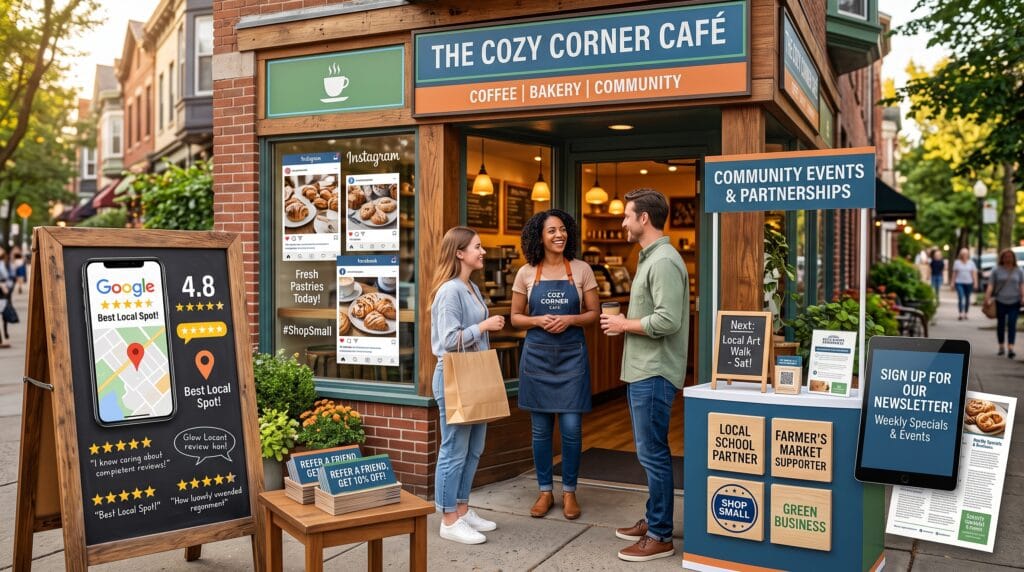
Small businesses rarely need to reach everyone. They need to reach the right people who live, work, commute, shop, or spend time nearby. Effective local marketing strategies help a company become more visible, trusted, and memorable within the geographic area it serves.
Local marketing is especially important for:
- Restaurants
- Salons
- Repair shops
- Professional services
- Healthcare providers
- Retailers
- Gyms
- Home-service companies
- Studios
- Local consultants
The strongest approach combines digital visibility with real community presence.
A business may attract customers through local search, social media, email, events, referrals, partnerships, reviews, and paid advertising. These channels work best when they communicate one clear message and support one consistent customer experience.
This guide explains practical local marketing strategies that small businesses can use to build awareness, earn trust, generate leads, and create repeat customers without needing a national advertising budget.
What Local Marketing Means
Local marketing focuses on attracting and retaining customers within a specific geographic market.
That market may be:
- A neighborhood
- A town or city
- A group of nearby postal codes
- A defined service area
- A local business district
- Several surrounding communities
Local marketing differs from broad national marketing because the audience is more specific, the buying decision often depends on convenience and trust, and the business can use community relationships as a competitive advantage.
A local strategy should answer three questions:
- Who exactly do we serve?
- Where do those people spend time and search for help?
- Why should they choose us instead of another nearby option?
Why Local Marketing Strategies Matter
Strong local marketing strategies help small businesses compete through relevance rather than scale.
They can improve:
- Local search visibility
- Walk-in traffic
- Phone calls
- Appointment requests
- Lead quality
- Word-of-mouth recommendations
- Customer trust
- Repeat purchases
- Community recognition
Local businesses often have an advantage that larger competitors struggle to reproduce: direct knowledge of the community.
Owners and employees can understand local habits, events, concerns, language, and expectations more closely.
That knowledge should influence messaging, offers, partnerships, timing, and customer service.
1. Define Your Local Target Market
Before choosing channels, define the people and area the business actually serves.
Map the Service Area
Document the neighborhoods, towns, postal codes, or driving radius where most customers live or work.
A home-service company may have a 30-kilometer service area, while a coffee shop may depend heavily on customers within a short walking or commuting distance.
Describe the Ideal Local Customer
Record:
- Age or life stage
- Household or business type
- Primary needs
- Typical budget
- Preferred communication channels
- Common objections
- Reasons for choosing a local provider
Do not define the audience only through demographics.
Include the situation that causes the customer to search.
Identify Local Buying Triggers
Examples include:
- A new family moving into the area
- A broken appliance
- An upcoming event
- A change in season
- A new business opening
- A health or maintenance need
Marketing becomes stronger when it connects with the moment a local customer needs help.
2. Clarify Your Local Value Proposition
A local value proposition explains who the business serves, what result it provides, and why customers should choose it.
Use a Simple Formula
Use:
We help (local audience) achieve (result) through (service), with (local advantage).
Example:
We help busy homeowners in Northside keep their gardens healthy with reliable weekly maintenance and same-day local support.
Emphasize Real Local Advantages
These may include:
- Fast response times
- Knowledge of local regulations
- A convenient location
- Community experience
- Flexible service areas
- Local product sourcing
- Personal customer care
Avoid vague claims such as “best quality” without evidence.
3. Optimize Your Google Business Profile
A complete Google Business Profile can help nearby customers discover the business through Search and Maps.
Complete Every Relevant Field
Add:
- Accurate business name
- Address or service area
- Phone number
- Website
- Business hours
- Primary and secondary categories
- Services or products
- Relevant attributes
- Photos
Keep this information consistent with the website and other business listings.
Publish Regular Updates
Use profile posts for:
- Offers
- Events
- New services
- Holiday hours
- Announcements
- Seasonal messages
Fresh information helps potential customers understand what is happening now.
Add High-Quality Photos
Include:
- Exterior images
- Interior images
- Team photos
- Product images
- Service images
- Customer-experience photos
Good photographs reduce uncertainty and help people recognize the location.
Answer Customer Questions
Monitor and answer questions about:
- Parking
- Accessibility
- Service areas
- Pricing
- Appointments
- Delivery
- Product availability
4. Improve Local SEO
Local SEO helps the business appear when nearby customers search for a product or service.
Create Location-Relevant Pages
Build clear pages for each major service area when the content can be genuinely useful and different.
Include:
- Local service details
- Coverage information
- Customer questions
- Relevant proof
- Travel or delivery details
- Area-specific examples
Use Natural Local Keywords
Examples include:
- Service plus city
- Product plus neighborhood
- Near-me search variations
- Emergency service plus area
- Local provider plus category
Do not repeat the city name unnaturally.
Write for customers first.
Maintain Consistent Business Information
Keep the following consistent across directories and platforms:
- Business name
- Address
- Phone number
- Opening hours
- Website address
Create Helpful Local Content
Topics may include:
- Local buying guides
- Seasonal advice
- Neighborhood resources
- Local regulations
- Event preparation
- Community case studies
Useful local content can attract search traffic and social engagement.
5. Build a Strong Review Strategy
Reviews influence trust, local search visibility, and customer decisions.
Ask at the Right Moment
Request a review after:
- A successful service
- A positive customer comment
- A repeat purchase
- A completed project
- A resolved problem
Make the process easy through a direct link or QR code.
Respond to Reviews
Thank customers for positive feedback and respond professionally to concerns.
Do not become defensive.
Show that the business listens, cares, and takes action.
Use Review Insights
Track recurring praise and complaints.
Reviews reveal:
- What customers value
- Which services stand out
- What causes dissatisfaction
- Where the experience needs improvement
Avoid Fake Reviews
Do not purchase, exchange, or invent reviews.
Inauthentic feedback can damage trust and violate platform policies.
6. Create a Local Referral Program
Referrals convert well because they transfer trust from an existing relationship.
Make the Request Specific
Instead of asking, “Do you know anyone?” ask whether the customer knows one or two people in the area who need the same result.
Offer a Simple Incentive
Possible rewards include:
- Store credit
- A service upgrade
- A discount
- A small gift
- A charitable donation
Keep the program easy to explain and use.
Track the Source
Record:
- Who made the referral
- Which new customer responded
- Which reward was issued
- How much revenue the referral generated
Also Read: How to Find Customers: The First 100 Customers Playbook
7. Build Local Business Partnerships
Partnerships connect small businesses with warm audiences and shared trust.
Choose Complementary Partners
Examples include:
- A florist and wedding photographer
- A gym and nutritionist
- A realtor and moving company
- A café and bookstore
- A designer and print shop
- An accountant and business coach
The best partners serve similar customers without being direct competitors.
Create Mutual Value
Partnership ideas include:
- Cross-referrals
- Shared events
- Bundle offers
- Co-branded content
- Joint giveaways
- Shared customer guides
Agree on expectations and make the recommendation process simple.
8. Participate in Community Events
Local events create direct visibility and real conversations.
Choose Relevant Events
Consider:
- Markets
- Festivals
- School events
- Business fairs
- Charity events
- Local sports
- Workshops
- Neighborhood meetings
Select events where the target audience is likely to attend.
Create a Useful Experience
Offer:
- A demonstration
- A consultation
- A sample
- A mini-service
- A contest
- An educational activity
This is more memorable than simply handing out brochures.
Capture Follow-Up Permission
Invite people to:
- Join an email list
- Claim an offer
- Book an appointment
- Enter a giveaway
- Request a consultation
Always obtain clear consent.
9. Sponsor Local Organizations
Sponsorships can create goodwill and repeated brand exposure.
Potential partners include:
- Schools
- Sports teams
- Charities
- Arts organizations
- Community groups
- Local publications
- Neighborhood initiatives
Choose sponsorships that align with the brand, customer base, and available budget.
Measure results through:
- Referral codes
- Event leads
- Website traffic
- Customer mentions
- Offer redemptions
10. Use Local Social Media Content
Social media works best for local businesses when it feels connected to real people and places.
Show the Community
Share:
- Local events
- Customer stories
- Neighborhood updates
- Team members
- Behind-the-scenes work
- Local partnerships
Use location tags and relevant local hashtags where appropriate.
Publish Helpful Content
Examples include:
- Tips
- Short tutorials
- Frequently asked questions
- Product demonstrations
- Before-and-after results
- Seasonal reminders
Useful content builds familiarity before a customer is ready to purchase.
Encourage User-Generated Content
Invite customers to share:
- Photographs
- Experiences
- Product results
- Event content
Request permission before reposting customer material.
11. Use Short-Form Local Video
Short videos can make a small business more familiar and human.
Video ideas include:
- A quick store tour
- A product demonstration
- A team introduction
- A customer question
- A local event recap
- A service transformation
- A behind-the-scenes process
Keep the opening direct and add captions so the content remains understandable without sound.
12. Build a Local Email List
Email creates a direct communication channel that does not depend entirely on social or search algorithms.
Give People a Reason to Subscribe
Offer:
- Local deals
- Event invitations
- Appointment reminders
- Seasonal advice
- New product updates
- Useful neighborhood resources
Make the value clear.
Segment the List
Segments may include:
- Location
- Customer type
- Purchase history
- Interests
- Service category
- Event attendance
Send Useful Messages
Do not make every email promotional.
Share:
- Advice
- Community updates
- Customer stories
- Upcoming events
- Relevant reminders
13. Create Location-Specific Offers
Local offers should reflect actual customer behavior and business needs.
Examples include:
- Weekday promotions
- New-resident offers
- Event-day specials
- Seasonal maintenance packages
- Neighborhood delivery
- Local loyalty rewards
Use clear dates, terms, and redemption instructions.
14. Launch a Local Loyalty Program
Loyalty programs encourage repeat purchases and provide useful customer data.
Options include:
- Points
- Visit-based rewards
- Member pricing
- Birthday offers
- VIP events
- Early access
- Product bundles
Keep the program easy to understand and make the reward meaningful.
15. Use Direct Mail Strategically
Printed local marketing can still work when the audience and offer are specific.
Target the Right Area
Choose neighborhoods based on:
- Existing customer data
- Service capacity
- Property type
- Demographics
- Proximity
- Previous campaign results
Use One Clear Offer
Include:
- A strong headline
- A specific benefit
- Proof
- A deadline
- One call to action
- Contact information
Use a trackable QR code, phone number, landing page, or promotional code.
16. Improve Local Signage
Signs should help people understand what the business offers and how to act.
Review:
- Visibility
- Readability
- Lighting
- Directional information
- Opening hours
- Brand consistency
- Accessibility
A confusing storefront can reduce the value of every other marketing effort.
17. Create Local Landing Pages
Landing pages can support campaigns for specific areas, services, or events.
Each page should include:
- A clear local headline
- The customer problem
- The proposed solution
- Service-area information
- Proof or reviews
- Relevant photographs
- One primary call to action
Do not create dozens of thin pages with only the city name changed.
18. Collaborate With Local Creators
Local creators, community leaders, and niche experts may provide more relevant reach than large influencers.
Evaluate Audience Fit
Review:
- Audience location
- Content quality
- Trust
- Engagement
- Values
- Previous partnerships
Set Clear Deliverables
Document:
- Content format
- Publication timing
- Disclosure requirements
- Usage rights
- Links
- Success measures
Prioritize Authenticity
Choose people who can recommend the business naturally and honestly.
19. Use Local Public Relations
Local media may be interested in useful and timely stories.
Possible story angles include:
- A new opening
- A community initiative
- A local hiring story
- An unusual service
- A customer-impact story
- Expert advice connected to a local issue
Send concise, relevant information and explain why the story matters to the local audience.
20. Run Local Paid Advertising
Paid advertising can reach nearby customers quickly when targeting and measurement are clear.
Search Advertising
Search ads can capture people actively looking for a local product or service.
Social Advertising
Social platforms can target:
- Local areas
- Interests
- Demographics
- Customer groups
- Previous website visitors
Start With a Small Test
Begin with:
- One offer
- One audience
- One geographic area
- One landing page
- One conversion goal
Track:
- Calls
- Forms
- Appointments
- Sales
- Cost per acquired customer
21. Retarget Interested Visitors
Retargeting can remind website visitors or engaged social users about the business.
Use:
- Clear frequency limits
- Relevant messages
- Updated offers
- Specific calls to action
Avoid showing the same advertisement excessively.
Retargeting is especially useful when the buying decision takes time.
22. Create a Local Content Calendar
A calendar keeps local marketing strategies consistent.
Include:
- Community events
- Seasonal campaigns
- Local holidays
- Product launches
- Email dates
- Social content
- Partnership activities
- Review requests
Plan broad themes monthly and schedule specific actions weekly.
23. Make the Customer Experience Marketable
Every interaction can create a review, referral, or repeat purchase.
Standardize Important Moments
Define how employees:
- Greet customers
- Explain pricing
- Confirm appointments
- Solve problems
- Follow up
- Request feedback
Add Memorable Details
Examples include:
- Handwritten notes
- Local recommendations
- Thoughtful packaging
- Quick status updates
- Personalized service
- Recognition of returning customers
Resolve Problems Quickly
A strong recovery can protect the customer relationship and create trust.
24. Track Local Marketing Performance
Measurement prevents the business from spending based only on impressions.
Track Channel Results
Useful metrics include:
- Phone calls
- Direction requests
- Website visits
- Form submissions
- Appointments
- Coupon redemptions
- Walk-in mentions
- Revenue
- Repeat purchases
Ask new customers how they discovered the business.
Use Trackable Campaigns
Use:
- Unique links
- QR codes
- Dedicated phone numbers
- Landing pages
- Offer codes
where practical.
Calculate Customer Acquisition Cost
Divide campaign spending by the number of new customers attributed to the campaign.
Also Read: Marketing for Small Business How to Measure What Works
25. Focus on Retention as Well as Acquisition
Local growth becomes stronger when customers return and recommend the business.
Retention methods include:
- Follow-up messages
- Rebooking reminders
- Loyalty programs
- Customer education
- Personalized offers
- Service recovery
- Anniversary messages
- Birthday offers
Track repeat purchase rate and customer lifetime value, not only first-time sales.
Local Marketing Strategies Comparison Table
| Strategy | Primary Goal | Typical Cost | Time to Result |
|---|---|---|---|
| Google Business Profile | Local discovery | Low | Short to medium |
| Local SEO | Search visibility | Low to medium | Medium to long |
| Reviews | Trust and conversion | Low | Ongoing |
| Referrals | High-trust leads | Low to medium | Short |
| Partnerships | Audience sharing | Low | Short to medium |
| Local events | Awareness and leads | Medium | Short |
| Retention and repeat sales | Low | Medium | |
| Social content | Familiarity and engagement | Low to medium | Medium |
| Direct mail | Targeted local offers | Medium | Short |
| Paid ads | Immediate local reach | Medium to high | Short |
A 90-Day Local Marketing Strategies Plan
Days 1-30: Build the Foundation
- Define the target area and customer.
- Clarify the value proposition.
- Complete the Google Business Profile.
- Correct inaccurate business listings.
- Request reviews from satisfied customers.
- Set up basic lead and sales tracking.
Days 31-60: Build Local Visibility
- Publish useful local website content.
- Post helpful social content.
- Contact potential partners.
- Create a referral offer.
- Start an email list.
- Plan one local event or promotion.
Days 61-90: Test and Improve
- Run one small paid campaign.
- Measure calls, leads, and sales.
- Improve weak landing pages.
- Repeat the strongest content themes.
- Review customer feedback.
- Create the next 90-day calendar.
Also Read: Local Business Ideas That Make Money All Year Long
Common Local Marketing Strategies Mistakes
Avoid this on local marketing strategies:
- Trying to reach everyone
- Using inconsistent business information
- Ignoring reviews
- Posting without a clear local audience
- Depending on one marketing channel
- Running advertisements without conversion tracking
- Creating generic content with no local relevance
- Joining partnerships without mutual value
- Failing to follow up with leads
- Focusing only on new customers
Most mistakes come from inconsistency rather than a lack of ideas.
Local Marketing Strategies Checklist
Use this local marketing strategies checklist to assess the business:
- The target geographic area is clearly defined.
- The ideal local customer is documented.
- The value proposition is specific.
- Google Business Profile information is complete.
- Business listings are consistent.
- Review requests are part of the workflow.
- Local website pages are useful and unique.
- Partnerships and referral sources are tracked.
- Email and social content follow a calendar.
- Campaigns use trackable links or codes.
- Customer acquisition and retention are measured.
- The customer experience supports reviews and referrals.
Frequently Asked Questions of Local Marketing Strategies
1. What Is the Best Local Marketing Strategy for a Small Business?
The strongest starting point is usually a complete Google Business Profile, accurate listings, a review process, and a clear local website.
The best combination depends on the business type, location, competition, and customer behavior.
2. How Much Should a Small Business Spend on Local Marketing?
There is no universal amount.
Base the budget on:
- Revenue
- Gross margin
- Customer value
- Growth goals
- Available service capacity
- Previous campaign performance
Begin with measurable tests before increasing spending.
3. How Can a Local Business Market Without Paid Ads?
Use:
- Local SEO
- Reviews
- Referrals
- Partnerships
- Community events
- Helpful content
- Consistent customer follow-up
4. How Long Does Local SEO Take?
Results vary according to:
- Competition
- Website quality
- Location
- Content
- Reviews
- Listing accuracy
- Search demand
Some improvements may appear quickly, while competitive search growth can take several months.
5. Which Social Media Platform Is Best for Local Business?
Choose the platform where local customers already spend time.
Visual consumer businesses may benefit from Instagram or TikTok.
Professional services may prefer LinkedIn, Facebook, or local online groups.
6. How Do You Measure Local Marketing Success?
Track:
- Calls
- Messages
- Appointments
- Direction requests
- Website leads
- Offer redemptions
- New customers
- Repeat purchases
- Revenue
- Customer acquisition cost
Conclusion on Local Marketing Strategies
Effective local marketing strategies combine visibility, trust, community presence, and consistent follow-up.
Small businesses do not need to compete with national brands on reach. They can compete through relevance, responsiveness, and stronger local relationships.
Begin with the basics:
- Define the target area.
- Clarify the offer.
- Complete local listings.
- Improve reviews.
- Track how customers discover the business.
Then add partnerships, content, email, events, referrals, and paid promotion according to what the results show.
Local marketing strategies works best as a long-term system.
When people repeatedly see the business, hear positive recommendations, and receive a dependable experience, local awareness becomes trust and trust becomes sustainable growth.
For high-quality fonts to boost your income, check out Letter Crafted. Our professional fonts are perfect for branding, marketing, and content creation. So, don’t miss this opportunity.