
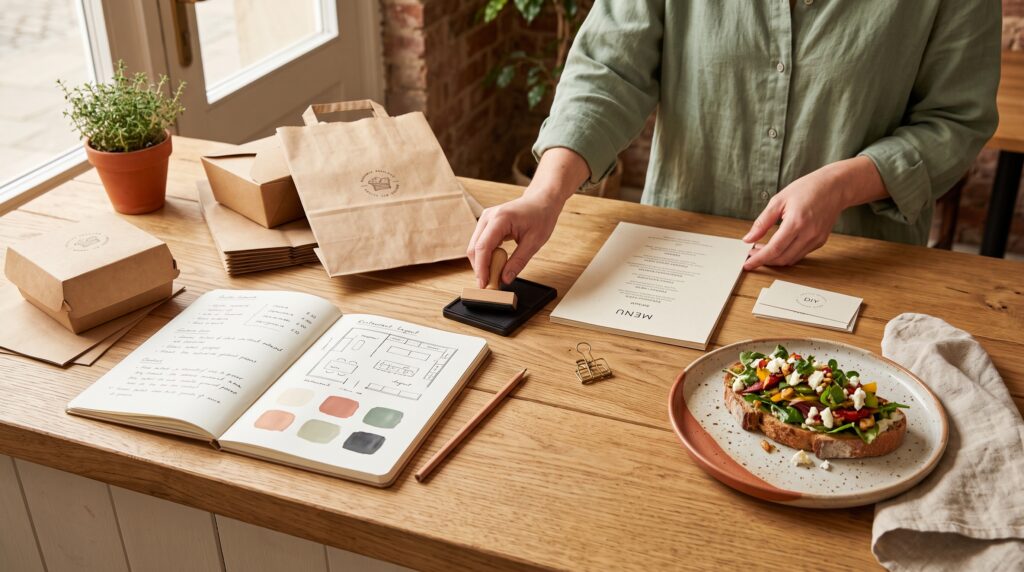
Restaurant branding on a budget starts with making your business easy to recognize and understand. Customers should be able to tell what you serve, what kind of experience you offer, and why your restaurant suits their occasion. You can communicate those things through thoughtful choices without purchasing custom materials for every part of the business.
For a new owner, branding competes with equipment, ingredients, staffing, and other opening expenses. A clear order of priorities helps you decide what deserves attention now.
This guide explains how to create a practical foundation, avoid unnecessary purchases, and build consistency as your restaurant develops. Begin with what customers need, then expand when there is a clear reason.
Start Restaurant Branding on a Budget With Your Restaurant’s Purpose
Before designing anything, describe your restaurant in one straightforward sentence.
Include the food, the audience, and the occasion. A quick lunch spot for nearby workers has different needs from a restaurant built around relaxed family dinners.
This description helps you evaluate future decisions.
Define Your Restaurant Brand in Plain Language
For example:
We serve comforting lunches for local workers who want a straightforward meal in a welcoming setting.
You do not have to publish this sentence. Use it internally to guide the atmosphere, menu presentation, and communication.
Effective restaurant branding on a budget begins with clarity. When you understand the experience you want to offer, you are less likely to buy attractive materials that send the wrong message.
Prioritize Restaurant Branding on a Budget Around Essential Touchpoints
List the places where customers encounter your restaurant.
Think about finding the entrance, reading the menu, placing an order, receiving food, and checking information online.
Each touchpoint should help them understand the business.
Choose What You Need for Opening Day
Your first priorities may include:
- Clear exterior identification.
- A recognizable visual identity.
- An easy-to-read menu.
- Accurate opening hours and contact details.
- Photographs of representative dishes.
- Suitable takeaway packaging, where needed.
Custom merchandise and elaborate decorative printing can usually be considered later.
With restaurant branding on a budget, the order matters. Address essential communication before adding extras that do little to improve the customer’s experience.
Keep Your Restaurant Identity Simple
A simple identity is easier to apply across signs, menus, labels, and digital graphics.
A design full of tiny details may look impressive on a large screen but become unclear on a small sticker.
Consider the actual applications before approving it.
Create a Small Set of Brand Rules
Choose a limited color palette, an approved logo arrangement, and a consistent approach to photographs and layouts.
Keep versions suitable for light and dark backgrounds. Check whether the identity remains recognizable in one color.
Save the approved assets in a clearly named folder.
These decisions support restaurant branding on a budget because you can reuse them. Updating a menu or creating an announcement becomes easier when the basic visual choices are already settled.
Make Menus Central to Restaurant Branding on a Budget
The menu is one of your most useful branding materials because customers interact with it while deciding what to buy.
It should reflect the restaurant’s character while making ordering straightforward.
Appearance should never hide essential information.
Build a Menu That Is Easy to Maintain
Organize dishes into clear categories. Use concise descriptions and keep prices easy to locate.
Avoid filling the page with decoration when the menu already contains substantial information.
Maintain an editable master file and print a sample before ordering a larger batch.
For restaurant branding on a budget, flexibility matters. If dishes or prices change during the opening months, you should be able to update the menu without rebuilding the entire design.
Also Read: Brand Messaging Guide for Better Positioning and Customer Trust
Use Honest Food Photography
Photographs should represent what customers can expect to receive.
Start with dishes that reflect your menu and can be prepared consistently. Use actual portions, serving pieces, and accompaniments.
An appealing image should still describe the real offer.
Plan a Small Restaurant Photo Session
Prepare a short shot list:
- A few signature dishes.
- The entrance.
- The dining space.
- One detail that expresses the atmosphere.
- Your takeaway presentation.
Use a consistent background and lighting approach where practical.
Good restaurant branding on a budget does not require hundreds of images. A focused collection can serve several purposes while helping customers form realistic expectations about the food and setting.
Make Your Online Information Easy to Use
A customer may encounter your restaurant online before visiting.
They need to find the menu, opening hours, location, and ordering or booking instructions without searching through unrelated content.
Start with that information.
Keep Your Restaurant Details Consistent
Use the same restaurant name and current contact details across the channels you manage.
Check the menu on a phone. Make sure customers can read it comfortably and understand how to take the next step.
When hours or prices change, update the relevant locations together.
A useful online presence supports restaurant branding on a budget by making the business understandable. Clear information deserves attention before decorative features that add little practical value.
Choose Packaging for the Food First
Takeaway packaging has a job to do before it becomes a branding surface.
Consider how the meal travels, how customers handle it, and whether the packaging suits the portion.
Test these needs before committing to a large order.
Add Recognition With Simple Packaging Details
Suitable standard packaging may work with a label, stamp, or sleeve.
Check how the branding holds up under normal use. A label that looks good in a mockup may become difficult to read or detach during handling.
Avoid buying large quantities while your offer is still changing.
For restaurant branding on a budget, a practical, adaptable solution can give you time to learn what customers order and which packaging performs reliably.
Let Service Support Restaurant Branding on a Budget
Customers experience your brand through conversations and actions as well as visual materials.
If the restaurant presents itself as welcoming, the ordering process should support that impression.
Small service habits can make the experience more consistent.
Establish Clear Everyday Expectations
Explain how staff should greet customers, answer common questions, and communicate unavailable dishes.
Make sure they know where to find accurate information and when to ask a colleague for help.
Discuss how to acknowledge a concern and what staff can do to address it.
Thoughtful restaurant branding on a budget includes these operational details. A friendly visual identity means more when the actual experience feels considerate and dependable.
Also Read: Premium Food Brand Colors for Better Branding Results
Create Templates for Regular Updates
Some communication needs repeat: opening-hour changes, special dishes, menu updates, and event announcements.
Create a few layouts that handle these purposes clearly.
You do not need a different visual direction for every post.
Keep Your Restaurant Templates Flexible
Test each template with short and longer information.
Leave enough room for the photograph and essential details. Avoid shrinking everything just to fit an unsuitable layout.
Store editable files alongside the approved brand assets.
Templates help restaurant branding on a budget remain consistent while reducing repeated work. However, review each update carefully. Reusing a design does not prevent incorrect prices, missing information, or confusing wording.
Know When to Ask for Design Help
Doing everything yourself can be useful, but it also takes time.
If you repeatedly struggle with an important material, consider whether focused professional help would make it easier to maintain.
Start with a clear assignment.
Give a Designer a Practical Brief
Describe your restaurant, audience, budget, and required applications.
Explain what you need first, such as an identity and menu, rather than requesting a broad package without a use for every item.
Agree on deliverables, editable files, and how future updates will work.
For restaurant branding on a budget, a focused project can be more manageable than trying to develop every possible asset before you have opened.
Review Spending Before Expanding the Brand
An attractive mockup can make an optional purchase feel urgent.
Before ordering, ask what problem the item solves and how often customers will encounter it.
Consider replacement and update costs alongside the initial price.
Use Feedback to Choose Your Next Improvement
Listen for repeated questions from customers and staff.
If people struggle to find the entrance, review the sign. If they misunderstand the menu, improve its organization before printing extra promotional materials.
Keep simple notes about the issue, the adjustment, and what happens afterward.
This makes restaurant branding on a budget a continuing process of useful decisions. Expansion becomes easier to justify when you can explain the need behind it.
Build a Brand You Can Maintain
A restaurant brand needs attention after opening day.
Assign someone to keep essential information current, manage approved files, and notice when materials become inconsistent.
Review the basics regularly rather than waiting until everything needs replacing.
You may discover that one small correction helps more than a complete redesign. A clearer menu description or updated entrance photograph can address a specific source of confusion.
Keep changes connected to the experience you want customers to have.
Also Read: Minimalist Branding Examples to Inspire Better Visual Identity
Conclusion – Grow Your Restaurant Brand One Priority at a Time
Restaurant branding on a budget works best when your purpose guides your purchases.
Define the offer, prioritize essential customer touchpoints, and create materials that you can update. Support the visual identity with accurate information, honest photographs, and thoughtful service.
Then improve the areas that cause confusion or repeated work.
Your restaurant does not need every branded item on opening day. It needs an understandable, recognizable experience that you can deliver consistently and develop with care.
For high-quality fonts to boost your income, check out Letter Crafted. Our professional fonts are perfect for branding, marketing, and content creation. So, don’t miss this opportunity.