
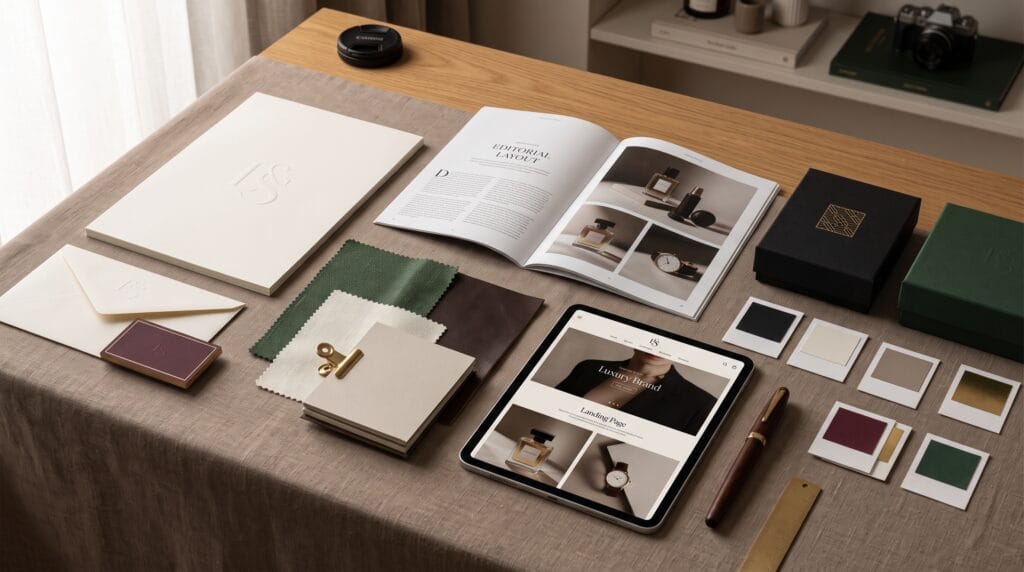
Luxury is not created by adding gold foil, using a serif font, or raising a price without explanation. The strongest luxury branding techniques shape how customers interpret quality, rarity, meaning, service, and status across every interaction.
Perceived value is the customer’s judgment of what an offer is worth before, during, and after purchase. That judgment is influenced by the product, but it is also shaped by positioning, design, language, presentation, environment, proof, availability, service, and consistency.
A technically excellent product can feel ordinary when its identity is inconsistent, its packaging looks generic, its website feels rushed, or its sales process relies on constant discounts. A simpler product can feel more valuable when every detail communicates intention, confidence, and care.
Effective luxury branding does not mean making every brand look exclusive or expensive. It means identifying the signals that support a premium position and designing them into the entire customer experience.
This guide explains the luxury branding techniques that increase perceived value, including positioning, scarcity, visual identity, typography, color, materials, packaging, storytelling, pricing, customer service, retail environments, digital experiences, partnerships, proof, and brand governance.
What Is Perceived Value in Luxury Branding?
Perceived value is the customer’s assessment of the benefits, meaning, quality, and experience associated with an offer compared with its price and alternatives.
It may include:
- Functional quality
- Emotional satisfaction
- Social meaning
- Personal identity
- Craftsmanship
- Convenience
- Trust
- Rarity
- Service
- Ownership experience
- Long-term durability
In premium markets, the customer is often evaluating more than utility.
A watch tells time, but a luxury watch may also communicate heritage, engineering, taste, achievement, or belonging. A hotel provides accommodation, but a luxury hotel may promise privacy, recognition, calm, and personalized care.
The brand increases perceived value when it connects the practical benefit to a larger emotional and symbolic experience.
Why Luxury Branding Techniques Matter
Customers cannot inspect every detail of a product before buying. They use signals to estimate quality and risk.
These signals include:
- Price
- Packaging
- Materials
- Photography
- Website design
- Retail environment
- Staff behavior
- Availability
- Reviews
- Provenance
- Product naming
- Brand language
- Consistency
Strong luxury branding techniques align these signals so they communicate one credible position.
When the signals conflict, perceived value falls. A premium price paired with low-quality photography, inconsistent packaging, aggressive discounting, or slow customer service creates doubt.
1. Define a Precise Luxury Position
Luxury branding begins with positioning, not decoration.
A brand must decide:
- Who is the ideal customer?
- What does that customer value most?
- Which alternatives are being compared?
- What makes the offer meaningfully different?
- Why is the price justified?
- Which customers are not the priority?
Avoid Broad Premium Claims
Statements such as “high quality,” “exclusive,” and “made with care” are too generic.
A stronger position is specific.
Examples:
- Hand-finished leather goods for professionals who prefer understated design
- Private travel planning for families who value discretion and time
- Small-batch fragrance inspired by regional botanical archives
- Bespoke furniture built for compact architectural spaces
Specificity creates stronger relevance and makes premium pricing easier to understand.
Choose a Luxury Territory
Common territories include:
- Heritage
- Craft
- Innovation
- Rarity
- Performance
- Personalization
- Cultural knowledge
- Privacy
- Sustainability
- Exceptional service
A brand can combine territories, but one should remain dominant.
2. Build a Distinctive Point of View
Luxury brands do not only describe products. They express a recognizable perspective.
A point of view may shape:
- Product design
- Curation
- Materials
- Communication
- Partnerships
- Customer experience
- Distribution
For example, a premium interior brand might believe that calm spaces require fewer, better objects. That belief could influence restrained collections, natural materials, minimal packaging, editorial photography, and limited distribution.
A clear point of view increases perceived value because customers are buying access to judgment, not only inventory.
3. Use Restraint as a Luxury Signal
Restraint communicates confidence.
Premium brands often avoid:
- Too many colors
- Crowded layouts
- Excessive product claims
- Loud promotional badges
- Constant urgency
- Multiple competing messages
- Decorative effects without purpose
Why Restraint Works
When a brand gives one product, image, or statement enough space, it suggests that the offer does not need to fight for attention.
Restraint can appear through:
- Generous negative space
- Limited color palettes
- Fewer product variants
- Shorter copy
- Selective imagery
- Controlled animation
- Carefully paced retail displays
Minimalism is not automatically luxurious, but disciplined editing often increases perceived value.
4. Create a Refined Visual Identity
A luxury visual identity should feel intentional across every touchpoint.
It normally includes:
- Logo system
- Typography
- Color palette
- Photography
- Illustration
- Layout rules
- Materials
- Motion
- Iconography
- Packaging
- Environmental graphics
Avoid Template-Like Design
Generic layouts, common stock photography, and inconsistent design treatments weaken distinction.
Luxury visual identity should reflect the brand’s specific territory.
A heritage brand might use archival references, engraved details, and warm materials. A technology-led luxury brand may use precise geometry, cool neutrals, and controlled motion.
Use a Flexible Logo System
The brand may need:
- Primary logo
- Secondary logo
- Monogram
- Seal
- Wordmark
- Small-scale mark
- Packaging signature
A flexible system preserves recognition without forcing one logo into every situation.
5. Select Typography That Signals Quality
Typography influences how customers interpret personality and value.
Luxury Typography Qualities
Premium typography often relies on:
- Strong proportion
- Refined spacing
- Clear hierarchy
- Controlled contrast
- Appropriate letterforms
- Consistent application
A serif typeface can suggest heritage, editorial sophistication, or craftsmanship. A geometric sans serif can communicate modern precision. A custom wordmark can create exclusivity.
Avoid Decorative Overuse
Luxury typography is rarely improved by excessive:
- Shadows
- Outlines
- Gradients
- Distortion
- Script fonts
- Metallic effects
The strongest typography often uses careful spacing and scale rather than heavy effects.
Pay Attention to Micro-Typography
Details matter:
- Kerning
- Line spacing
- Line length
- Numerals
- Punctuation
- Capitalization
- Price formatting
- Product codes
Poor typography can make premium materials feel inexpensive.
6. Build a Sophisticated Color System
Luxury color is strategic, not formulaic.
Black and gold can communicate prestige, but they are not the only premium solution.
Other effective directions include:
- Ivory and charcoal
- Deep navy and warm white
- Forest green and stone
- Burgundy and blush
- Chocolate brown and cream
- Slate blue and silver
- Taupe and copper
- Monochrome neutrals
Use Accent Colors Carefully
Metallics and vivid colors can be powerful when limited.
An accent may appear in:
- Foil
- Stitching
- Edge paint
- Buttons
- Packaging interiors
- Digital interactions
- Seasonal campaigns
Too much metallic gold can feel decorative rather than premium.
Protect Color Consistency
Specify digital, print, textile, paint, and packaging color standards.
The same brand color may require different formulas across materials.
Also Read: Branding Colors: How to Use Neutrals to Look More Premium
7. Invest in Materials and Tactile Quality
Luxury is experienced through touch as well as sight.
Material choices may include:
- Textured paper
- Heavy card stock
- Glass
- Metal
- Natural fabric
- Leather
- Wood
- Ceramic
- Embossing
- Debossing
- Foil
- Edge painting
- Custom closures
Match Materials to the Brand Story
A sustainable luxury brand may use uncoated certified paper, reusable packaging, natural fibers, and minimal ink.
A precision technology brand may use anodized metal, molded inserts, and sharp structural packaging.
The material should support the position rather than imitate a generic luxury aesthetic.
Focus on Execution
A simple material executed perfectly can feel more valuable than an elaborate material applied poorly.
Check:
- Alignment
- Edges
- Print registration
- Color accuracy
- Surface finish
- Closure quality
- Durability
- Unboxing sequence
8. Design Packaging as Part of the Product
Premium packaging should protect, present, inform, and extend the ownership experience.
Luxury Packaging Components
- Outer shipping package
- Protective materials
- Product box
- Interior structure
- Tissue or wrap
- Product documentation
- Care instructions
- Authenticity information
- Reuse or disposal guidance
Create a Deliberate Sequence
The unboxing experience should reveal information and product details in a controlled order.
Avoid unnecessary layers that create waste or frustration.
Use Packaging to Explain Value
Packaging can communicate:
- Materials
- Craft process
- Provenance
- Edition number
- Care
- Warranty
- Maker
- Sustainability choices
These details turn presentation into proof.
9. Use Premium Photography and Art Direction
Customers often experience a luxury brand through images before seeing the product.
Effective Luxury Photography
Premium imagery usually demonstrates:
- Material accuracy
- Controlled light
- Strong composition
- Consistent color
- Meaningful environments
- Appropriate scale
- Human detail
- Editorial confidence
Create an Image System
Develop categories such as:
- Hero product imagery
- Material close-ups
- Process photography
- Lifestyle scenes
- Portraits
- Architecture
- Editorial still life
- Packaging details
Every image does not need the same composition, but all images should belong to the same world.
Avoid Artificial Perfection
Over-retouched imagery can reduce trust.
Preserve meaningful texture, natural detail, and evidence of craftsmanship.
10. Tell a Story of Origin and Craft
Luxury customers often want to understand where the product came from and why it was made.
Useful story elements include:
- Founder insight
- Regional origin
- Material provenance
- Maker expertise
- Design philosophy
- Historical references
- Production time
- Technical innovation
- Cultural context
Connect Story to Evidence
Do not simply say “crafted with passion.”
Show:
- The maker
- The process
- The workshop
- The tools
- The time involved
- The materials
- The quality checks
- The design decisions
Storytelling increases perceived value when it explains something real.
11. Make Scarcity Credible
Scarcity can increase desirability, but false scarcity damages trust.
Credible Scarcity Sources
- Limited production capacity
- Rare materials
- Seasonal availability
- Numbered editions
- Bespoke work
- Geographic sourcing
- Long production time
- Curated distribution
Explain the Reason
A limited collection feels more credible when customers understand why production is restricted.
For example:
Each piece is hand-finished by one artisan, limiting monthly production to forty units.
This is stronger than a permanent “almost sold out” message.
Avoid Manufactured Pressure
Constant countdowns and repeated limited offers can make a premium brand feel promotional.
12. Use Selective Distribution
Where a product is available influences perceived value.
Luxury distribution may include:
- Flagship stores
- Curated retailers
- Private appointments
- Invitation-only access
- Limited regional partners
- Controlled online availability
- Direct client relationships
Selective distribution can support:
- Quality control
- Service standards
- Product education
- Brand environment
- Price consistency
- Customer data
Distribution should remain convenient enough for the intended customer while protecting the experience.
13. Price With Confidence and Logic
Price is one of the strongest value signals.
A low price may create doubt when the rest of the brand communicates rarity, craftsmanship, and service.
Premium Pricing Should Reflect
- Materials
- Craft
- Design
- Service
- Warranty
- Access
- Personalization
- Distribution
- Brand meaning
- Ownership experience
Avoid Constant Discounting
Frequent discounts train customers to question the regular price.
Alternatives include:
- Private client benefits
- Early access
- Complimentary personalization
- Care services
- Gift packaging
- Member experiences
- Limited bundles
Present Price Carefully
Price presentation can feel premium through:
- Clear formatting
- Simple product architecture
- Transparent inclusions
- Confident language
- No unnecessary justification
- Easy access to assistance
14. Offer Personalization
Personalization increases value when it creates relevance rather than complexity.
Examples include:
- Monogramming
- Made-to-measure service
- Custom color
- Engraving
- Curated recommendations
- Private consultations
- Bespoke packaging
- Custom delivery
- Product configuration
Design Personalization Standards
Define:
- Available options
- Lead times
- Quality checks
- Preview and approval
- Returns policy
- Pricing
- Customer communication
Poorly managed personalization can reduce perceived quality.
15. Create Service Rituals
Luxury service is often remembered through small, consistent behaviors.
Service rituals may include:
- Personal greeting
- Preference recording
- Product presentation
- Consultation
- Follow-up
- Care reminders
- Repair support
- Thoughtful delivery updates
- Recognition of returning customers
Why Rituals Matter
Rituals make service repeatable without making it feel mechanical.
They create familiarity, reassurance, and recognition.
Train for Judgment
Staff need clear standards, but premium service also requires discretion.
Employees should know when to:
- Offer help
- Give space
- Escalate a problem
- Personalize a solution
- Protect privacy
- Make an exception
16. Protect Customer Privacy
Privacy is a luxury benefit.
High-value customers may expect:
- Discreet communication
- Secure payments
- Limited data collection
- Confidential appointments
- Controlled photography
- Careful delivery
- Permission-based personalization
Do not confuse personalization with excessive surveillance.
Use customer data responsibly and explain how it improves the experience.
17. Design an Elevated Digital Experience
A luxury website or application should feel calm, precise, and useful.
Important Digital Elements
- Fast performance
- High-quality imagery
- Clear product information
- Refined motion
- Easy navigation
- Responsive design
- Accessible typography
- Simple checkout
- Personal assistance
- Consistent language
Avoid Digital Friction
Common problems include:
- Slow video
- Intrusive pop-ups
- Excessive animation
- Hidden shipping information
- Complicated forms
- Low-quality mobile layouts
- Aggressive discount messages
Luxury digital design should reduce effort, not add spectacle.
18. Use Product Naming to Increase Value
Names shape how customers interpret a collection.
Luxury naming systems may reference:
- Materials
- Places
- Archives
- Craft
- Numbers
- Botanical sources
- Architecture
- Cultural themes
- Design concepts
Build a Naming Architecture
Define how names work across:
- Master brand
- Collections
- Product families
- Individual products
- Editions
- Sizes
- Colors
A coherent naming system makes the range easier to understand and more memorable.
19. Create Consistent Brand Language
Premium language should be clear, specific, and controlled.
Use Language That Demonstrates Value
Replace vague claims with evidence.
Instead of:
Exceptional quality
Use:
Cut from full-grain leather and hand-finished at the edges.
Instead of:
Timeless design
Use:
Designed with replaceable components and a neutral form intended for long-term use.
Avoid Overstatement
Words such as “iconic,” “revolutionary,” “world-class,” and “exclusive” lose meaning when unsupported.
Confidence is more persuasive than exaggeration.
20. Build Trust Through Proof
Luxury positioning requires evidence.
Useful proof includes:
- Material specifications
- Certifications
- Maker credentials
- Patents
- Quality tests
- Customer stories
- Independent reviews
- Awards
- Repair programs
- Warranty
- Provenance records
- Transparency reports
Make Proof Easy to Find
Place the right evidence near the relevant decision.
For example:
- Material details on product pages
- Care information inside packaging
- Warranty near checkout
- Certification on sourcing pages
- Client results in sales presentations
21. Partner Selectively
Partnerships transfer meaning between brands.
Potential partners include:
- Artists
- Architects
- Hotels
- Designers
- Cultural institutions
- Craftspeople
- Chefs
- Photographers
- Specialist retailers
Evaluate Brand Fit
Ask:
- Do the audiences overlap?
- Are the values compatible?
- Does the partnership create something meaningful?
- Can quality be controlled?
- Is the collaboration credible?
A partnership should deepen the brand world rather than create temporary attention.
22. Create Memorable Environments
Physical environments turn brand identity into experience.
This may include:
- Retail stores
- Pop-ups
- Showrooms
- Events
- Hospitality spaces
- Packaging stations
- Private consultation rooms
Environmental Luxury Signals
- Lighting
- Sound
- Scent
- Material
- Space
- Temperature
- Staff behavior
- Product spacing
- Navigation
- Privacy
Every sensory detail should support the intended position.
23. Build a Complete Brand System
Perceived value depends on consistency.
A complete brand system should document:
- Positioning
- Audience
- Personality
- Purpose
- Message hierarchy
- Logo usage
- Typography
- Color
- Photography
- Packaging
- Digital design
- Environmental design
- Brand voice
- Service standards
Also Read: Quiet Luxury Branding in 2026 What Actually Works
A system allows teams, agencies, retailers, and partners to make consistent decisions.
Luxury Branding Techniques Comparison Table
| Technique | Value Signal | Best Application | Common Mistake |
|---|---|---|---|
| Precise positioning | Relevance and confidence | Strategy and messaging | Trying to serve everyone |
| Restraint | Confidence and focus | Design and campaigns | Confusing emptiness with strategy |
| Premium materials | Craft and durability | Packaging and retail | Decorative materials without quality |
| Scarcity | Rarity | Editions and distribution | False urgency |
| Personalization | Individual relevance | Product and service | Too many options |
| Storytelling | Meaning and provenance | Website and content | Unsupported claims |
| Premium pricing | Quality and status | Product architecture | Frequent discounting |
| Service rituals | Recognition and care | Retail and support | Scripted interaction |
| Selective distribution | Control and exclusivity | Retail and partnerships | Making purchase unnecessarily difficult |
| Proof | Credibility | Product pages and sales | Hiding details |
| Brand system | Consistency | All channels | Rules without governance |
How to Apply Luxury Branding Techniques
1. Audit Current Signals
Review:
- Logo
- Typography
- Color
- Photography
- Packaging
- Website
- Pricing
- Retail
- Customer service
- Delivery
- Partnerships
Identify signals that feel:
- Premium
- Generic
- Inconsistent
- Promotional
- Confusing
2. Clarify the Value Story
Document:
- Customer
- Desire
- Product difference
- Proof
- Emotional benefit
- Symbolic meaning
3. Choose Three Priority Improvements
Do not redesign everything at once.
High-impact priorities may include:
- Product photography
- Packaging
- Website performance
- Service training
- Pricing architecture
- Brand guidelines
4. Create Standards
Define what premium quality means in practical terms.
Examples:
- Photography lighting standard
- Packaging inspection checklist
- Email response time
- Typography hierarchy
- Material approval process
- Retail presentation rules
5. Test With Customers
Ask customers to compare:
- Product pages
- Packaging
- Price presentation
- Retail environments
- Service interactions
Measure interpretation, not only preference.
6. Protect Consistency
Assign owners and review touchpoints regularly.
Also Read: Brand Identity Examples That Show Better Brand Guidelines
Common Luxury Branding Techniques Mistakes
1. Luxury Clichés
Black, gold, marble, and serif typography cannot replace positioning.
2. Raising Prices Without Improving Value
Premium pricing requires credible experience and proof.
3. Overdesigning Every Touchpoint
Too many decorative details create noise.
4. Copying Established Luxury Brands
Imitation weakens distinctiveness.
5. Ignoring Product Quality
Branding cannot permanently compensate for a weak offer.
6. Discounting Too Frequently
Constant promotions damage price confidence.
7. Focusing Only on Visual Identity
Service, delivery, retail, and product performance shape the brand.
8. Making Exclusivity Feel Hostile
Selective access should not become poor communication or unnecessary inconvenience.
9. Using Sustainability as Decoration
Environmental claims require evidence.
10. Failing to Train Partners
Retailers, distributors, and service teams must understand the brand standards.
Luxury Branding Techniques Audit Checklist
Use this luxury branding techniques checklist:
- The premium customer is clearly defined.
- The brand owns a specific luxury territory.
- The value proposition is distinct.
- Price is supported by evidence.
- The visual identity is recognizable.
- Typography is refined and consistent.
- The color system is controlled.
- Photography reflects material quality.
- Packaging supports the product.
- Scarcity is credible.
- Distribution protects the experience.
- Personalization is well managed.
- Service rituals are documented.
- Customer privacy is respected.
- The digital experience is fast and calm.
- Product naming is coherent.
- Brand language is specific.
- Proof is easy to find.
- Partnerships are selective.
- Brand standards are governed.
Frequently Asked Questions
1. What Makes a Brand Feel Luxurious?
A brand feels luxurious when quality, meaning, design, service, rarity, pricing, presentation, and consistency support one credible position.
2. Do Luxury Brands Need Black and Gold?
No. Luxury can be communicated through many palettes. Restraint, consistency, material quality, and positioning matter more than one color combination.
3. Can a Small Business Use Luxury Branding Techniques?
Yes. Small businesses can focus on narrow positioning, excellent service, thoughtful packaging, strong photography, careful language, limited collections, and consistent customer experience.
4. Does Scarcity Always Increase Perceived Value?
Scarcity can increase value when it is credible and relevant. Artificial scarcity and permanent urgency reduce trust.
5. How Does Packaging Affect Perceived Value?
Packaging influences expectations before the product is used. Structure, materials, print quality, information, and the opening sequence can all reinforce quality.
6. Should Premium Brands Offer Discounts?
Discounting should be controlled. Private benefits, early access, complimentary services, and curated bundles may protect perceived value better than frequent public price reductions.
7. How Can a Brand Measure Perceived Value?
Use customer interviews, price sensitivity, conversion, repeat purchase, referral, return rates, review language, brand perception research, and willingness to choose the brand over alternatives.
Conclusion on Luxury Branding Techniques
The most effective luxury branding techniques increase perceived value by aligning every signal around a clear position.
Luxury is communicated through what the brand chooses, what it removes, how it presents quality, how it treats customers, and how consistently it delivers. Refined typography, sophisticated color, premium materials, packaging, photography, storytelling, pricing, service, scarcity, and distribution all contribute to the experience.
Begin with the customer and the value story. Choose a distinctive luxury territory, support it with evidence, and improve the touchpoints that create the strongest expectations.
A brand becomes premium when customers repeatedly experience intention, quality, relevance, and care. Perceived value is not created by appearance alone. It is created when the entire brand makes the promise believable.
For high-quality fonts to boost your income, check out Letter Crafted. Our professional fonts are perfect for branding, marketing, and content creation. So, don’t miss this opportunity.