

AI graphic design prompts can help designers develop visual concepts faster, explore unexpected creative directions, and generate inspiration for posters, branding, packaging, editorial layouts, social media graphics, advertisements, and digital campaigns. Instead of asking an AI generator to simply create a “cool image,” designers can describe the actual graphic design output they need, including typography, composition, color, layout, hierarchy, and visual style.
This distinction is important. A generic image prompt may produce beautiful artwork that has little practical value for a design project. A stronger prompt specifies whether the result should resemble a poster, packaging concept, campaign graphic, editorial cover, or branding presentation.
The best AI graphic design prompts treat artificial intelligence as a concept-development tool rather than a replacement for design judgment. Designers still need to refine typography, check hierarchy, improve readability, correct AI-generated text, and prepare final artwork professionally.
This guide provides practical prompt ideas across major graphic design categories and explains how to improve them for stronger creative results.
How to Write Better AI Graphic Design Prompts
A useful graphic design prompt should describe more than the subject.
A simple structure is:
Design type + subject + visual style + typography direction + color palette + layout + graphic elements + intended mood.
For example, instead of:
“Coffee poster.”
Try:
“Modern promotional poster design for an artisan coffee shop, bold condensed typography, warm brown and cream palette, editorial grid layout, close-up coffee cup photography, subtle grain texture, strong visual hierarchy, premium contemporary branding.”
The second prompt clearly asks for graphic design rather than a generic coffee image.
When working with AI graphic design prompts, specify practical design characteristics such as negative space, hierarchy, alignment, typography scale, grid structure, or packaging format.
AI Graphic Design Prompts for Poster Design
Posters are ideal for experimenting with typography, imagery, scale, and visual hierarchy.
1. Minimalist Music Poster
Create a minimalist graphic design poster for an independent electronic music event, oversized geometric sans serif typography, black and electric blue palette, asymmetric Swiss-inspired grid, abstract sound-wave shapes, generous negative space, modern cultural poster design.
2. Retro Festival Poster
Design a retro graphic poster for a summer music festival, bold 1970s typography, orange, mustard, brown, and cream palette, psychedelic sun shapes, grainy screen-print texture, layered vintage composition.
3. Fashion Exhibition Poster
Create an editorial poster design for a contemporary fashion exhibition, elegant high-contrast serif typography, oversized fashion photography, black, ivory, and muted red palette, sophisticated magazine-inspired layout.
4. Futuristic Technology Poster
Design a futuristic technology conference poster, bold modern typography, dark background, electric violet and cyan accents, translucent 3D forms, technical grid elements, clean information hierarchy.
5. Brutalist Art Poster
Create a brutalist graphic design poster for an experimental art exhibition, oversized black typography, raw monochrome photography, intentionally unconventional spacing, exposed grid, high contrast black and white composition.
 Example|Image Source: ChatGPT
Poster-focused AI graphic design prompts should always describe typography and hierarchy because those elements distinguish a poster from general AI artwork.
AI Graphic Design Prompts for Branding
AI can help designers explore brand directions before building the final identity manually.
1. Minimal Skincare Brand
Create a complete visual branding concept for a premium botanical skincare company, minimalist wordmark, refined serif typography paired with clean sans serif supporting text, sage green and warm ivory palette, botanical line illustrations, elegant packaging applications.
2. Modern Coffee Brand
Design a contemporary coffee brand identity, bold geometric wordmark, dark brown, cream, and burnt orange palette, simple coffee-inspired graphic symbols, modern packaging labels, reusable visual system for cups and social media.
3. Playful Snack Branding
Create a playful branding system for a healthy snack company, rounded bold typography, cheerful yellow, coral, green, and blue colors, hand-drawn ingredient illustrations, friendly packaging and social media graphics.
4. Luxury Fashion Identity
Design a luxury fashion brand identity, elegant high-contrast serif wordmark, restrained black and cream palette, generous spacing, sophisticated editorial typography, premium shopping bag and clothing tag applications.
5. Creative Studio Branding
Create an expressive graphic design studio identity, experimental typography, modular geometric symbol system, cobalt blue and vibrant orange palette, flexible poster, website, business card, and social graphics.
 Example|Image Source: ChatGPT
Branding AI graphic design prompts are most effective when they request a visual system rather than one isolated logo.
AI Graphic Design Prompts for Packaging
Packaging prompts should describe the package structure, product category, hierarchy, and shelf personality.
1. Tea Packaging
Create modern tea packaging design for an organic herbal tea collection, recyclable paper box, botanical illustrations, elegant serif product names, clean sans serif supporting information, sage, lavender, and cream color coding, premium natural brand style.
2. Chocolate Packaging
Design luxury chocolate bar packaging, dark cocoa brown background, gold geometric accents, refined serif typography, subtle cocoa botanical illustration, sophisticated information hierarchy, premium gift-worthy appearance.
3. Cosmetic Packaging
Create minimalist cosmetic packaging for a vitamin C serum, frosted glass bottle, white and bright orange label system, clean modern typography, clinical but approachable visual identity, simple product hierarchy.
4. Coffee Bag Packaging
Design artisan coffee pouch packaging, matte recyclable bag, bold typographic label, origin information clearly organized, earthy brown and terracotta palette, small topographic illustration inspired by coffee-growing regions.
5. Fun Beverage Packaging
Create colorful sparkling water can packaging for a young lifestyle brand, oversized playful typography, abstract fruit illustrations, bright color-coded flavors, energetic contemporary graphic design.
 Example|Image Source: ChatGPT
Packaging-based AI graphic design prompts should specify practical elements such as product name placement, color coding, packaging material, and visual hierarchy.
AI Graphic Design Prompts for Social Media
Social media graphics need strong focal points and immediate readability.
1. Product Launch Post
Create an Instagram product launch graphic for wireless headphones, bold product photography, modern sans serif headline, black background with electric green accents, clean high-tech composition, strong CTA area.
2. Fashion Sale Graphic
Design a premium fashion sale social media post, elegant editorial photography, oversized 40% OFF typography, black, cream, and red palette, clean luxury layout with generous negative space.
3. Creative Quote Post
Create a typography-led inspirational social media graphic featuring the quote “Create with purpose,” strong modern serif and sans serif combination, muted beige background, balanced layout, minimal abstract shapes.
4. Restaurant Promotion
Design a social media promotional graphic for a modern Italian restaurant, close-up pasta photography, warm cream and tomato-red palette, elegant serif headline, clear reservation CTA, contemporary editorial composition.
5. Tech Announcement
Create a square social media announcement graphic for a new AI productivity platform, dark navy background, blue gradients, modern typography, abstract digital interface elements, professional startup branding.
 Example|Image Source: ChatGPT
These AI graphic design prompts can be adapted into Instagram posts, Pinterest graphics, LinkedIn content, or campaign concepts.
AI Graphic Design Prompts for Editorial Design
Editorial design requires typography, rhythm, image placement, and structured information.
1. Architecture Magazine Cover
Create an editorial magazine cover about modern architecture, dramatic building photography, oversized elegant sans serif masthead, restrained black and white palette with one red accent, sophisticated grid-based layout.
2. Fashion Magazine Spread
Design a two-page fashion editorial layout, large full-bleed photography, high-contrast serif headlines, narrow body text columns, elegant white space, black and ivory color palette, luxury magazine aesthetic.
3. Technology Report
Create a professional editorial report layout about artificial intelligence trends, modern grid, clean sans serif typography, blue data visualizations, pull quotes, charts, and structured information hierarchy.
4. Travel Editorial
Design a travel magazine spread about coastal Italy, atmospheric destination photography, elegant serif title, warm Mediterranean palette, map detail, captions, and relaxed editorial composition.
5. Creative Culture Magazine
Create an experimental culture magazine cover, oversized expressive typography, layered photography and collage, vibrant red and cobalt palette, unconventional editorial hierarchy.
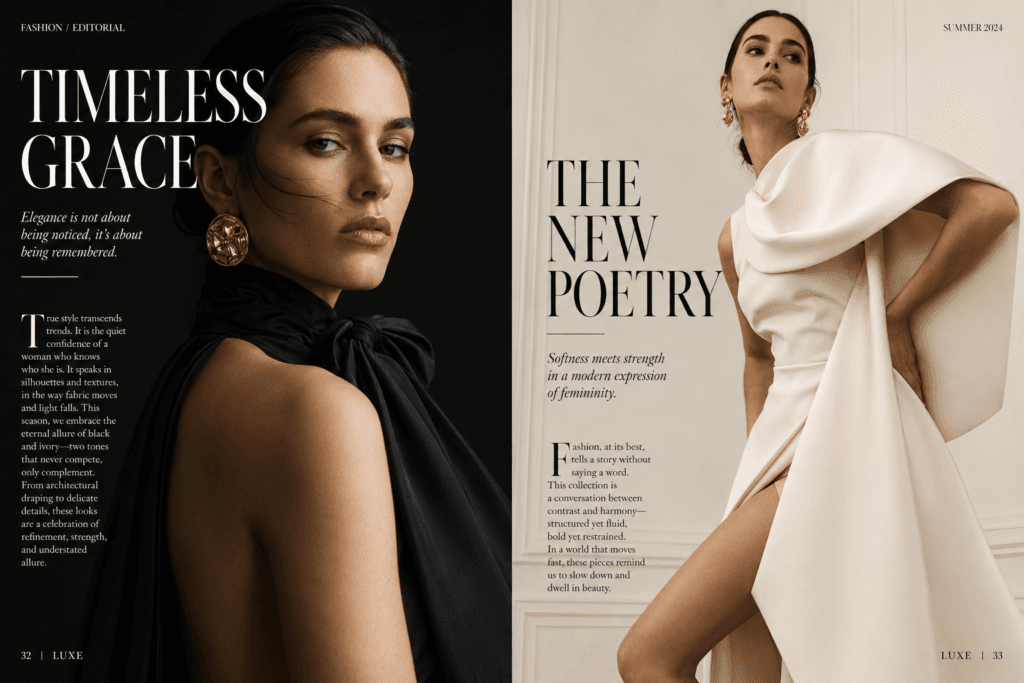 Example|Image Source: ChatGPT
Editorial AI graphic design prompts should describe the relationship between headlines, body copy, photography, captions, and negative space.
Also Read: Seasonal Autumn Design Trends for Better Visual Campaigns
AI Graphic Design Prompts for Advertising
Advertising graphics need to communicate one idea quickly.
1. Running Shoe Advertisement
Create a dynamic advertising poster for premium running shoes, athlete in motion, oversized bold typography, black and neon yellow color palette, motion blur accents, product clearly visible, strong “Run Further” campaign headline.
2. Smartphone Advertisement
Design a minimalist smartphone advertisement, floating premium phone render, dark gradient background, clean white sans serif typography, subtle reflective lighting, strong product focus and elegant technology aesthetic.
3. Sustainable Fashion Campaign
Create an advertising campaign graphic for a sustainable clothing brand, natural lifestyle photography, earthy green and beige palette, modern serif typography, minimal environmental messaging, sophisticated editorial layout.
4. Coffee Campaign
Design a bold advertising graphic for cold brew coffee, dramatic glass photography, dark brown and cream palette, oversized condensed typography, energetic composition, modern urban branding.
5. Travel Campaign
Create an inspirational travel advertising poster for a tropical island destination, vibrant ocean photography, large elegant headline, turquoise and warm sand palette, clean modern tourism branding.
 Example|Image Source: ChatGPT
Advertising AI graphic design prompts work best when they include a campaign message, product focus, and clear hierarchy.
AI Graphic Design Prompts for Typography
Typography can become the primary visual element instead of supporting imagery.
1. Bold Type Poster
Create a typography-only poster featuring the phrase “MAKE IT MATTER,” oversized condensed sans serif lettering, black and bright red palette, strong contrast, experimental scale, modern graphic design.
2. Elegant Quote Design
Design a sophisticated typography poster featuring “Less, but better,” elegant serif headline, small modern sans serif supporting text, cream background, black typography, generous negative space.
3. Experimental Lettering
Create an experimental typography artwork using the word “FORM,” distorted geometric letterforms, blue and orange gradients, modular grid, contemporary design-school aesthetic.
4. Retro Typography
Design a retro typography poster reading “GOOD DAYS AHEAD,” chunky 1970s lettering, orange, yellow, brown, and cream colors, wavy forms, subtle vintage print texture.
5. Futuristic Typography
Create a futuristic typographic composition featuring “NEXT ERA,” extended geometric lettering, metallic silver and electric blue palette, dark background, subtle grid and digital interface details.
 Example|Image Source: ChatGPT
Typography-heavy AI graphic design prompts can generate strong starting points, but AI-generated lettering should always be checked and corrected manually before publication.
AI Graphic Design Prompts for Web Graphics
Designers can also use AI to explore visual directions for digital interfaces and landing pages.
1. SaaS Hero Section
Create a modern SaaS landing page hero design, bold headline area, dark navy background, bright blue gradient accents, clean dashboard interface mockup, modern sans serif typography, strong CTA button.
2. Creative Portfolio Homepage
Design a creative graphic designer portfolio homepage, oversized typography, asymmetric grid, bold project imagery, black, white, and vivid orange palette, contemporary editorial web design.
3. Wellness Website
Create a calming wellness website homepage, warm beige and sage palette, soft lifestyle photography, elegant serif headlines, highly readable sans serif body text, spacious responsive layout.
4. Ecommerce Homepage
Design a modern ecommerce homepage for a premium home decor brand, editorial product photography, cream and charcoal palette, sophisticated typography, clear product categories and shopping CTA.
5. Technology Startup Page
Create a futuristic startup landing page, dark interface, translucent glass panels, electric violet gradient, bold sans serif typography, clean navigation, abstract 3D technology visual.
 Example|Image Source: ChatGPT
AI Graphic Design Prompts for Creative Experiments
Some of the strongest concepts appear when designers combine established styles.
1. Swiss Meets 3D
Create an experimental poster combining Swiss graphic design with glossy 3D abstract objects, strict typographic grid, neutral black and white layout, bright red dimensional centerpiece.
2. Retro Futurism
Design a retro-futuristic poster, chrome typography, deep blue space background, pink and orange gradient sunset, geometric grid, nostalgic 1980s technology aesthetic.
3. Botanical Brutalism
Create a brutalist botanical poster combining oversized raw typography with detailed flower photography, black, white, and fluorescent green palette, unconventional layered composition.
4. Minimalist Collage
Design a minimalist editorial collage using cut-out fashion photography, geometric paper shapes, restrained black, beige, and red palette, sophisticated magazine composition.
5. Modern Art Deco
Create a contemporary Art Deco poster, symmetrical geometric frame, elegant serif typography, black, cream, and metallic gold palette, simplified luxury composition.
 Example|Image Source: ChatGPT
Experimental AI graphic design prompts are useful during ideation because they encourage combinations designers may not explore manually at first.
How to Improve AI Graphic Design Prompts
Avoid relying only on style words such as “modern,” “professional,” or “beautiful.”
These terms are too broad.
Add specific visual instructions.
Instead of:
“Modern branding for a bakery.”
Try:
“Modern bakery branding system, bold serif wordmark, warm cream and terracotta palette, hand-drawn wheat illustration, minimalist packaging labels, structured editorial typography.”
Specific language gives the generator clearer direction.
Strong AI graphic design prompts describe both the creative concept and how information should be presented.
Mention the Actual Design Output
One common mistake is writing an image prompt when you need a graphic design concept.
If you need a poster, explicitly say:
“poster design.”
For packaging, say:
“packaging design concept.”
For an editorial project:
“magazine cover” or “editorial spread.”
For social media:
“Instagram promotional graphic.”
This small detail can dramatically change the type of result.
Every AI graphic design prompt should tell the generator what the final design is supposed to be.
Also Read: Festival Graphic Design Styles for Better Marketing Results
Add Typography Instructions
Typography is central to graphic design.
Useful instructions include:
- Bold condensed sans serif
- Elegant high-contrast serif
- Rounded geometric typography
- Experimental display lettering
- Oversized editorial type
- Minimal lowercase sans serif
- Retro script accent
Also describe scale and hierarchy.
For example:
“Oversized headline dominating the upper half, small supporting information aligned to a grid.”
AI may not reproduce exact wording accurately, so use generated typography mainly as a layout reference and recreate important text manually.
Define a Color Palette
Color can make AI generations more consistent.
Instead of requesting “bright colors,” specify:
“Cobalt blue, vivid orange, cream, and black.”
Or:
“Sage green, warm beige, ivory, and charcoal.”
A limited palette often produces stronger graphic design results because it creates visual cohesion.
When building a campaign, reuse the same colors across multiple AI graphic design prompts.
Add Layout and Composition
Designers should describe composition just as carefully as subject matter.
Try directions such as:
- Asymmetric Swiss grid
- Centered packaging label
- Oversized headline at top
- Product on right with copy space on left
- Modular editorial grid
- Large negative space
- Layered collage composition
- Symmetrical luxury layout
Composition helps transform an AI image into something closer to a usable design concept.
Helpful Tools for AI Graphic Design
Different tools can support different parts of an AI-assisted workflow.
ChatGPT Images
Useful for developing visual concepts, exploring variations, and refining design directions through conversational instructions.
Adobe Firefly
Useful for generative imagery and integration with Adobe creative workflows.
Midjourney
Popular for exploring highly visual concept directions, art styles, compositions, and mood.
Ideogram
Useful for design-oriented image generation where typography and poster concepts are important.
Recraft
Helpful for designers creating illustrations, icons, vector-inspired graphics, and brand assets.
Adobe Illustrator
Use Illustrator to rebuild logos, typography, icons, and vector elements professionally after concept generation.
Adobe Photoshop
Photoshop is useful for refining AI images, correcting artifacts, combining concepts, and preparing final campaign graphics.
Figma
Figma can turn AI-generated ideas into structured web layouts, interface concepts, design systems, and digital prototypes.
AI tools are most effective when combined with professional design software rather than treated as the final production environment.
Common AI Graphic Design Prompt Mistakes
1. Asking Only for a Subject
“Luxury perfume” may generate product photography instead of packaging or advertising design.
Specify the graphic design output.
2. Ignoring Typography
Graphic design without typographic direction can quickly become generic artwork.
3. Using Too Many Styles
Combining minimalism, cyberpunk, vintage, brutalism, and watercolor in one prompt usually creates visual confusion.
4. Trusting AI-Generated Text
Always proofread or replace important typography manually.
5. Skipping Brand Context
A design should match the intended audience and positioning.
6. Publishing the First Generation
Treat AI results as concepts. Refine composition, typography, color, and details before using them professionally.
AI Graphic Design Prompts Checklist
Before generating your design, confirm that the prompt includes:
- The exact design output
- Main subject or product
- Intended audience
- Graphic design style
- Typography direction
- Color palette
- Layout structure
- Image or illustration style
- Visual hierarchy
- Mood or brand personality
- Background treatment
- Negative space requirements
- Format or aspect ratio when relevant
- Intended platform
- Clear creative purpose
Using this checklist can make AI graphic design prompts much more predictable and useful.
Also Read: 25 AI Graphic Design Tools for Designers Want Better Results
Final Thoughts on AI Graphic Design Prompts
The best AI graphic design prompts do more than describe attractive imagery. They define the type of design, visual hierarchy, typography, palette, composition, and intended purpose.
A poster prompt should produce something that feels like a poster. A packaging prompt should consider the label and product structure. A branding prompt should explore a visual system rather than a single decorative symbol.
Designers can use AI for posters, brand concepts, packaging, editorial layouts, advertisements, social media graphics, typography experiments, and web design inspiration.
However, creative direction still comes from the designer.
AI may suggest a compelling arrangement or unexpected visual combination, but professional designers need to evaluate readability, consistency, accessibility, typography, production requirements, and brand fit.
Use these AI graphic design prompts as starting points. Modify the typography, colors, layouts, and visual styles to suit your project.
As you experiment, save prompt structures that repeatedly produce useful results. This creates a reusable creative system that can make future ideation faster.
When strong design thinking is combined with specific AI graphic design prompts, artificial intelligence becomes less of a random image generator and more of a practical tool for exploring better creative possibilities.
For high-quality fonts to boost your income, check out Letter Crafted. Our professional fonts are perfect for branding, marketing, and content creation. So, don’t miss this opportunity.