
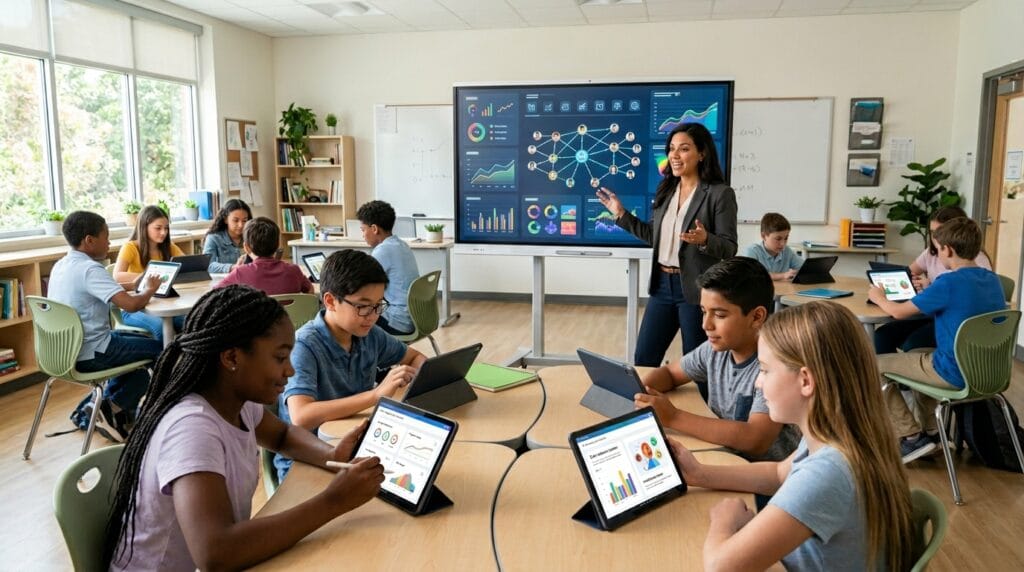
The role of AI in education is growing rapidly as schools, teachers, and families adapt to new ways of modern learning. Today, AI in education is not just a concept for the future. It is already helping improve teaching methods, personalize learning, and support students in ways that were not possible before. As technology continues to evolve, understanding how AI in education works becomes essential for teachers, students, and parents who want better learning outcomes.
This article provides a clear overview of how AI in education is shaping modern classrooms and what it means for everyday learning.
Why AI in Education Matters for Modern Learning
The shift toward digital learning has increased the importance of AI for education. Schools are looking for ways to improve efficiency while maintaining quality teaching.
Key benefits include:
- More personalized learning experiences
- Faster access to information
- Better support for teachers
- Improved student engagement
With the help of AI for education, learning becomes more flexible and adaptable to individual needs.
AI in Education for Personalized Learning Experiences
One of the biggest advantages of AI for education is personalization.
1. Adaptive Learning Systems
AI can adjust lesson difficulty based on student performance. This allows each learner to move at their own pace.
2. Smart Content Recommendations
Students receive suggestions based on their progress and interests.
3.Individual Learning Paths
AI helps create customized learning journeys for better understanding.
These features show how AI for education supports students with different learning styles.
AI in Education for Teachers and Classroom Support
Teachers benefit greatly from modern tools powered by AI.
1. Automated Grading and Feedback
AI can quickly evaluate assignments and provide feedback, saving time.
2. Lesson Planning Assistance
Teachers can generate ideas, quizzes, and materials efficiently.
3. Classroom Management Tools
AI helps track student progress and identify areas that need attention.
Using AI in classrooms, teachers can focus more on teaching and less on repetitive tasks.
Also Read: AI and Students: How Technology Improves Learning
AI in Education for Students and Skill Development
Students gain new opportunities with technology-driven learning.
1. Interactive Learning Tools
AI-powered apps make lessons more engaging and dynamic.
2. Instant Support and Tutoring
Students can access help anytime through AI-based assistants.
3. Skill-Based Learning
AI helps students focus on practical skills needed for the future.
These improvements highlight how AI for education supports active learning.
AI in Education for Parents and Home Learning
Parents also play a key role in modern education.
1. Progress Tracking
AI tools provide insights into student performance.
2. Learning Support at Home
Parents can use AI tools to assist children with homework.
3. Better Communication with Schools
Digital platforms make it easier to stay informed.
With AI in learning, parents can stay more involved in their child’s learning journey.
AI in Education and Accessibility for All Learners
Accessibility is one of the most important aspects of modern learning.
1. Support for Different Learning Needs
AI tools can adapt to students with disabilities or special needs.
2. Language Translation and Assistance
Students can learn in multiple languages with ease.
3. Voice and Speech Tools
AI supports learners who prefer audio-based learning.
These advancements show how AI for education helps create inclusive environments.
Also Read: AI for Teaching Made Simple: From Lessons to Grading
AI in Education Trends Shaping the Future of Learning
The future of learning is closely connected to technology.
1. Virtual Classrooms and AI Tutors
Online learning platforms continue to grow with AI support.
2. Data-Driven Learning Insights
AI helps analyze student performance and improve teaching strategies.
3. Integration with Everyday Tools
AI is becoming part of common apps used in education.
These trends confirm that AI in learning will continue to evolve.
Challenges and Concerns in AI in Education
While the benefits are clear, there are also challenges.
1. Data Privacy Issues
Protecting student data is critical.
2. Over-Reliance on Technology
Too much dependence on AI can reduce human interaction.
3. Access and Equity
Not all students have equal access to technology.
Understanding these challenges ensures responsible use of AI in education.
Best Practices for Using AI in Education Effectively
To get the most value, a balanced approach is needed.
1. Combine AI with Human Teaching
AI should support, not replace, teachers.
2. Focus on Learning Goals
Use tools that align with educational objectives.
3. Start Simple and Scale
Adopt tools gradually to avoid overwhelm.
Applying these practices helps maximize the benefits of AI in education.
Also Read: Top 7 AI Teaching Tools for Teachers to Transform Their Classroom
Final Thoughts on AI in Education for Better Learning
The growth of AI in education is changing how we teach and learn. It offers new opportunities for personalization, efficiency, and accessibility. When used correctly, AI in education can improve both teaching and learning experiences for everyone involved.
For teachers, students, and parents, the key is to stay informed and open to change. By understanding how AI in education works, you can take advantage of its benefits while avoiding common challenges.
As technology continues to evolve, those who embrace AI in education will be better prepared for the future of learning.
For high-quality fonts to boost your income, check out Letter Crafted. Our professional fonts are perfect for branding, marketing, and content creation. So, don’t miss this opportunity.