
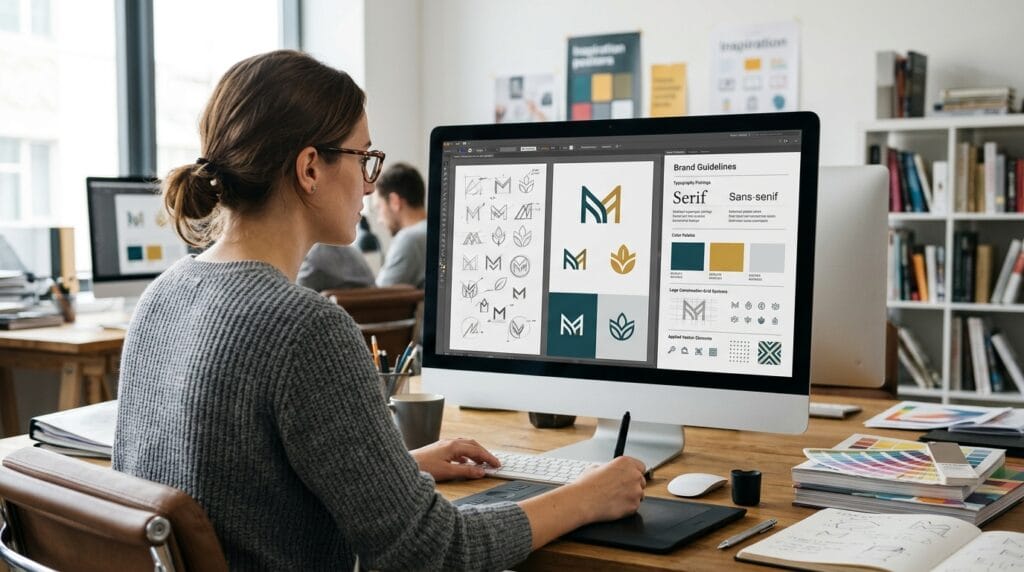
Learning effective logo design tutorials is one of the best ways to improve branding skills and create memorable visual identities. Whether you are a beginner designer, freelance creative, or branding specialist, understanding the logo design process helps you create logos that are not only attractive but also meaningful and functional.
A logo is often the first thing customers notice about a business. It appears on websites, social media profiles, packaging, advertisements, and marketing materials. Because of this, strong logo design plays a major role in building recognition and trust. Many designers focus on aesthetics alone, but professional branding requires much more than a beautiful symbol.
The best logo design tutorials teach designers how to combine research, strategy, typography, color, and visual simplicity into one cohesive identity. A successful logo should communicate a brand’s personality while remaining flexible across different applications.
In this guide, you will learn practical logo design tutorials, branding principles, typography strategies, logo creation workflows, and professional techniques that help designers build stronger visual identities.
Why Logo Design Tutorials Matter for Branding
A logo is more than decoration.
Strong branding relies on visual consistency, and the logo often becomes the foundation of that system.
Professional logo design tutorials help designers:
- Create memorable identities
- Improve brand recognition
- Build customer trust
- Develop visual consistency
- Strengthen marketing materials
- Improve professional skills
Good logos communicate clearly and remain recognizable for years.
Logo Design Tutorials and the Brand Discovery Process
Before drawing anything, designers should understand the brand.
Many beginner designers skip research and immediately start sketching concepts.
However, successful logo design tutorials often begin with brand discovery.
Questions to ask include:
- What does the business do?
- Who is the target audience?
- What values define the brand?
- What makes the company different?
- How should customers feel about the brand?
Research creates stronger design direction.
Understanding Brand Personality
Every logo should reflect a personality.
Examples include:
- Luxury brands → Elegant and sophisticated
- Technology companies → Modern and innovative
- Kids brands → Fun and playful
- Fitness brands → Energetic and powerful
Strong branding starts with understanding these characteristics.
Logo Design Tutorials for Sketching Better Concepts
Sketching remains one of the most important stages in logo creation.
Many professional designers generate dozens of ideas before choosing a direction.
Effective logo design tutorials encourage:
- Rapid idea generation
- Symbol exploration
- Shape experimentation
- Concept refinement
Sketching helps designers solve branding problems before moving into software.
Logo Brainstorming Techniques
Helpful brainstorming methods include:
- Mind mapping
- Word association
- Symbol exploration
- Industry research
- Competitor analysis
These techniques often produce more original logo concepts.
Typography-Based Logo Design Tutorials
Typography plays a major role in logo design.
Many successful brands rely entirely on typography.
Examples include:
- Wordmarks
- Lettermarks
- Signature logos
- Monogram logos
Strong typography helps improve memorability and professionalism.
Choosing Fonts for Logo Design
Different fonts communicate different emotions.
Examples:
- Serif fonts → Elegant and trustworthy
- Sans serif fonts → Modern and clean
- Script fonts → Personal and creative
- Display fonts → Bold and expressive
Many logo design tutorials emphasize choosing typography that matches brand personality.
Font Pairing in Logo Design Tutorials
When logos include supporting text, font pairing becomes important.
Good font combinations often include:
- Serif + sans serif
- Bold display + minimal sans serif
- Script + neutral sans serif
Balanced typography improves visual harmony.
Logo Design Tutorials for Symbol and Icon Creation
Symbols often help logos become more recognizable.
However, icons should support the brand rather than simply decorate it.
Effective logo symbols are:
- Simple
- Scalable
- Meaningful
- Memorable
Strong icon design is a common focus in professional logo design tutorials.
Using Negative Space in Logo Design
Negative space creates clever visual solutions.
Benefits include:
- Better memorability
- Creative storytelling
- Visual simplicity
- Stronger branding impact
Many iconic logos use negative space effectively.
Also Read: Typography Logo Design How to Make Logos Look Expensive
Color Theory in Logo Design Tutorials
Color strongly affects customer perception.
Choosing the right colors helps communicate brand personality.
Examples include:
- Blue → Trust and professionalism
- Green → Nature and sustainability
- Red → Energy and excitement
- Black → Luxury and sophistication
- Yellow → Optimism and friendliness
Color strategy is a key part of modern logo design tutorials.
Building Effective Logo Color Palettes
Most professional logos use:
- One primary color
- One secondary color
- Neutral support colors
Simple color systems usually create stronger branding consistency.
Logo Design Tutorials for Simplicity and Scalability
One of the biggest beginner mistakes is making logos too complicated.
Professional logos should remain effective when:
- Printed small
- Viewed on mobile devices
- Used in black and white
- Displayed on packaging
- Applied to social media profiles
Strong logo design tutorials teach designers to simplify rather than decorate excessively.
Why Minimal Logo Design Works
Minimal logos offer:
- Better readability
- Easier reproduction
- Stronger recognition
- Timeless appeal
Many successful brands rely on simple logo systems.
Logo Design Tutorials for Digital Branding
Modern logos must work across many platforms.
Designers should test logos on:
- Websites
- Mobile apps
- Social media icons
- Packaging mockups
- Business cards
Digital-first branding has become increasingly important.
Responsive Logo Design Principles
Responsive logos adapt to different sizes and formats.
Examples include:
- Full logo versions
- Icon-only versions
- Monogram versions
- Simplified mobile versions
These systems improve usability across platforms.
Logo Design Tutorials for Presentation and Client Approval
Presentation quality often influences client decisions.
A strong logo presentation should include:
- Brand story explanation
- Logo rationale
- Color palette showcase
- Typography system
- Real-world mockups
Professional presentations help clients understand design choices.
Mockup Techniques for Better Logo Presentations
Useful mockups include:
- Packaging previews
- Store signage
- Business cards
- Website headers
- Social media profiles
Mockups make branding feel more realistic and valuable.
Also Read: Best Logo Color Combinations for Tech, Retail, and Services
Best Tools Used in Logo Design Tutorials
Modern designers use several tools to improve workflow efficiency.
1. Adobe Illustrator
Useful for:
- Vector logo creation
- Icon design
- Typography refinement
- Brand identity systems
Illustrator remains the industry standard for logo design.
2. Adobe Photoshop
Helpful for:
- Logo presentations
- Mockups
- Branding visuals
- Marketing materials
Photoshop supports professional branding workflows.
3. Figma
Popular for:
- Brand guideline creation
- Digital branding systems
- Client collaboration
- Responsive logo testing
Figma has become a valuable branding tool.
4. Canva
Useful for:
- Brand presentations
- Social media branding
- Logo showcases
- Marketing assets
Canva helps freelancers create professional presentations quickly.
Common Mistakes in Logo Design Tutorials
Many beginner designers make similar mistakes.
1. Overcomplicated Logos
Too many elements reduce readability.
Simple concepts usually perform better.
2. Following Trends Too Closely
Trendy logos often become outdated quickly.
Timeless design creates longer-lasting branding.
3. Ignoring Scalability
A logo should work at every size.
Tiny details often disappear on mobile screens.
4. Weak Typography Choices
Typography strongly affects perception.
Poor font choices can weaken otherwise strong concepts.
Future Trends in Logo Design Tutorials
Modern branding continues evolving.
Popular trends include:
- Minimal logo systems
- Responsive branding
- AI-assisted concept generation
- Monochrome logos
- Typography-focused branding
- Geometric logo design
Despite changing trends, strong fundamentals remain essential.
How to Improve Faster With Logo Design Tutorials
Designers can improve by:
- Studying successful logos
- Recreating professional work for practice
- Learning typography principles
- Sketching daily concepts
- Building branding case studies
- Seeking constructive feedback
Consistent practice leads to stronger branding skills over time.
Also Read: AI Prompts for Logo Design: Simple Prompts That Work
Final Thoughts on Logo Design Tutorials
Learning professional logo design tutorials helps designers create stronger visual identities, improve branding quality, and develop more strategic creative thinking. Great logos are not simply attractive graphics. They communicate meaning, build recognition, and support long-term brand growth.
The most effective logos combine research, simplicity, typography, color psychology, and scalability into one cohesive system. By understanding these principles and practicing regularly, designers can build memorable brand identities that work across both digital and print platforms.
Whether you are a beginner designer, freelancer, or branding specialist, investing time in logo design tutorials will help you create better logos, stronger branding systems, and more professional design solutions.
For high-quality fonts to boost your income, check out Letter Crafted. Our professional fonts are perfect for branding, marketing, and content creation. So, don’t miss this opportunity.