
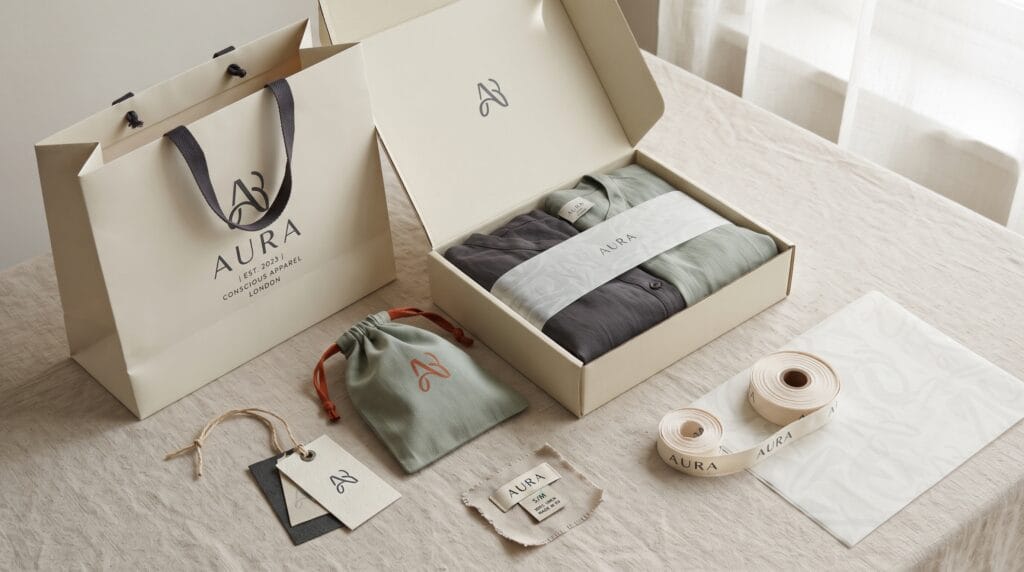
Clothing packaging design helps fashion brands create a stronger impression before customers even wear the product. Packaging can communicate quality, personality, price positioning, and attention to detail through boxes, mailers, tissue paper, tags, colors, typography, and small branded touches. For online fashion businesses especially, the package may be the first physical experience a customer has with the brand.
Good apparel packaging does more than protect clothing.
It can also:
- Build brand recognition
- Improve presentation
- Support premium positioning
- Create memorable unboxing
- Encourage social sharing
- Protect garments during shipping
- Communicate sustainability
- Strengthen customer loyalty
The best clothing packaging design combines practical protection with a clear visual identity.
A luxury fashion label and a casual streetwear brand may sell similar products, but their packaging should communicate very different experiences.
Why Clothing Packaging Design Matters
Fashion is highly visual.
Customers judge:
- Style
- Quality
- Personality
- Presentation
before they ever try on the product.
Packaging becomes part of that visual experience.
A carefully folded shirt inside clean tissue paper and a well-designed box may feel more premium than the same shirt placed loosely in a generic shipping bag.
Strong clothing packaging design can help customers feel that the entire purchase has been considered carefully.
This is particularly important for:
- Ecommerce fashion stores
- Boutique brands
- Luxury labels
- Streetwear brands
- Sustainable apparel
- Handmade clothing
- Subscription fashion
The packaging should reflect the same level of care as the clothing itself.
Start Clothing Packaging Design With Brand Positioning
Before choosing packaging materials, define how the fashion brand should feel.
Possible directions include:
- Luxury
- Minimal
- Youthful
- Sustainable
- Bold
- Elegant
- Artistic
- Casual
- Sporty
- Vintage
The packaging should support this positioning.
For example:
- A luxury brand may use rigid boxes, restrained colors, premium paper, and subtle finishes.
- A sustainable clothing brand might prefer recycled mailers, kraft materials, and minimal printing.
- A streetwear label may use bold typography, oversized stickers, and stronger graphic elements.
The strongest clothing packaging design connects every detail to the overall brand identity.
Clothing Packaging Design With Apparel Boxes
Boxes create a structured and premium presentation.
They can be useful for:
- Shirts
- Dresses
- Jackets
- Accessories
- Gift products
- Premium collections
Common styles include:
- Folding cartons
- Rigid boxes
- Mailer boxes
- Drawer boxes
- Two-piece boxes
Use the Box as Part of the Brand Experience
The exterior can communicate recognition.
The interior can create another layer of surprise.
You might use:
- Outside: Minimal logo or pattern
- Inside: Brand message, color, or graphic detail
This creates a more intentional unboxing experience.
However, avoid oversized boxes that waste materials or shipping space.
Choose dimensions that fit the garment realistically.
Clothing Packaging Design With Mailer Bags
Mailer bags are practical for ecommerce fashion.
They are:
- Lightweight
- Flexible
- Easy to store
- Efficient to ship
Mailers may be made from:
- Recyclable plastic
- Recycled plastic
- Paper
- Compostable materials
A mailer can still feel branded.
Designers can use:
- Custom color
- Repeating patterns
- Logo placement
- Simple typography
- Branded seals
For lower-priced fashion products, mailers may provide a better balance between presentation and shipping efficiency than rigid boxes.
Use Tissue Paper for Better Presentation
Tissue paper can make simple packaging feel more considered.
It can:
- Protect garments
- Create layers
- Improve visual presentation
- Support brand colors
A basic clothing package may include:
Folded garment → Tissue paper → Sticker seal → Mailer or box
This simple system can create a much stronger presentation without adding excessive complexity.
Custom printed tissue paper may include:
- Small logos
- Symbols
- Patterns
- Illustrations
However, plain tissue in a well-chosen brand color can also work effectively.
Clothing Packaging Design With Stickers and Seals
Stickers are an affordable way to add brand personality.
They can be used to:
- Seal tissue paper
- Close packages
- Decorate mailers
- Add campaign messages
- Create collectible extras
Keep sticker design consistent with the broader visual identity.
- A minimalist brand might use a simple circular logo sticker.
- A streetwear brand might use large expressive graphics.
- A playful fashion brand could include several collectible sticker designs.
Small details can help clothing packaging design feel more distinctive.
Also Read: Supplement Label and Packaging Design Guide for Better Branding
Clothing Packaging Design With Hang Tags
Hang tags are an important part of fashion presentation.
They can communicate:
- Brand name
- Size
- Price
- Material
- Care information
- Product story
Hang tags may use:
- Coated card
- Kraft paper
- Textured stock
- Specialty finishes
The design should remain easy to read.
- A premium tag might use a thick textured stock and minimal typography.
- A youth-oriented brand may use bold color and graphic shapes.
Hang tags should feel connected to the packaging rather than appearing like a separate visual system.
Add Thank-You Cards and Inserts
Printed inserts can strengthen the relationship between the customer and the brand.
Possible content includes:
- Thank-you message
- Care instructions
- Social media information
- Return instructions
- Loyalty program
- Brand story
Avoid including too many separate cards.
One carefully designed card may be more effective than several small pieces of paper.
The insert should provide useful information rather than simply adding decoration.
Clothing Packaging Design and Typography
Typography strongly influences how apparel packaging feels.
Different type styles can create very different moods.
Serif Typography
Serif fonts may feel:
- Elegant
- Fashionable
- Premium
- Editorial
They can work well for luxury and boutique fashion brands.
Sans Serif Typography
Sans serif fonts can communicate:
- Modernity
- Simplicity
- Clean branding
- Contemporary style
They work especially well for minimal fashion and streetwear brands.
Display Typography
Bold display fonts can create stronger personality.
They may suit:
- Streetwear
- Youth fashion
- Creative brands
- Limited collections
The typography used in clothing packaging design should match the personality of the clothing brand itself.
Color in Clothing Packaging Design
Color can create immediate brand recognition.
A fashion brand may use:
- Black and cream: Luxury and sophistication
- White and cobalt: Modern and clean
- Beige and brown: Natural and understated
- Black and red: Bold and energetic
- Sage and cream: Soft and sustainable
- Pink and burgundy: Fashionable and expressive
Color should remain consistent across:
- Boxes
- Mailers
- Tags
- Tissue
- Cards
- Stickers
This creates a stronger visual system.
Avoid changing colors randomly between packaging components.
Minimal Clothing Packaging Design
Minimalism works particularly well for modern apparel brands.
A minimalist package may use:
- One logo
- Limited colors
- Strong typography
- Generous spacing
- Simple materials
Minimal packaging can feel premium because every detail receives more attention.
However, minimalism still requires good execution.
Poor printing, weak materials, or awkward spacing become more noticeable when there are fewer visual elements.
Luxury Clothing Packaging Design
Luxury fashion packaging often focuses on:
- Material quality
- Structure
- Texture
- Typography
- Finishing details
Possible features include:
- Rigid boxes
- Embossing
- Foil accents
- Fabric ribbons
- Magnetic closures
- Thick tissue paper
- Premium cards
The design should feel refined rather than overloaded.
Too many metallic effects or decorative details can make the package feel less sophisticated.
Luxury clothing packaging design often succeeds through restraint.
Also Read: Creative Chocolate Packaging Design Ideas for Better Branding
Sustainable Clothing Packaging Design
Sustainability is increasingly important for fashion brands.
Packaging can reduce unnecessary waste through:
- Recycled paper
- Recyclable mailers
- Smaller boxes
- Reduced inserts
- Minimal printing
- Reusable packaging
Avoid adding excessive layers simply to create an elaborate unboxing experience.
A sustainable package should balance presentation with material efficiency.
Communicate Sustainability Clearly
If the package has environmental benefits, explain them accurately.
For example:
- Made from recycled paper
- Recyclable after use
- Reusable mailer
- Plastic-free packaging
Avoid vague claims that cannot be supported.
Clothing Packaging Design for Ecommerce
Ecommerce packaging must survive shipping.
A beautiful package that arrives:
- Crushed
- Torn
- Wet
- Dirty
will create a poor customer experience.
Consider:
- Strength
- Moisture resistance
- Closure
- Product movement
- Shipping labels
The outer shipping package may need to be more functional, while the inner package provides the branded experience.
This layered approach can protect both the garment and the visual presentation.
Create a Memorable Unboxing Experience
Unboxing should feel organized.
A simple sequence might be:
Outer mailer → Tissue wrap → Branded seal → Product → Thank-you card
This creates several small moments without requiring complicated packaging.
Think about what customers see first.
Then decide what they discover next.
Strong clothing packaging design uses sequence to create a more thoughtful customer experience.
Clothing Packaging Design for Product Collections
Fashion brands often sell multiple product categories.
Packaging should remain recognizable across:
- Shirts
- Dresses
- Accessories
- Seasonal collections
Maintain consistent:
- Logo placement
- Typography
- Color system
- Packaging materials
Then vary selected details.
For example, different collections may use different accent colors while maintaining the same basic packaging structure.
Consistency strengthens brand recognition.
Design Packaging for Social Media
Customers sometimes photograph attractive packaging.
That means packages may appear in:
Designers should consider how the package looks from several angles.
A recognizable:
- Color
- Pattern
- Sticker
- Interior message
can help the brand remain visible in user-generated content.
However, social sharing should be a bonus rather than the only design objective.
Common Clothing Packaging Design Mistakes
Using Too Much Packaging
More layers do not automatically create more value.
Ignoring Shipping Requirements
Packaging must survive delivery.
Making Every Component Different
A consistent system creates stronger branding.
Using Poor Materials
Low-quality materials can weaken brand perception.
Overusing Special Finishes
Premium details work best when used selectively.
Adding Too Many Printed Inserts
Keep supporting materials useful and focused.
Ignoring Sustainability
Reduce unnecessary packaging wherever possible.
Clothing Packaging Design Checklist
Before approving your fashion packaging, check:
- Brand positioning is clear
- Packaging matches the clothing style
- Garments are properly protected
- Box or mailer size is appropriate
- Typography remains readable
- Colors are consistent
- Tissue paper supports the presentation
- Hang tags match the identity
- Stickers or seals feel intentional
- Inserts provide useful information
- Shipping durability has been tested
- Unboxing feels organized
- Materials are appropriate
- Sustainability claims are accurate
- Packaging works for ecommerce
- Final artwork is print-ready
- Fonts and visual assets are properly licensed
Also Read: Bakery Packaging Design Ideas for Beautiful Branding
Final Thoughts
Clothing packaging design is an important part of fashion branding because it connects the visual identity with the physical customer experience.
- Boxes can create premium presentation.
- Mailers can improve shipping efficiency.
- Tissue paper can add refinement.
- Hang tags communicate information.
- Stickers and cards can add personality.
- Typography and color help everything feel connected.
The best approach is not to add as many packaging elements as possible.
Instead, choose the elements that support the brand and improve the experience.
- Start with clear positioning.
- Choose the right package structure.
- Protect the garment properly.
- Build a consistent visual system.
- Then refine the typography, color, materials, and supporting details.
Strong clothing packaging design should look attractive, but it should also feel practical and intentional.
When the outer mailer, inner presentation, tags, colors, and printed details work together, customers experience a more complete fashion brand rather than simply receiving a piece of clothing.
By treating clothing packaging design as part of the overall identity, apparel brands can improve presentation, strengthen recognition, create more memorable unboxing experiences, and build a more professional relationship with customers.
For high-quality fonts to boost your income, check out Letter Crafted. Our professional fonts are perfect for branding, marketing, and content creation. So, don’t miss this opportunity.